As electronics manufacturing continues to move toward higher efficiency, greater precision, and intelligent production, automation has become increasingly important in the PCB industry.
The rapid development of industrial robotics, machine vision, automated inspection, and intelligent material handling is transforming traditional PCB Manufacturing processes. Tasks that were previously performed manually—such as loading, unloading, inspection, sorting, and packaging—can now be automated with different types of industrial robots.
By combining Industrial Robots with AOI systems, inspection equipment, AGVs, machine vision, and production lines, PCB manufacturers can improve productivity while reducing repetitive manual operations and manufacturing risks.
Below are several typical applications of industrial robots in PCB manufacturing.
Typical Applications of Industrial Robots in PCB Manufacturing
1. Six-Axis Robot for AOI Inspection and PCB Handling
Automated Optical Inspection (AOI) is widely used in modern PCB production to identify defects such as missing components, soldering abnormalities, trace defects, and other visual problems.
Traditional AOI processes may still require operators to manually load, rotate, transfer, and unload PCBs between inspection stations. Repetitive handling tasks can increase labor requirements and may lead to fatigue or inconsistent operation over long production periods.
A six-axis articulated robot can be integrated with two or more AOI inspection machines to automate:
- PCB loading
- Board positioning
- PCB transfer
- Board flipping
- AOI machine unloading
- Inspection station transfer
- Finished-board unloading
The robot can automatically move boards between inspection stations according to a predefined program.
With suitable conveyor systems and board-handling equipment, the inspection line can also be connected to an AGV system for automated material transportation between different production processes.
This creates a more integrated production workflow and reduces dependence on manual material handling.
2. SCARA Robot for PCB Coil Inspection
Inspection of coils and small conductive structures on multilayer PCBs can be challenging, particularly when the inspection process requires precise probe positioning.
In conventional processes, operators may manually place the PCB on inspection equipment and position probes to test individual coils or electrical points. Manual operation can result in inconsistent positioning, missed inspection points, and reduced inspection efficiency.
A SCARA Robot can be integrated with an inspection system to automate PCB loading, positioning, probe alignment, and testing.
For larger-aperture or relatively accessible PCB structures, the robot can position the board and coordinate with the inspection equipment to complete multiple inspection points automatically.
For smaller structures, a precision probe can be mounted to the robotic system and positioned according to programmed coordinates or machine-vision results.
Machine vision can further improve positioning accuracy and help compensate for small differences in PCB placement.
The advantages include:
- Improved positioning accuracy
- More consistent inspection
- Reduced operator workload
- Lower risk of missed inspection points
- Higher inspection throughput
- Better process repeatability
This type of automation is particularly valuable when large quantities of repetitive electrical or dimensional measurements are required.
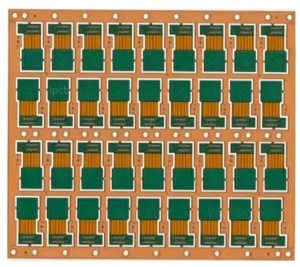
3. DELTA Robot for Small PCB and FPC Packaging
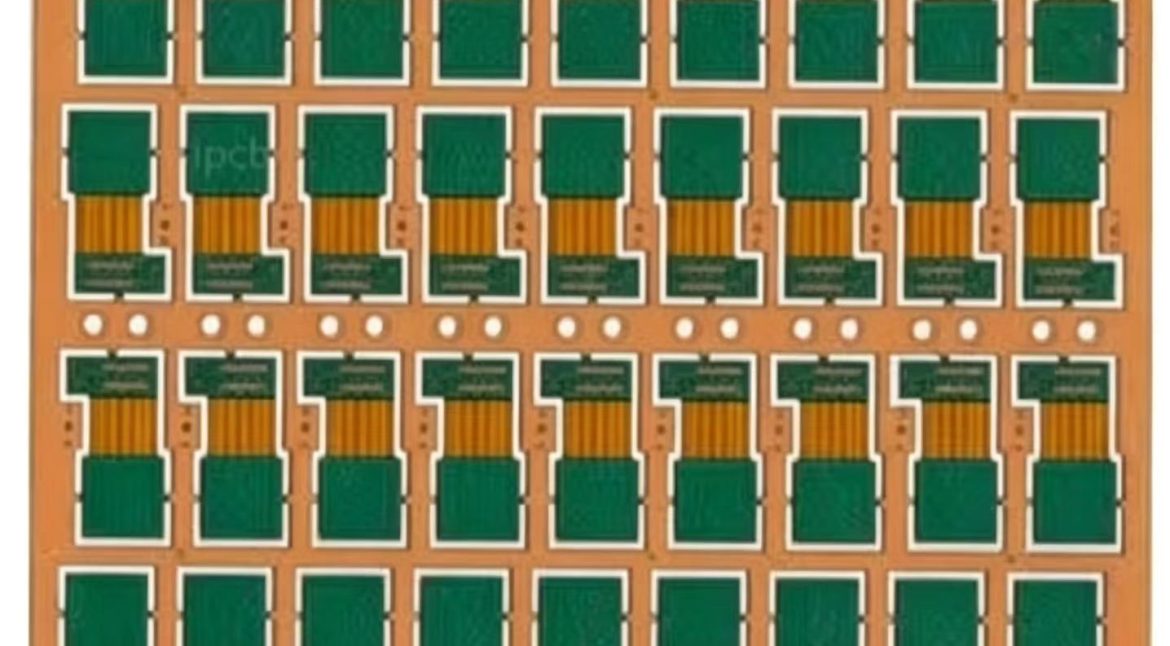
Flexible printed circuits and small PCB products can be difficult to handle manually because they may be thin, lightweight, and easily deformed.
Manual operators typically need to pick individual boards or flexible circuits from trays and place them into blister trays or packaging fixtures. When the products are small and flexible, repetitive manual handling can reduce productivity.
A DELTA Robot combined with a machine-vision system can provide a more efficient solution.
The vision system identifies qualified products from randomly arranged PCBs or flexible circuits, determines their position and orientation, and provides coordinates to the robot.
The robot then picks the products and places them into the designated blister tray according to the required orientation.
This system can automate:
- Product identification
- Position recognition
- Quality selection
- Pick-and-place operations
- Orientation correction
- Packaging tray loading
Compared with manual sorting, automated systems can provide more consistent cycle times and reduce handling errors.
Why Use Industrial Robots in PCB Manufacturing?
The adoption of Industrial Robots offers several advantages for PCB manufacturers.
1. Reduced Labor Requirements
Robots can perform repetitive loading, unloading, sorting, inspection, and handling operations continuously.
This allows operators to focus on tasks requiring decision-making, process monitoring, equipment maintenance, and quality management.
Automation can therefore reduce labor requirements for repetitive operations and improve overall production efficiency.
2. Higher Accuracy and Repeatability
Robots operate according to programmed motion paths and predefined coordinates.
When combined with machine vision and precision positioning systems, they can repeatedly perform the same operation with high consistency.
This is especially useful for PCB processes requiring accurate positioning, inspection, or component handling.
3. Improved Product Quality
Manual operations can be affected by fatigue, inconsistent handling, and human error.
Automated robotic systems can maintain consistent operating conditions and reduce variations between individual production cycles.
As a result, manufacturers can improve process consistency and reduce certain types of handling-related quality problems.
4. Improved Worker Safety
Some PCB manufacturing processes involve repetitive motion, chemical exposure, heat, dust, or other potentially unfavorable working conditions.
Robots can take over selected repetitive or hazardous operations, allowing workers to operate equipment from safer positions.
This can improve workplace safety while reducing the need for workers to remain continuously at demanding production stations.
5. Reduced Fatigue From Repetitive Operations
Long periods of repetitive handling can cause operator fatigue.
By assigning highly repetitive tasks to robots, manufacturers can reduce the physical burden on operators and create a more sustainable production environment.
6. Better Use of Factory Space
An appropriately designed robotic cell can combine handling, inspection, sorting, and transfer functions within a relatively compact production area.
This can help manufacturers optimize production-line layouts and make better use of available factory space.
7. Reduced Material Handling Losses
Accidental dropping, bending, scratching, or incorrect positioning can damage PCB products during manual handling.
Automated handling equipment can use predefined movement paths and controlled gripping or vacuum systems to reduce unnecessary handling damage.
This is particularly important when processing thin PCBs, flexible circuits, and high-value boards.
8. Continuous Operation
Robotic systems can operate for extended periods with consistent cycle times.
They can also work under low-light conditions when appropriate machine-vision and sensing systems are installed.
However, continuous operation still requires appropriate equipment maintenance, safety systems, inspection, and process monitoring.
9. Greater Production Flexibility
PCB manufacturers increasingly face shorter product life cycles, frequent design changes, and small-batch production.
Modern robotic systems can be reprogrammed for different products and process requirements.
This flexibility allows manufacturers to adapt production lines more quickly when product specifications change.
The Role of Machine Vision in PCB Automation
Machine vision is an important technology for intelligent PCB Automation.
A robotic arm can perform programmed movements, but machine vision allows the system to identify product positions, orientations, shapes, and visual characteristics.
A typical robotic vision system may include:
- Industrial cameras
- Lighting systems
- Image-processing software
- Position recognition algorithms
- Robot controllers
- Sensors
- Communication interfaces
For example, when small PCBs are randomly placed on a conveyor, the vision system can identify the position and orientation of each board. The robot can then calculate the appropriate pickup path.
This is particularly useful for flexible products or production lines where the exact position of each PCB cannot be guaranteed.
Combining Robots With AGV Systems
AGVs can extend the capabilities of robotic automation beyond an individual workstation.
A robot may handle a PCB within a production cell, while an AGV transports materials between different production areas.
For example:
PCB fabrication → AOI inspection → electrical testing → sorting → packaging
Robots can automate operations within individual stations, while AGVs can transport work-in-process materials between stations.
The combination of Industrial Robots and AGV systems can therefore create a more connected manufacturing environment.
With appropriate manufacturing execution systems and production-control software, material movement can also be tracked and coordinated more effectively.
Challenges of Industrial Robot Implementation
Although robotic automation offers significant advantages, implementing robots in PCB manufacturing also presents challenges.
Existing Production Lines
Many existing PCB production lines were not originally designed for robotic integration.
Limited floor space, equipment interfaces, conveyor layouts, and legacy control systems may make automation upgrades more difficult.
Product Diversity
PCB manufacturing involves many product types, sizes, materials, and process requirements.
A robotic solution designed for one product may require additional programming or tooling to accommodate another product.
Flexible and Fragile Materials
FPCs and thin PCBs require special handling because excessive force can cause bending, scratching, deformation, or other damage.
Vacuum grippers, soft grippers, machine vision, and force-control technologies may be required for certain applications.
Initial Investment
Robotic automation requires investment in robots, controllers, sensors, vision systems, conveyors, safety equipment, integration, and maintenance.
Therefore, manufacturers should evaluate the expected productivity improvement and return on investment before implementing a large-scale automation project.
Technical Personnel
Robotic production systems require personnel who understand robot programming, electrical control, mechanical systems, machine vision, troubleshooting, and maintenance.
Developing or hiring qualified technical personnel is therefore an important part of a successful automation strategy.
Future Trends of Industrial Robots in PCB Manufacturing
The application of Industrial Robots in PCB manufacturing is expected to expand as intelligent manufacturing technologies mature.
Several major trends are emerging.
1. From Single-Station Automation to Multi-Line Automation
Instead of automating an entire factory at once, manufacturers can begin with high-value or highly repetitive individual stations.
After the benefits are demonstrated, automation can gradually expand to additional production lines.
This step-by-step approach can reduce implementation risk and allow manufacturers to optimize their automation strategy over time.
2. Integration With AGVs and Other Intelligent Equipment
Robots will increasingly work together with AGVs, conveyors, machine vision, sensors, automated storage systems, and production-management software.
This will enable more efficient movement of materials throughout the factory.
3. Intelligent Automation in New Factories
New PCB factories have an advantage because automation can be considered during the initial plant and production-line design.
Robot workstations, AGV routes, material flow, inspection stations, and digital production systems can be planned together from the beginning.
This can be more efficient than retrofitting automation into an existing factory.
4. Integration With IoT and Smart Manufacturing
The combination of robotics and the Industrial Internet of Things (IIoT) will make production processes more transparent and intelligent.
Production equipment can collect information such as:
- Production quantity
- Cycle time
- Equipment status
- Inspection results
- Equipment alarms
- Maintenance data
- Material movement
This data can be used for production analysis, preventive maintenance, quality management, and process optimization.
5. Greater Use of AI and Machine Vision
Future robotic systems are likely to make greater use of artificial intelligence and advanced machine vision.
Instead of simply following fixed coordinates, robots may increasingly identify different products, detect defects, adapt movement paths, and make process decisions based on real-time data.
This will further improve flexibility in high-mix PCB production environments.
Kingda and PCB Manufacturing Automation
As a professional PCB manufacturer, Kingda recognizes the importance of automation in improving manufacturing efficiency, inspection consistency, and production flexibility.
Modern PCB manufacturing requires more than advanced fabrication equipment. Effective automation also depends on the integration of PCB production processes, inspection systems, material handling, quality control, and intelligent production management.
For applications involving PCB inspection, handling, sorting, packaging, and high-volume repetitive operations, robotic automation can provide an important pathway toward more efficient manufacturing.
Conclusion
The use of Industrial Robots in PCB Manufacturing is moving from individual automated workstations toward integrated and intelligent production systems.
Six-axis robots can automate AOI loading and unloading, SCARA Robots can assist with precision inspection, and DELTA Robots can efficiently handle small PCB and flexible-circuit packaging applications.
When combined with PCB Automation, machine vision, AGVs, sensors, and intelligent manufacturing systems, robotic technology can help PCB manufacturers improve productivity, consistency, workplace safety, and production flexibility.
As PCB products become smaller, more complex, and more diverse, automation will play an increasingly important role in meeting the industry’s requirements for high quality, rapid delivery, and cost-effective production.