PCBA Hipot Test: Process, Standards and Best Practices
Why a PCBA Hipot Test Is Essential
Power electronics, electric vehicles, medical devices, industrial automation, communication equipment and new energy systems are all moving toward higher voltage, higher power and higher reliability, which makes electrical safety one of the most important quality gates after PCB assembly. The hipot test, also called the dielectric withstand test, verifies insulation strength and dielectric performance and has become a required step for many high end electronic products before they ship.
Unlike a continuity test or functional test, a PCBA hipot test applies a voltage far above the normal working level between circuits and between live parts and the enclosure, checking for leakage, breakdown or insulation failure. For OEM companies, EMS providers and brand owners, adding hipot testing to the PCBA flow supports UL and IEC certification and dramatically reduces field failure rate, after sales repair cost and recall risk.
gopcb integrates hipot testing into its complete quality system through PCBA testing, combining SPI, AOI, X-ray, ICT, flying probe, functional test and final inspection for high reliability assembly.
What Is a PCBA Hipot Test?
Hipot stands for high potential testing. It applies an AC or DC voltage several times higher than the normal working voltage between two sets of insulated conductors for a set duration while monitoring leakage current in real time. If the leakage stays below the threshold and no breakdown occurs, the board passes.
The core goals are to verify insulation reliability, confirm dielectric strength, detect leakage paths, prevent electric shock hazards and satisfy product safety certification requirements. The test therefore checks the whole insulation system rather than a single solder joint or trace.
Why PCBA Must Be Tested After Assembly
A bare board that passes electrical test does not guarantee that the assembled board still has sound insulation. SMT placement, wave soldering, through hole soldering, cleaning, conformal coating and manual assembly can all introduce new insulation defects, which is why the PCBA hipot test is scheduled after assembly finishes.
The test finds hidden defects that AOI and visual inspection cannot see, such as micro cracks in the laminate, moisture absorbed into the board, flux residue, carbonized paths, copper debris, solder splash and damaged conformal coating. Screening these defects before shipment lowers customer complaints, repair rates, rework and market recall risk.
Products that typically require the test include medical electronics, EV systems, industrial controls, solar inverters, energy storage, communication equipment, power modules and high reliability consumer devices.
Standard PCBA Hipot Test Flow
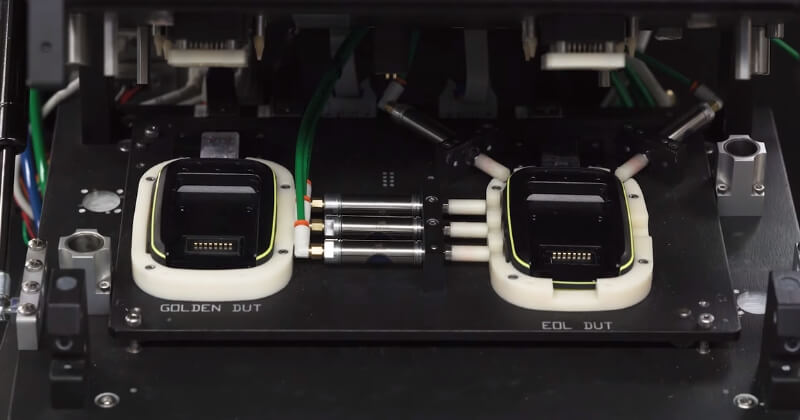
A standard hipot test follows five steps. First, test points are connected according to the product design, including primary and secondary circuits, input and output terminals, power and chassis ground, and high voltage and low voltage zones. Second, the voltage rises slowly along a programmed ramp so a sudden surge does not cause false failures. Third, the voltage is held for the required duration, typically 1, 3, 5 or 60 seconds for certification testing. Fourth, the instrument continuously monitors leakage current. Fifth, the tester automatically judges the result, stopping immediately on a fail and recording pass or fail data for traceability.
Correct fixturing matters as much as the instrument. Probes must contact the right nets, isolation gaps must be respected and the fixture itself must not create parallel leakage paths that produce false results.
AC Hipot vs DC Hipot Testing
AC hipot testing is closer to the real working environment, makes insulation defects easier to find and is widely accepted for UL certification, but it draws larger test current and demands stronger safety protection. DC hipot testing produces smaller leakage current and suits automated production and products with large capacitance, while for many standards the DC test voltage is set higher, typically 1.414 times the AC value, to stress the insulation equally.
The right choice depends on the product standard and the failure mode you want to catch. Many power products are tested with AC for certification and use DC in high volume line testing where speed and automation matter.
Test Standards and Voltage Selection
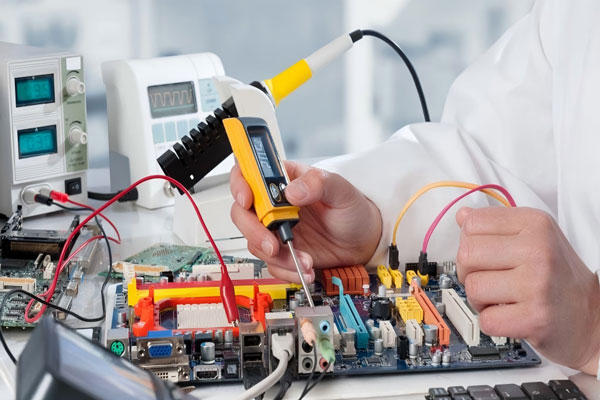
Common safety references are UL 61010 for measurement and control equipment, UL 62368-1 for audio video and ICT equipment, IEC 60601 for medical devices and IEC 60950-derived requirements for power supplies. Automotive and industrial programs often add their own internal standards on top.
Test voltage is normally calculated from the working voltage with a safety multiplier and may be raised for reinforced insulation, high altitude products or contamination environments. Clearance and creepage distance designed into the PCB must support the voltage class, otherwise even a perfect process cannot pass certification.
Design for testability also reduces cost. Adding dedicated high voltage test pads, keeping clear separation between primary and secondary zones, and documenting the voltage class early help the manufacturer build a fixture that tests every required net pair quickly. When the board layout is part of the PCB design and layout review, hipot requirements are built in instead of retrofitted, which shortens validation time.
How Hipot Fits the Full Test Strategy
Hipot testing complements rather than replaces other tests. SPI and AOI catch soldering defects, X-ray checks hidden BGA joints, ICT verifies opens and shorts, flying probe suits prototypes, and functional test confirms the board works as designed. The hipot test adds the electrical safety dimension that none of the others cover.
Because each test finds a different class of defect, the strongest PCBA quality system combines them in one flow with full data traceability. gopcb runs this combination inside its turnkey PCB assembly service so customers receive boards that are electrically safe and fully functional.
2026 Hipot Testing Cost Reference
Cost depends on product complexity, test voltage, batch size and whether a custom fixture is required. Sample level PCBA hipot testing typically costs 15 to 50 USD per board. Small batch production runs 5 to 20 USD per board, medium batches 1 to 5 USD per board and high volume automated lines less than 1 USD per board. A custom high voltage test fixture costs roughly 100 to 500 USD per set.
When hipot is part of the complete PCBA flow, it represents only a small fraction of total manufacturing cost while protecting against expensive repairs and recalls, which gives it one of the best returns on investment in quality engineering.
Best Practices
Set the test voltage and leakage threshold according to the product standard rather than copying another project. Remove flux residue and contamination before testing. Consider clearance and creepage in the PCB layout from the start. Run the test after assembly, cleaning and conformal coating are complete. Calibrate test equipment regularly, keep complete data traceability and perform root cause analysis with corrective actions on every failed unit.
With these practices, hipot testing becomes a controlled quality gate instead of a bottleneck, and consistent data makes process improvements measurable.
FAQ
Does every product need a PCBA hipot test? Not every product is required to have one, but high voltage power supplies, medical devices, automotive electronics, industrial controls and UL or IEC certified products normally need it.
What is the difference between hipot and insulation resistance testing? Insulation resistance is measured at low DC voltage, while hipot applies much higher AC or DC voltage to find breakdown under extreme conditions.
Can hipot testing damage the PCB? When voltage, time and leakage limits are set correctly, hipot is non destructive and will not damage a good board, although incorrect parameters can stress sensitive components.
How do I choose AC or DC testing? AC is closer to real operating conditions and suits most certifications, while DC gives smaller leakage and fits automated production and capacitive products.
Can hipot replace functional test? No. Hipot verifies insulation and withstand capability while functional test verifies that the product works as designed, so both are needed together.
Get a PCBA Hipot Test Quote
The PCBA hipot test is one of the most effective ways to guarantee electrical safety, reliability and certification compliance. It finds insulation defects, leakage paths and weak dielectric points before products reach customers, and when combined with SPI, AOI, X-ray, flying probe, ICT and functional test it creates a complete PCBA quality system. gopcb provides DFM review, board fabrication, SMT assembly and full electrical safety testing for industrial, medical, automotive, power, new energy and communication products. Send your design files for a free DFM review and a PCBA hipot test quotation today.