Rework and Repair of PCB Assemblies
Rework or Repair
The two words describe different things. Rework is the correction of a board that does not meet specification, restoring it to the intended design, such as replacing a component placed in the wrong orientation. Repair is the restoration of a damaged board to a usable condition, often by a method that differs from the original, such as adding a wire to a broken track. The distinction matters because the two have different acceptance criteria, different documentation and different risk. A factory that treats them as one activity will either scrap boards that could be repaired or ship repairs that should have been scrapped.
What Makes a Board Repairable
Repairability is decided by the design as much as by the defect. A board with a thick laminate, a high glass transition temperature and few layers tolerates heat better than a thin, high density board with a low grade of laminate. Fine pitch devices, area array packages and boards with multiple thermal cycles already in them are harder, because the remaining thermal budget is small. Where a pad is damaged, the ability to repair depends on whether a spare pad, a test via or a solderable track is available. Designing with a modest amount of repair in mind, including test points and a few spare pads, costs little and can save a lot.
Hand Soldering and Hot Air
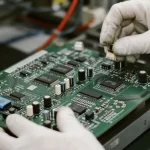
Most rework is done with a soldering iron or a hot air station, and the method should be matched to the joint rather than chosen by habit. A small passive is removed with two irons or with hot air; a fine pitch package needs hot air with a controlled nozzle and a preheat; a ball grid array needs a rework station with a profile, a reball or a fresh paste print and often a stencil. The common failure in hand rework is excessive temperature and excessive time, which damages the pad, the laminate or the neighbouring parts. Preheating the board from below is the single most effective technique for keeping the local temperature down and the dwell short.
Thermal Limits and Cycles
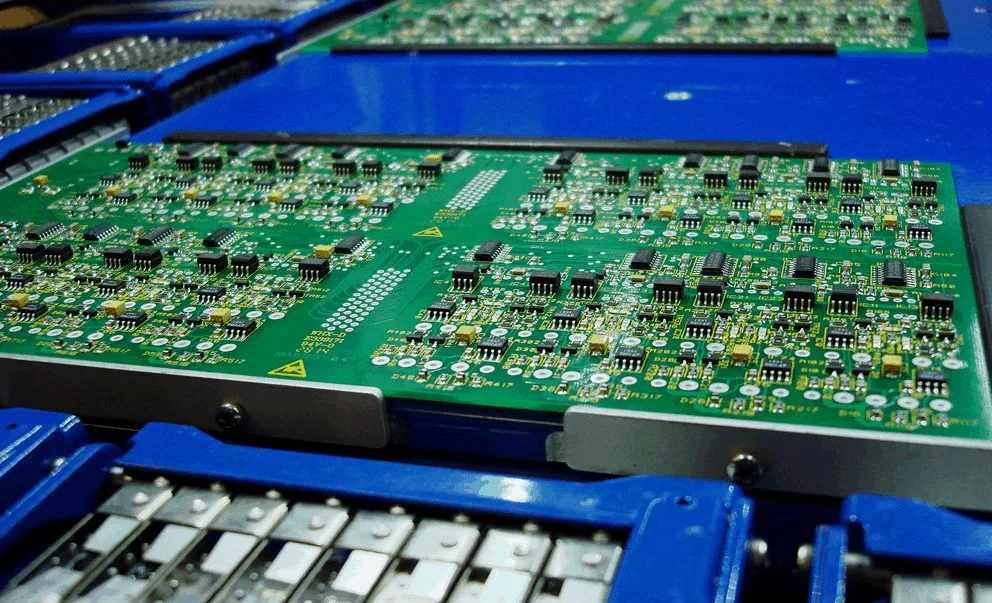
A board has a thermal budget. Every reflow cycle, every rework operation and every bake consumes part of it, and the damage accumulates in the laminate, the plating and the intermetallic layer of the joints. The temperature of a rework operation should be kept as low as the alloy allows, the dwell as short as the joint requires and the number of operations limited by the product’s specification. Recording the cycles a board has been through is part of its history and should be maintained, because a board that has been reworked three times is a board with a different reliability expectation from a new one.
Moisture and Bake Before Rework
A board that has been in storage or in service has absorbed moisture, and heating it quickly can cause delamination or popcorning. Where the board has been out of a dry environment, a bake before rework is advisable, at a temperature and duration compatible with the parts and the laminate. The bake is not free, since it consumes thermal budget and time and can affect the solderability of the pads, so it should be applied where the risk justifies it rather than as an automatic step. The parts’ own moisture sensitivity should be considered as well, since some components cannot be heated at all without damage.
Documentation and Verification
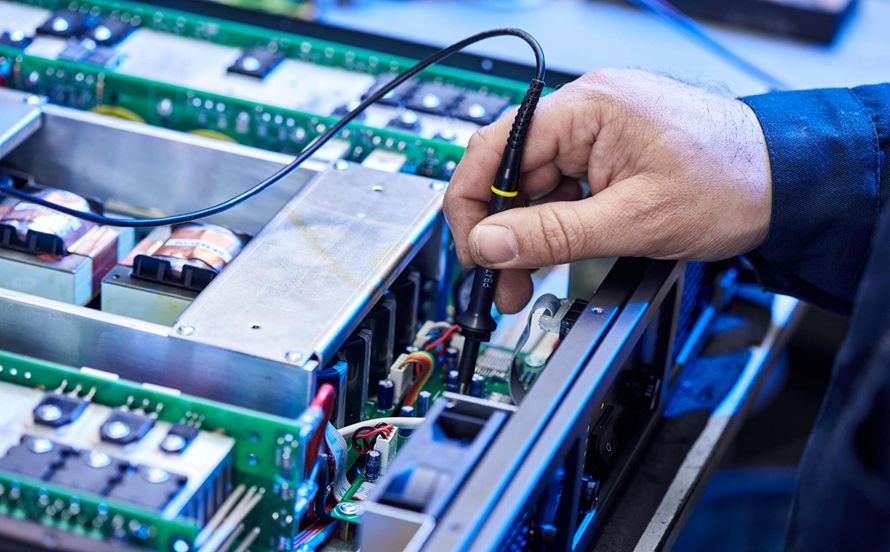
A repaired board should be documented. The record should identify the defect, the method, the materials used, the operator and the date, and it should state whether the repair changes the form, fit or function. Verification after a repair should be at least the test the board passed originally, and where the repair touches a critical net, a more specific check. Where a repair is visible, such as a wire or a reworked area, the customer’s acceptance criteria decide whether it is permitted at all; some products forbid repairs entirely, and that requirement has to be known before the work is done rather than afterwards.
Making Rework Rare
The best rework is the rework that does not happen, so the effort belongs in the process. A first article that catches a systematic error, a printer that holds its volume, a profile that is correct for the assembly and a placement program that is verified all reduce the number of boards that ever need attention. Where the same defect keeps appearing, the response should be a process change rather than a faster repair, because a repair operation that is busy is a sign that the process is not. Tracking the rework rate by defect type is the feedback that closes that loop.
The Cost of a Repair
A repair costs more than the labour it consumes. It carries the risk of a latent defect that will appear in the field, it consumes thermal budget that may be needed later, and it complicates the traceability of the unit because the board no longer matches its process record. Where a repair is considered, the decision should compare the cost of the repair, including the risk and the documentation, against the cost of replacement. On a cheap board the replacement usually wins; on an expensive or long lead assembly the repair is worth doing properly rather than quickly.
FAQ
What is the difference between rework and repair? Rework restores a board to the intended design; repair restores a damaged board by a method that may differ.
How many times can a board be reworked? It depends on the product’s thermal budget and specification; the cycle count should be recorded.
Why preheat before rework? To reduce the local temperature and dwell, which limits damage to pads, laminate and neighbouring parts.
Should a board be baked before rework? Where it may have absorbed moisture, yes, within the temperature limits of the parts and the laminate.
Are repairs always allowed? No. Some products prohibit repairs, and that requirement must be known before the work is done.
Conclusion
Rework and repair are legitimate operations when they are controlled, documented and verified, and they are a symptom when they are routine. Keep the heat low, the time short and the record complete. Repair discipline belongs to quality management, the assembly process it corrects sits in PCB assembly, and the placement and reflow that produce the board belong to SMT PCB assembly. Repair policy for a new product is settled during prototype PCB assembly in 2026.