Cost Balance Point Analysis Between Small Batch Prototyping and Mass manufacturing
The cost structure of PCB manufacturing has significant nonlinear characteristics. Its unit cost does not decrease linearly with order quantity. Instead, it is constrained by the fixed cost allocation and variable cost superposition effects of multiple process links. In the transition from design verification to mass production, engineers often face a key decision: when to switch from small batch prototyping, usually 1 to 5 sets with 1 to 10 pieces per set, to mass production, typically 500 pieces per batch or more. This critical point is not determined by a single parameter. It is determined by the dynamic game between upfront inputs such as photoplot file processing fees, film production, lamination mold debugging, solder mask and legend exposure tooling reset, AOI program reloading, and flying probe test fixture customization, and the marginal cost of single board materials and processing.
Composition and Allocation Logic of Fixed Cost Items
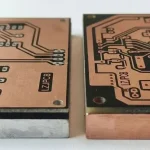
In the small batch prototyping stage, manufacturers need to independently perform engineering preparation work for each order. For example, the first prototyping of a 6-layer HDI board requires generating a dedicated Gerber parsing script, verifying drilling data precision, with manual review of all 0.15 mm microvia coordinates under a plus or minus 0.05 mm tolerance requirement, creating a panel layout template for the laser direct imaging machine, and completing zone-by-zone calibration of solder mask opening parameters. Such engineering service fees usually fluctuate between 800 and 2,500 yuan and do not grow with the number of boards. When the order quantity increases to 200 pieces, this fee is diluted to 4 to 12.5 yuan per board. After increasing to 1,000 pieces, it is diluted to 0.8 to 2.5 yuan. It is worth noting that the setting of interlayer alignment compensation values for multilayer boards, calibration of copper deposition chemical activation cycles, and recalibration of lamination temperature curves for high-frequency materials such as Rogers 4350B are all non-reusable fixed inputs. Their allocation effect directly affects the position of the balance point.
Material Utilization and Panelization Efficiency Threshold
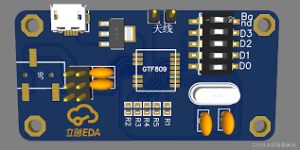
Materials account for 35 to 60 percent of PCB cost, and panelization efficiency is a key lever affecting material cost. Taking a double-sided board with dimensions of 80 mm by 60 mm as an example, on a standard 24 inch by 18 inch substrate, about 610 mm by 457 mm, the single board utilization rate in small batches is only 62 percent because at least 5 mm process edges and 3 mm optical positioning holes must be reserved, resulting in a waste rate as high as 38 percent. When the order quantity reaches 300 pieces, by optimizing the panelization matrix, such as using a 4 by 4 grid arrangement and enabling V-Cut separation grooves, the utilization rate can be increased to 89 percent, and the waste rate can be compressed to 11 percent. Measured data shows that when the number of single boards in a panelization unit is 16 pieces or more and the total panelization area utilization rate reaches 85 percent or more, the material cost inflection point appears. At this time, the differences in copper foil loss per unit area, substrate cutting loss, and residual edge recovery value tend to converge, and the contribution of further increments to material cost optimization approaches zero.
Structural Changes in Testing and Inspection Costs
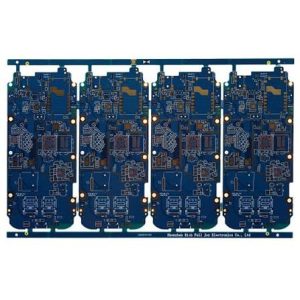
Flying probe test is suitable for small batch rapid verification. Its single board test time is 120 to 180 seconds, and the single board test cost after equipment depreciation and labor cost allocation is about 18 to 25 yuan. But when the order quantity exceeds 500 pieces, switching to fixture-based ICT test is more economical. Although the fixture development fee is as high as 6,000 to 12,000 yuan, the single board test time is shortened to 8 to 12 seconds, and functional test can be performed simultaneously. Taking a certain power management module PCB as an example, after using the fixture, the single board test cost dropped to 3.2 yuan, a reduction of 82 percent compared with flying probe. The break-even point calculation formula for this conversion is: break-even pieces equals fixture development fee divided by flying probe single board cost minus fixture single board cost. Substituting typical values, the result is 476 to 588 pieces. This is the core cost inflection point in the testing link.
Supply Chain Response Cycle and Hidden Cost Weight
Small batch prototyping usually uses expedited channels, such as 24-hour shipment. Suppliers charge a 15 to 30 percent expedite fee and prioritize scheduling high-liquidity general-purpose substrates such as FR-4 1.6 mm. Mass production enables long-cycle strategic procurement. For example, locking in a roll material quota for Rogers RO4350B 60 days in advance can obtain an 8 to 12 percent price discount while avoiding copper price fluctuation risks. In addition, small batch orders are often arranged during production line changeover gaps. The overall equipment effectiveness, or OEE, is below 65 percent, causing unit energy consumption and labor costs to rise. Mass production orders enjoy continuous full-load scheduling with OEE of 88 percent or more, significantly improving single board electroplated copper thickness control precision of plus or minus 10 percent and solder mask thickness consistency of 25 to 35 micrometers, indirectly reducing subsequent SMT first pass yield losses. According to statistics from a certain EMS factory, when a single batch order is 800 pieces or more, the rework cost savings brought by improved process stability are equivalent to reducing the comprehensive single board cost by 1.7 yuan.
Engineering Judgment Method for Dynamic Balance Point
In practical applications, a weighted cost model should be used for multi-dimensional accounting: total cost equals the sum of engineering fees, material fees, processing fees, testing fees, and logistics fees, plus hidden costs including OEE loss, inventory capital occupation, and quality abnormality disposal. A piecewise linear regression method is recommended. Collect actual quotation data from 5 different batch sizes, such as 5, 50, 200, 500, and 1,000 pieces. After removing outliers, fit two straight lines with different slopes. The small batch segment, 200 pieces or less, has a steep slope, reflecting the dominance of fixed costs. The mass production segment, 500 pieces or more, has a gentle slope, reflecting economies of scale. The horizontal coordinate of the intersection of the two lines is the theoretical balance point. A certain RF front-end PCB case shows that its balance point is at 623 pieces. Below this value, the small batch unit cost is 128.4 yuan. Above this value, the mass production unit cost stabilizes at 76.9 yuan, a decrease of 40.2 percent. It should be emphasized that if there is an unfrozen ECN change risk in the design, or the customer delivery cycle is compressed to less than 15 days, the balance point should be raised by 20 to 30 percent to reserve flexible buffer space.
In summary, the cost balance point is not a static value. It is a dynamic solution nested within the triple constraints of technical feasibility, supply chain resilience, and business rhythm. When making decisions, engineers need to work with procurement, production, and quality departments to conduct rolling calculations based on real-time BOM cost databases and historical production line OEE data. They should incorporate PCB layer complexity, surface treatment processes such as ENIG versus OSP, special material proportion, and test coverage requirements as core adjustment factors into the model. Only in this way can the optimal coordination of research and development efficiency and manufacturing economy be achieved while ensuring product reliability.
Gopcba provides professional PCB manufacturing, PCB assembly, prototype PCB assembly, low-volume PCB assembly, high-volume PCB assembly, SMT PCB assembly, through-hole PCB assembly, mixed-technology PCB assembly, flex PCB assembly, PCB design layout, components procurement, rapid PCBA prototyping, conformal coating, PCBA testing, box build assembly, wire cable harness assembly, medical PCBA, telecommunications PCBA, energy PCBA, industrial PCBA, artificial intelligence PCBA, Internet of Things PCBA, PCB capabilities, and PCBA capabilities. You can also visit our blog, learn about us, see why us, review our quality management, or contact us for more information.