PCB Prototype or Turnkey PCBA Assembly: Which to Order
Every board goes through a prototype stage, but what arrives at the engineer bench at the end of it depends on what was ordered. A fabricator asked only for bare boards ships bare boards: drilled, plated, masked and silkscreened, with every component location empty. A fabricator asked for assembly ships a populated board that can be powered up the same day. That difference is a purchasing decision taken at the quote stage, and getting it wrong costs a week.
What a Bare Board Prototype Delivers
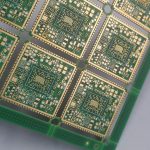
A pcb prototype ordered as a bare board is a process qualification part. It proves that the artwork, the drill programme, the layer registration and the controlled impedance targets are correct, and it lets the engineer measure the features that matter: pad sizes, annular rings, hole diameters, soldermask clearance and the true position of connector footprints. Nothing on it is tested at component level because there are no components.
Everything else is downstream work that belongs to the customer. Components have to be purchased, inspected and stored, a stencil has to be ordered or laser cut, and the board has to be programmed into a placement machine, reflowed and inspected. For a design that will be hand assembled in small numbers, that is a reasonable path. For anything carrying fine-pitch packages, it is a reliable source of systematic defects.
What Turnkey Assembly Changes
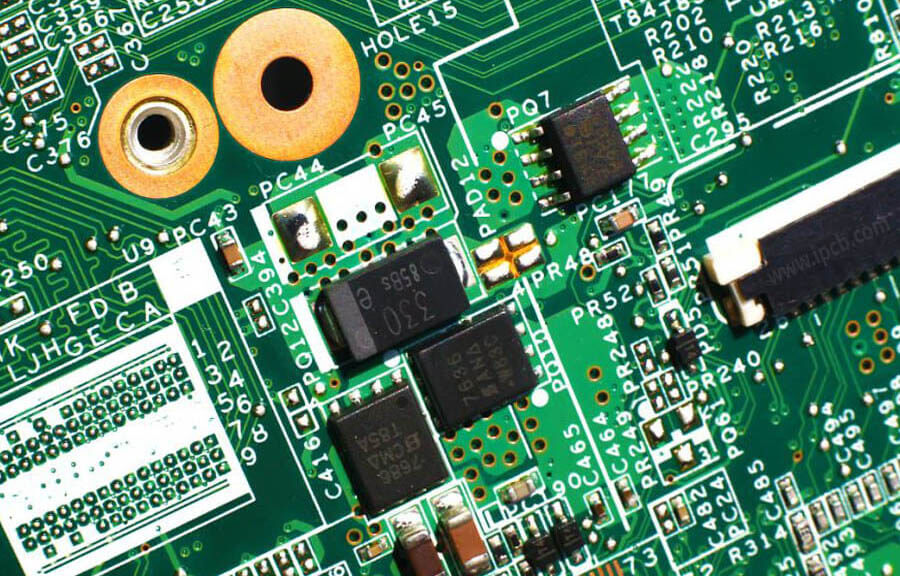
Turnkey pcba assembly moves that work to the fabricator. The customer supplies design files and a parts list, and receives a board with components placed and reflowed. In the simplest arrangement the customer ships parts from their own stock and the factory performs soldering only. In the fuller arrangement the factory sources components as well, which shifts supply risk to the supplier but demands a clean and unambiguous parts list. The hand-off between design and production is mapped in PCBA development process.
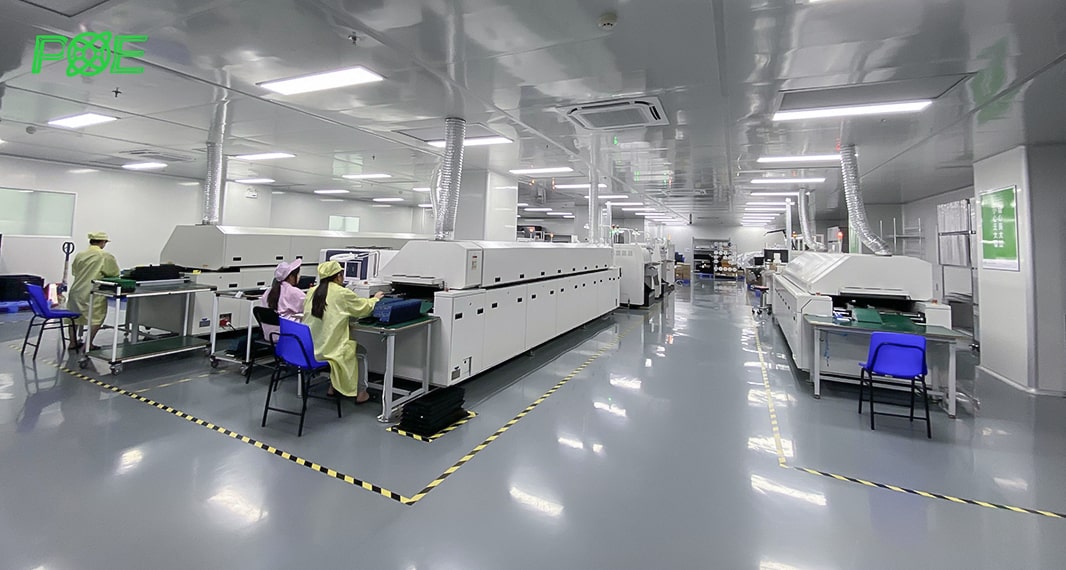
The practical difference is where the boundary of responsibility sits. With a bare board, a missing pad is a fabrication problem and a tombstoned capacitor is the customer problem. With turnkey assembly, both come back to the same supplier, so the failure investigation does not stall while two parties debate whose process caused the defect.
The Bill of Materials Question
A bill of materials is the single document that decides whether turnkey assembly runs smoothly. Reference designators, manufacturer part numbers, package names, tolerance and voltage ratings, and approved alternates all have to be stated explicitly. Where a part is out of stock, an approved alternate list lets the factory substitute without returning for approval, which is often the difference between a one week and a three week turnaround.
If the factory is to source parts, the quantities should be listed as assembly quantity plus attrition, not as the exact number of placements. Fine-pitch parts are lost to placement errors and rework, and a build that starts with zero spares will stop. If the customer supplies parts, they must arrive kitted and labelled by reference designator, because a loose bag of 0402 resistors cannot be reconciled against a placement programme.
When Bare Boards Are the Right Answer
Bare board delivery still makes sense in several situations. A bring-up board for a new processor may be assembled in-house on a hot plate while the engineer swaps parts and instruments the rails, which is faster than any external service. Boards carrying only through-hole parts, large modules or press-fit connectors are easy to assemble by hand. Designs with a deliberately loose placement density also tolerate manual work.
The decision turns on package mix and volume. Once a design includes 0402 passives, QFN or BGA packages, or a connector with 0.4 mm pitch, an smt assembly service with a proper stencil and reflow profile is not a luxury. Placement accuracy, paste volume and thermal uniformity are all outside what a hand process can hold, and the resulting faults are intermittent rather than obvious.
Stencil, Paste and Reflow Readiness
The stencil is the first thing to check when assembly is quoted. Aperture sizes should be derived from the paste volume the pad needs, normally around 0.8 to 1.0 of the pad area for a 0.5 mm pitch device, with a slight reduction on fine pitch to avoid bridging. Stencil thickness of 0.10 mm to 0.12 mm suits most fine-pitch work, with a step-down where a single board carries both fine and coarse parts.
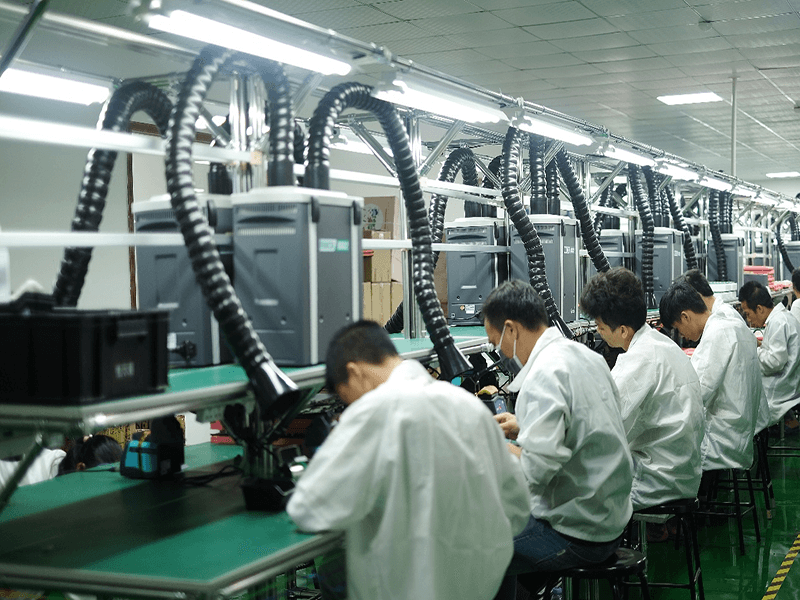
Reflow profile is the second item to confirm. A lead-free profile peaks near 245 degrees Celsius with roughly 60 to 90 seconds above liquidus, while a leaded profile peaks near 220 degrees Celsius. Boards carrying a mix of large thermal masses and small packages need a soak long enough to equalise temperature across the assembly, or small parts will reach reflow while large ones are still below the paste activation window. Placement drift causes its own failure modes, described in SMT component shift causes.
First Article Inspection and Reporting
A first article inspection is what separates a delivered assembly from a verified assembly. It compares the placed board against the design intent using the placement programme output, an automated optical inspection pass and, where budget allows, X-ray of the hidden joints under area array packages. The report should list every deviation rather than simply declaring a pass.
Ask for the inspection data even when the build is small. A report that shows placement offsets, paste volume statistics and any reworked reference designators gives the engineer something to act on when the second build misbehaves. It also establishes a baseline, so a process shift in a later batch can be identified rather than guessed at.
Cost and Schedule Realities
Assembly cost scales with placement count, not board area. A panel of two hundred placements across a small board costs more to assemble than a large board carrying twenty connectors. Tooling, stencil and programming charges are one-time costs, which is why the same board becomes dramatically cheaper per unit once the volume justifies keeping the programme on file.
Schedule is dominated by component availability rather than by machine time. If a single part has a twelve week lead time, the assembly date cannot be earlier than that regardless of how the order is placed, so checking availability before releasing the order saves more calendar time than any negotiation. Ordering the bare board first and the assembly afterwards is a valid strategy only when the fabricator keeps the panels on the shelf.
Communicating the Order Clearly
State three things in writing: whether the delivery is bare board or populated, who supplies the components, and which inspection report is expected. Everything else follows from those answers. A factory that understands the intent will flag a footprint that cannot be reflowed and a parts list that cannot be sourced, but only if the request reaches the engineering desk rather than the order desk.
Special instructions belong on the same document. Conformal coating, depanel requirements, cleanliness class, moisture-sensitive part handling and any marking requirement should be listed once, in the fabrication note on the board rather than in an email thread, and the same discipline applies to the assembly drawing. The stackup decisions behind the bare board are covered in multilayer prototype requirements.
FAQ
Can a prototype be assembled without a stencil? Only in a limited way. Dispensing paste by hand or using a needle dispenser works for coarse packages and a handful of parts, but it cannot control volume well enough for fine pitch. A laser cut stencil is inexpensive and removes the variable entirely.
Should the customer or the factory buy the components? If the design is still changing, the customer should buy, because leftover stock stays under their control. If the design is frozen, the factory should buy, because approved alternates and consolidated shipping usually shorten the schedule and reduce total cost.
How many spares should be ordered? A practical starting point is two to five per cent of each passive value and one extra of every active part and connector. Attrition on a first build is always higher than on a mature one, and a few spare dollars are cheaper than a stalled build waiting on one part.