What Drives Flexible PCB Cost
Flexible printed circuits are the default interconnect in products where space is tight and the harness has to bend. They are light, thin, and can be shaped to follow an enclosure, which is why they appear in phones, wearables, cameras, and instrument clusters. The cost question arrives immediately afterwards, and the honest answer is that a flexible PCB price is the product of six primary variables plus a set of secondary ones, all of which can be discussed before a quote is issued.
The six primary cost drivers
Layer count, board size, production quantity, base material, thickness, and minimum line width decide most of the price. Each of them changes how much material is consumed, how many process steps are needed, and how tightly the process has to be controlled.
Nothing in that list is unusual for a circuit board. What makes flexible circuits different is the sensitivity: polyimide laminates cost far more than rigid laminate, thin material is harder to handle, and a fine line width on a flexible substrate demands more precise imaging and etching than the same feature on a rigid board.
Layer count
A single-layer flexible circuit is the least expensive option, with a simple design landing in the low single-digit dollar range at moderate quantity. A double-layer circuit sits above it, and a multilayer flexible circuit of three or more layers climbs sharply, because each additional layer adds lamination cycles, registration steps, and drilling or via work.
Coverlay and stiffener requirements usually arrive with the layer count. A circuit that needs openings in a cover film, or a rigid stiffener behind a connector, is priced with those operations included rather than as an afterthought.
Board size
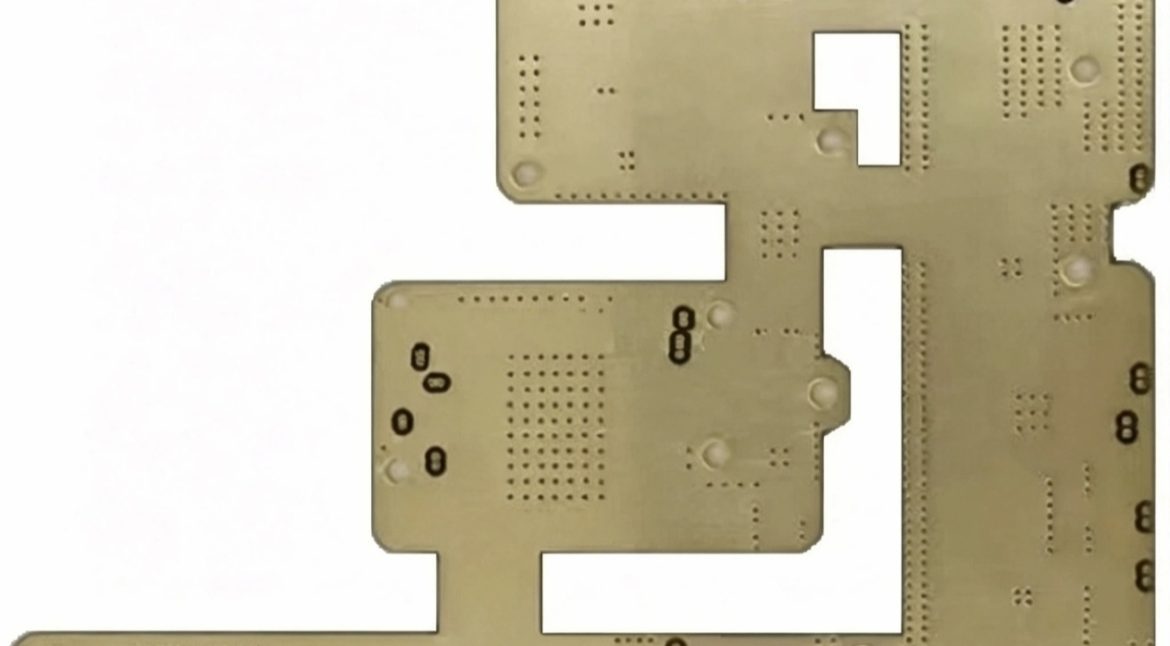
Larger circuits consume more material and more machine time, so size drives cost almost linearly until the design no longer fits the standard panel. Small circuits used in handheld devices, medium circuits used in consumer equipment, and large circuits used in automotive or industrial assemblies each occupy a different price band.
Size also affects yield. A circuit that fills most of a panel has less margin for handling damage and registration error, and a single defect in a large circuit wastes more material than the same defect in a small one. Panel utilisation therefore matters as much as the outline itself, and the design decisions that influence it are the same ones that affect production of any board; our guide to layout decisions that affect production covers them.
A modest change in outline can move a flexible circuit from a comfortable panel layout to an inefficient one, and the price follows the panel rather than the design intent.
Production quantity
Quantity changes the unit price more than any other variable. Small orders carry the full tooling and setup cost on a handful of pieces, so the unit price is dominated by fixed charges. As quantity rises, those charges are spread across more units and the material cost becomes the visible part of the price.
This is why a flexible circuit quoted as a prototype is rarely representative of its production cost. The useful exercise is to ask for the price at two or three quantities, so the fixed and variable components become visible and the decision can be made on the right number.
Base material
Material choice follows the thermal and mechanical requirement. Polyimide is the standard for demanding flexible circuits because it tolerates heat, resists chemicals, and stays flexible across a wide temperature range. Polyester is used for cost-sensitive products with benign requirements, and it is cheaper per unit, but it cannot take the same soldering temperatures.
Specialty materials such as PTFE and liquid crystal polymer serve high-frequency or extreme-temperature designs. They are specified when the electrical requirement cannot be met any other way, and they are priced accordingly, often several times above a polyimide construction of the same size.
Thickness
Thinner flexible circuits bend more easily but are harder to handle, so precision in lamination, registration, and handling pushes the price up for constructions below 0.1 mm. Standard material between 0.1 mm and 0.5 mm is the most common and the easiest to source. Constructions above 0.5 mm are used for heavy-duty or industrial products where the circuit must survive repeated flexing or carry more current.
Thickness is a stack decision rather than a single number, because coverlay, adhesive, and stiffener thicknesses all contribute to the finished profile. A requirement that the circuit must fit a specific slot in an enclosure therefore constrains the whole stack, and the constraint should be stated in millimetres rather than as a preference.
Line width and density
Minimum line width sets the process window. A pattern of 5 mil or wider can be produced on conventional flexible circuit equipment and covers most consumer and industrial designs. Fine-line circuits below 5 mil allow higher routing density and appear in advanced products, but they demand tighter imaging, etching, and inspection control, and the price reflects that.
The same logic applies to spacing and via size. A design that pulls every dimension to the process minimum leaves nothing for process variation, so it is either quoted at a premium or returned with a request to relax the rule.
Secondary factors that still move the price
Surface finish is the most visible of these. Hot air solder levelling is the traditional low-cost option, electroless nickel immersion gold provides a flat surface and a long shelf life at a higher price, and immersion silver sits between them. The finish also has to suit the assembly process, so choosing purely on price is a false economy.
Other secondary items include the soldering process, overall design complexity, test requirements, coverlay and stiffener details, packaging, and certification documentation. Each is modest on its own, and together they can account for a meaningful share of a quotation, which is why an itemised quote is easier to check than a single lump sum.
What regional price differences reflect
Prices for the same flexible circuit vary by region, and the variation is real. Regions with mature flexible circuit capacity, high-volume material purchasing, and deep process experience produce at lower cost. Regions with strict quality systems, advanced process capability, and higher labour cost produce at greater cost. The gap is not only labour: it includes material sourcing, equipment capability, and the amount of engineering support included in the service.

The useful comparison is not price per circuit but the cost of a circuit that works. A lower quotation that needs two prototype rounds costs more than a higher one that passes on the first build.
How to reduce flexible PCB cost
Ask for the price at several quantities with the specification held constant, so the effect of tooling is visible. Design to standard line width and spacing unless the density requirement is genuine. Do not add layers for margin; add them when a signal or a return path needs them. Keep the surface finish as simple as the assembly process allows, and panelise the parts so the material is used efficiently.
Two of those decisions are made at the layout stage and are hard to reverse later, which is why flexible PCB cost belongs in the design review rather than only in purchasing. The stackup choices behind it are covered in our guide to multilayer prototype requirements, and the rules that decide how well parts fit a panel are discussed under board outline and mounting design.
FAQ
Why is my flexible circuit much more expensive than a rigid board of the same size? The base material costs more, the processing is more delicate, and the coverlay and stiffener operations have no equivalent on a rigid board. At low quantity the difference is dominated by tooling and handling.
Does a thinner circuit always cost more? Below about 0.1 mm the handling difficulty dominates, so price rises as the material gets thinner. Within the standard range the difference is small.
Can I get a production price from a prototype order? Only if the specification and the quantity are close. Prototype unit prices are dominated by fixed costs, so they overstate the production price by a large factor.