2-Layer Flex PCB: Cost Structure and Design Choices
A two layer flexible circuit looks simple on a drawing, but its price is set by a stack of decisions that rigid boards never face: which base film is used, how the copper is protected, whether stiffeners are bonded, and how many connectors have to survive repeated bending. Buyers who understand those levers can usually take twenty to forty percent out of a quotation without changing performance. This guide explains what a 2-layer flex PCB really costs and where the money goes.
What Drives the Price of a 2-Layer Flex PCB
The base film is the first cost. Polyimide dominates high reliability work because it survives reflow and keeps its mechanical properties over a wide temperature range, while polyester is cheaper and adequate for low temperature products such as disposable sensors and simple display tails. Copper weight, via count, surface finish and the number of assembly steps all add on top, and the total is dominated by material when volumes are low and by process time when the design is dense.
Panel geometry matters more than most buyers expect. Flexible circuits are built on small panels, so a board that does not nest well wastes expensive film. Thickness above about 0.4 mm adds handling difficulty and typically 5 to 10 dollars per board, and a design that needs several connector bonding steps will cost more than one that terminates in a single stiffened tail.
Material Choice: Polyimide Versus Polyester
Polyimide base film is priced around 10 to 30 dollars per square foot, and it is the default for anything that will see soldering, thermal cycling or a long service life. Its dielectric properties are stable, its dielectric strength is high and it tolerates the lamination temperatures used for multilayer flex. For a 2-layer flex PCB that must survive assembly and field use, this is usually the correct starting point.
Polyester costs roughly 5 to 15 dollars per square foot and is fine for low temperature applications, but it cannot be soldered with conventional processes and it ages faster under heat and humidity. Copper weight then sets current capacity and bending behaviour. One ounce copper is standard and adds about 0.10 to 0.20 dollars per square inch, while three ounce copper raises cost by 25 to 40 percent and reduces flexibility, which is a poor trade on a circuit that has to bend repeatedly.
<img src="https://www.gopcba.com/wp-content/uploads/2026/08/Figure-2.-Fully-automated-material-cutting-production-line.jpeg.webp" alt="2-layer flex PCB with stiffener and connector bonding” />
Fabrication Steps That Add Cost
Etching and lamination for a two layer flex circuit generally run 0.5 to 2.00 dollars per square inch depending on feature density. Plated through holes add roughly 0.10 to 0.50 dollars per hole, so via count is a direct cost line and a design with hundreds of small vias can double the fabrication charge. Coverlay is the next item: the protective polyimide film with its adhesive layer must be aligned and pressed, and tighter openings around pads increase cost because alignment tolerance drives panel yield.
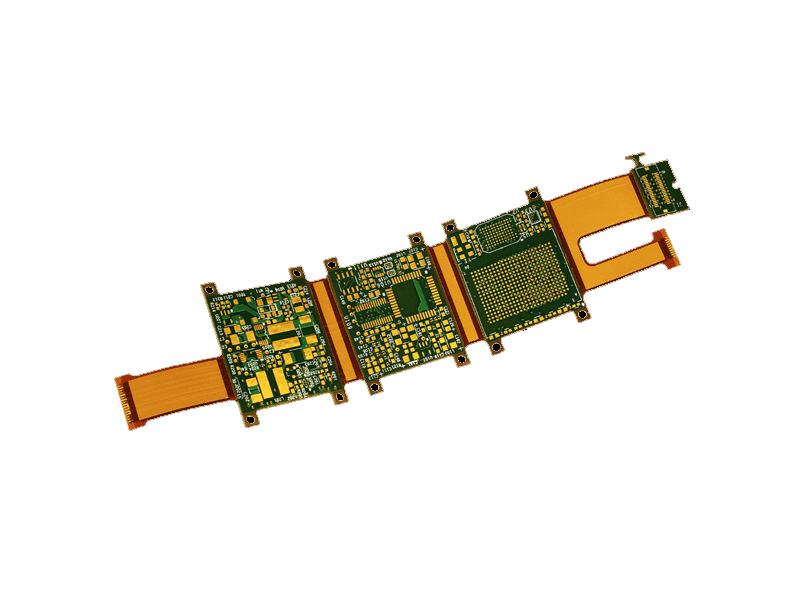
A stiffener is often required where connectors, switches or fine pitch components are mounted, and it can be polyimide, FR-4 or stainless steel. Adding a stiffener means another bonding operation, another alignment step and additional thickness variation. Reducing the number of stiffened areas, and consolidating them into one or two zones, is one of the most effective cost reductions available on a flexible design. Where the circuit needs environmental protection beyond the coverlay, the options are covered in conformal coating for board protection.
Copper Weight, Surface Finish and Geometry
Surface finish selection changes the price noticeably. Hot air solder levelling runs about 0.10 to 0.30 dollars per square inch but is harsh on thin flexible substrates. Organic solderability preservative costs 0.15 to 0.40 dollars per square inch and works for parts assembled quickly. Electroless nickel immersion gold is the most expensive at 0.50 to 2.00 dollars per square inch, and it is the usual choice when fine pitch parts, wire bonding or long shelf life are involved.
Trace geometry affects yield as well as price. Dynamic bend areas want traces routed perpendicular to the bend line with a smooth, gradual curvature, since a sharp corner concentrates stress and cracks first. Where length matching is needed, right angle routing of differential traces explains why gentle arcs outperform mitered corners on high speed nets. Impedance control on a 2-layer flex PCB is achievable, but the thin dielectric makes the trace widths narrow, so tolerance has to be negotiated with the fabricator.
Prototype, Small Batch and Volume Pricing
For small quantities of fewer than fifty pieces, a 2-layer flex PCB typically costs between 1 and 5 dollars per square inch, with the exact figure depending on material, feature density and finish. A prototype run of one to five designs commonly quotes at 200 to 500 dollars per design, largely because tooling and set up are spread over very few units. Tooling runs 50 to 200 dollars per design and set up for prototyping adds another 50 to 100 dollars.
Volume transforms the number. Batches of a hundred to a thousand pieces typically land at 10 to 50 dollars per board with the same design, and larger runs at a stable design continue to fall. The rules that govern how prototypes and volume builds differ in process control are set out in multilayer prototype requirements, and much of that reasoning carries over to flex. Expedited delivery adds 20 to 50 percent, so schedule pressure is a cost item rather than a free service.
Regional Comparison and Landed Cost
China remains the lowest cost source for flexible circuits. Small batch orders typically quote 5 to 15 dollars per board and volume production 1 to 3 dollars per board. The United States runs 15 to 40 dollars for small batches and 5 to 20 dollars at volume, while Europe quotes 25 to 60 dollars and 10 to 30 dollars respectively. India and Southeast Asia sit close to Chinese pricing on comparable designs.
Shipping and duties narrow the gap. Freight from China to the United States typically runs 30 to 100 dollars depending on size and speed, and import duty and documentation add several percent. When comparing quotations, the useful figure is the landed cost per good board, which includes tooling amortisation, freight and the expected yield of the design rather than the headline unit price alone.
Design Choices That Cut Cost
Four changes deliver most of the savings. Replace polyester only where it is adequate, keep copper at one ounce unless current demands more, consolidate stiffeners into as few zones as possible, and reduce via count by routing on both layers rather than stitching frequently. Choosing a finish that matches the assembly schedule instead of specifying gold by default also removes cost without touching reliability.
Nesting is the last lever. Flexible panels are small, so adjusting the outline to fit the fabricator’s standard panel and adding a shared tooling array can lift utilisation substantially. A partner such as gopcb can review the outline, the coverlay openings, the stiffener zones and the finish against the assembly plan, and usually identifies one or two changes that reduce cost before tooling is committed.
FAQ
Why does a 2-layer flex PCB cost more than a rigid board of the same size? The base film costs far more than FR-4, the panels are smaller, and coverlay and stiffener operations add handling steps that rigid boards do not require.
Is impedance control possible on two layer flex? Yes. Trace width and dielectric thickness determine the impedance, and the thin dielectric produces narrow traces, so tolerance should be agreed with the fabricator before release.
When is a stiffener necessary? Wherever a connector, switch or fine pitch component is mounted, or where the circuit is inserted into a mating part. It can be polyimide, FR-4 or stainless steel depending on stiffness and thickness requirements.