Layer Count: What Drives PCB Cost: The Levers That Matter
The cost of a printed circuit board is built up from a small number of cost drivers, and almost all of them are decided by the design rather than by the purchasing discussion. Knowing which lever moves which part of the price makes a cost reduction exercise concrete rather than speculative.
Layer Count and Its Cost
The layer count drives the material cost and the number of process cycles, and it is the largest single lever available. Each additional pair of layers adds cores, prepreg, an imaging cycle, an etching cycle and a lamination cycle, and it consumes part of the registration budget.
Reducing the count is therefore the first thing to examine, and it is only possible if the routing closes at the lower count. Attempting the reduction after the layout is complete is what makes it expensive; the decision belongs at the stack-up stage. Our layer count notes describe the trade.
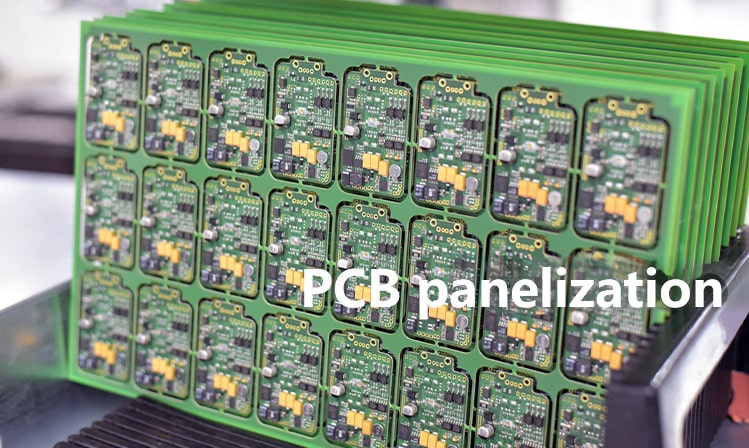
Panel Utilisation
The fraction of the panel that becomes product is a direct multiplier on the material cost, and it is affected by the outline, the spacing and the arrangement. An irregular outline wastes material that no amount of process improvement can recover.
Where the product allows, choosing an outline that tiles well and a panel arrangement that fills the sheet is worth more than most process optimisation. Our panelization notes describe how the arrangement is chosen.
Minimum Feature Size
Reducing the minimum line width and spacing increases the density that can be achieved and reduces the number of layers needed, but it also reduces the process yield. There is a point beyond which the yield loss costs more than the layers saved.
The practical rule is to design to the shop’s comfortable capability rather than to its advertised limit, and to reserve the limit for the small fraction of the design that genuinely needs it.
Surface Finish and Its Contribution
The finish is a small fraction of the board cost and a large factor in the yield of the assembly. A cheap finish that solders poorly costs more than an expensive one that works, because the cost of a rework is several times the cost of the plating.
The same reasoning applies to the storage period. A finish chosen for a short storage period and then stored for a year is not a saving; it is a deferred cost.
Tolerances and Their Price
A tight tolerance on a board dimension has a price, because it requires more measurement and a lower process speed. The tolerances that matter most are the finished thickness, the hole sizes and the impedance, and each should be specified only as tightly as the function requires.
The most common waste is an impedance tolerance tighter than the system needs. Half of the designs that specify a five per cent tolerance would work with ten, and the tighter figure costs money at every panel.
Volume and Setup Amortisation
At low volume the price is dominated by the setup: the tooling, the data preparation and the process qualification. At high volume those costs are amortised and the material dominates instead.
The consequence is that the same design should be costed differently at prototype and at production, and a decision that is correct at one volume may be wrong at the other.
Lead Time as a Cost
A shorter lead time normally costs more, and the premium is worth paying when the schedule depends on it. Where the schedule is not tight, the standard lead time avoids a cost that adds nothing to the product.
The largest lead time driver is the process step that is least available, which is often lamination for a high layer count or plating for a heavy copper design. Both are decided at the stack-up stage.
Where the Money Actually Goes
For most designs the cost is dominated by three items: the material, which follows the layer count and the panel utilisation; the process cycles, which follow the layer count; and the yield, which follows how close the design sits to the process limits.
The finish, the marking, the test and the packaging are smaller, and are usually worth optimising only after the first three have been examined. Our cost reduction notes describe the order to work in.
Additional Considerations for This Build
Practical attention to setup cost pays for itself here, because it decides whether the finished board behaves as the drawing intended. Where the requirement is not stated on the fabrication drawing or in the assembly notes, the shop has to assume a default, and that default is rarely the value the design was simulated with. Stating setup cost explicitly, together with the tolerance that applies, removes the assumption and keeps the result predictable from batch to batch.
Process Control and Verification
On a design of this kind, tolerance is the item that decides how the rest of the board is arranged. Keeping a sample from the panel turns a dispute into a measurement, because the same coupon can be re-examined by both parties without rebuilding the batch. Reviewing the design before the data is released is cheaper than correcting it after the panel is in the tank, because every step downstream inherits the decision made at the front end.
Documenting the assumption is part of the design work, and a short note on the drawing prevents a question that would otherwise arrive a day later and cost a day of schedule. The process window is set by the narrowest step in the flow, so an improvement anywhere else shows up as margin rather than as yield until that step is addressed.
A short note on the drawing about handling, storage or packaging is often worth more than an extra decimal place on a tolerance.
Process Control and Verification
On a design of this kind, tolerance is the item that decides how the rest of the board is arranged. Keeping a sample from the panel turns a dispute into a measurement, because the same coupon can be re-examined by both parties without rebuilding the batch. Reviewing the design before the data is released is cheaper than correcting it after the panel is in the tank, because every step downstream inherits the decision made at the front end.
Process Control and Verification
On a design of this kind, tolerance is the item that decides how the rest of the board is arranged. Keeping a sample from the panel turns a dispute into a measurement, because the same coupon can be re-examined by both parties without rebuilding the batch. Reviewing the design before the data is released is cheaper than correcting it after the panel is in the tank, because every step downstream inherits the decision made at the front end.
FAQ
What is the single biggest cost lever? The layer count, because it changes the material, the number of process cycles and the yield at the same time. It is also the hardest to change after the layout is complete, which is why the stack-up should be reviewed before the routing begins.
Does a smaller board always cost less? It costs less material, but it may cost more to build if it forces finer features or a tighter panelisation. The relevant measure is the panel area consumed per good board, not the board area alone.
How does gopcb quote a board? We quote from the stack-up, the outline, the panel arrangement, the finish and the tolerances, and we break the price down by those items so that the customer can see which one to change. Where a cheaper arrangement exists we quote both.