When choosing a PCB Assembly supplier, price and production capacity are important—but they are not the only factors that determine whether a PCBA project will succeed.
A supplier may have modern SMT equipment and competitive pricing, yet customers can still face inconsistent quality, uncontrolled material changes, delayed production, or poor traceability.
For companies developing industrial electronics, medical electronics, energy systems electronics, communication equipment, AI hardware, and other electronic products, these risks can become expensive once the product enters mass production.
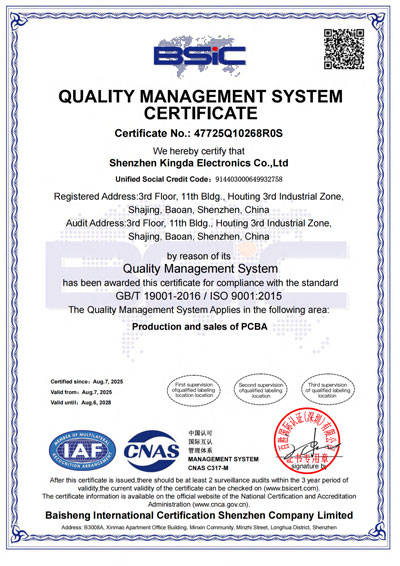
This is why an ISO9001 certified PCB Assembly supplier can provide an important advantage.
ISO9001 is not simply a certificate on the supplier’s website. When properly implemented, an ISO9001 quality management system provides a structured framework for controlling processes, managing suppliers, handling nonconformities, maintaining records, and continuously improving manufacturing quality.
For electronics companies looking for a reliable PCB Assembly partner, understanding how ISO9001 affects actual manufacturing processes can help you make a better supplier decision.
What Does ISO9001 Mean for PCB Assembly?
ISO9001 is an internationally recognized standard for quality management systems.
In PCB Assembly manufacturing, an ISO9001-based quality management system helps establish controlled processes across areas such as:
- Customer requirements
- Engineering and document control
- BOM and production data management
- Supplier qualification
- Incoming material inspection
- SMT and DIP production
- Process inspection
- Final inspection
- Nonconforming product control
- Corrective and preventive actions
- Production records and traceability
- Continuous improvement
The important point is that ISO9001 does not mean that every PCBA will automatically be defect-free.
Instead, it provides a systematic framework for controlling the processes that influence product quality.
For customers, this means that quality should not depend only on an individual operator or engineer. The manufacturer should have defined procedures for managing critical activities and responding when something goes wrong.
Why Does ISO9001 Matter When Choosing a PCB Assembly Supplier?
A PCBA project involves many interconnected processes.
A typical manufacturing flow may include:
BOM Review → Component Sourcing → PCB Fabrication → Incoming Inspection → SMT Assembly→ DIP Assembly→ PCBA Testing → Final Inspection → Shipment
A problem at any stage can affect the final product.
For example:
- An incorrect component may be purchased.
- A BOM revision may not be properly controlled.
- A process parameter may change without adequate documentation.
- A defective component may enter production.
- A soldering defect may not be detected early enough.
- A customer complaint may not be properly analyzed.
Without a structured quality management system, these issues can become difficult to control as production volume increases.
An ISO9001 certified PCB Assembly manufacturer should have documented processes designed to reduce these risks and provide a consistent framework for quality management.
7 Reasons to Choose an ISO9001 Certified PCB Assembly Supplier
1. Better Control of Customer and Engineering Requirements
PCB Assembly begins long before components are placed on the PCB.
The supplier needs to understand and control information such as:
- BOM
- Gerber files
- Pick-and-place files
- Assembly drawings
- PCB specifications
- Component specifications
- Testing requirements
- Packaging requirements
- Revision information
If different teams are working from different versions of the same file, production errors can occur.
A structured quality management system helps control documents and revisions so that production teams are working with the correct information.
For customers, this can reduce the risk of manufacturing a PCBA using outdated design data.
2. More Consistent Component and Supplier Management
Component quality has a direct impact on PCBA reliability.
A PCB Assembly supplier may source hundreds of different components for a single project, including:
- ICs and processors
- MOSFETs
- Diodes
- Resistors
- Capacitors
- Connectors
- Switches
- Electromechanical components
Supplier qualification and incoming material control are therefore important parts of PCBA quality management.
An ISO9001-based system provides a structured approach to supplier evaluation, purchasing control, incoming inspection, and nonconforming material management.
This is particularly valuable for customers with long-term production requirements, where component consistency is important across multiple batches
3. Controlled SMT Assembly and DIP Assembly Processes
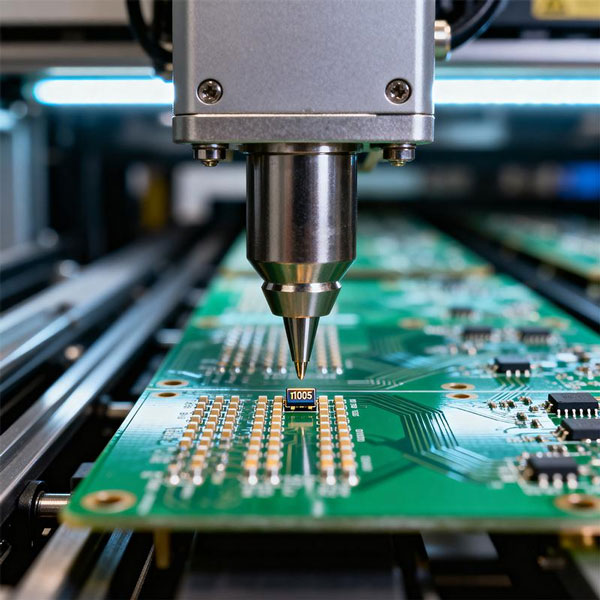
Modern SMT equipment can achieve high placement accuracy, but equipment alone does not guarantee consistent PCBA quality.
Production quality also depends on process control.
Important factors may include:
- Solder paste management
- Stencil control
- SPI inspection
- Component placement
- Reflow profile
- AOI inspection
- DIP soldering
- Cleaning requirements
- Rework procedures
A structured quality system helps manufacturers define responsibilities, procedures, inspection requirements, and records for critical manufacturing processes.
For high-mix and low-to-medium volume projects, this is particularly important because different products may require different assembly parameters and inspection criteria.
4. Stronger Quality Inspection and Defect Control
Quality inspection is an essential part of PCB Assembly manufacturing.
Depending on the project, inspection may include:
SPI — Solder Paste Inspection
SPI can identify issues such as insufficient solder paste, excessive solder paste, or printing deviations before components are fully assembled.
AOI — Automated Optical Inspection
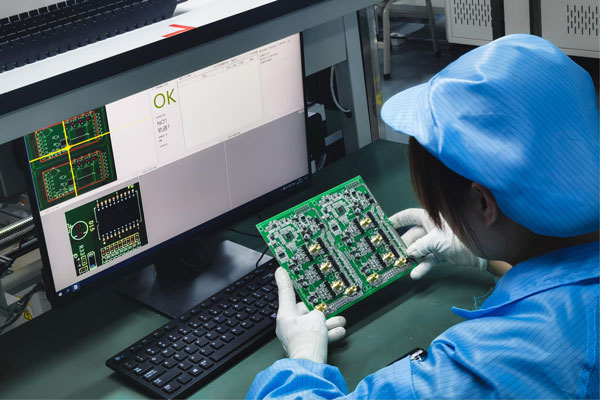
AOI can detect visible assembly defects such as component placement errors, polarity issues, missing components, and soldering problems.
X-Ray Inspection
X-ray inspection can help identify hidden solder joints and defects under components such as BGAs and other packages that cannot be fully inspected from the surface.
ICT and FCT
In-circuit testing and functional testing can verify electrical characteristics and product functionality according to the customer’s requirements.
An ISO9001 quality management system helps ensure that inspection activities are defined, documented, and managed rather than being performed inconsistently from one project to another.
5. Better Control of Nonconforming PCBAs
Not every manufacturing project will run without defects.
The more important question is:What happens when a defect is discovered?
A mature PCB Assembly supplier should have a defined process for:
Defect Identification → Isolation → Root Cause Analysis → Corrective Action → Verification → Record Keeping
For example, if a soldering defect is repeatedly detected during AOI, the supplier should not simply repair the affected boards.
The manufacturer should investigate why the problem occurred.
Potential causes may include:
- Incorrect solder paste volume
- Stencil issues
- Component placement parameters
- Reflow profile
- Component variation
- Operator procedures
The goal is not only to repair defective boards but also to prevent the same problem from recurring.
This corrective-action approach is one of the practical benefits of an ISO9001-based quality management system.
6. Improved Production Traceability
Traceability becomes increasingly important as electronic products move from prototypes into mass production.
Customers may need to know:
- Which components were used?
- Which material batch was used?
- When was the PCBA produced?
- Which production line was used?
- What inspection results were recorded?
- Were any components replaced?
- Was rework performed?
- Which production batch is affected by a quality issue?
A structured quality management system encourages manufacturers to maintain appropriate production and quality records.
This can make it easier to investigate quality issues and identify affected products.
For companies producing regulated, industrial, or mission-critical electronics, traceability can be an important supplier-selection criterion.
7. Continuous Improvement Instead of One-Time Quality Control
One of the most important concepts behind ISO9001 is continual improvement.
A quality system should not simply detect problems after they happen.
It should also help manufacturers analyze:
- Recurring defects
- Customer complaints
- Supplier issues
- Production efficiency
- Inspection results
- Process deviations
- Corrective actions
The objective is to identify patterns and improve the manufacturing process over time.
This is particularly important for customers who plan to work with the same PCB Assembly supplier across multiple product generations or production batches.
ISO9001 vs. PCB Assembly Quality: What Should Customers Actually Evaluate?
It is important to understand that an ISO9001 certificate alone does not tell you everything about a PCB Assembly supplier.
When evaluating a potential supplier, look beyond the certificate and examine how the quality system is implemented in actual production.
| Evaluation Area | Questions to Ask |
|---|---|
| ISO9001 Certification | Is the certification valid and applicable to the manufacturing operation? |
| Engineering Control | How are BOM, Gerber, drawings, and revisions managed? |
| Supplier Management | How are component suppliers qualified and evaluated? |
| Incoming Inspection | How are incoming components and materials inspected? |
| SMT Process Control | How are solder paste, placement, and reflow processes controlled? |
| Quality Inspection | Are SPI, AOI, X-ray, ICT, or FCT available? |
| Nonconformance Control | What happens when defective products are found? |
| Traceability | Can materials and production batches be traced? |
| Corrective Action | Does the supplier perform root-cause analysis and corrective action? |
| Continuous Improvement | How are recurring problems identified and prevented? |
This approach gives you a more realistic picture of the supplier’s manufacturing capability.
ISO9001 Certified PCB Assembly for Different Electronics Applications
The importance of quality management can vary depending on the product and application.
For example:
Industrial Control Electronics
PLC-related products, industrial controllers, measurement equipment, and automation systems often require consistent production quality and long-term component availability.
Medical Electronics
Medical electronics may require stricter documentation, traceability, and process control because product quality can directly affect regulatory compliance and product reliability.
Energy and BMS Electronics
Battery management systems and power electronics can involve high-current components and demanding operating environments, making component and process control particularly important.
IoT Electronics
IoT and communication products often involve compact PCB designs, high component density, and rapid product development cycles. Consistent assembly quality can help reduce production issues during scaling.
AI Electronics
AI hardware, edge AI devices, AI computing platforms, and intelligent embedded systems often require high-density PCB designs, advanced processors, memory components, power management circuits, and high-speed interfaces.
As AI electronics become more complex, consistent PCB Assembly quality is important for maintaining signal integrity, thermal performance, power stability, and overall product reliability.
For AI electronics manufacturers, a controlled manufacturing process, reliable component sourcing, accurate assembly, and effective testing can help reduce production risks when moving from prototype development to volume production.
For these applications, selecting an ISO9001 certified PCB Assembly supplier can provide a stronger foundation for long-term manufacturing cooperation.
What Should You Expect from an ISO9001 Certified PCB Assembly Partner?
A reliable manufacturing partner should provide more than an ISO9001 certificate.
You should expect a combination of:
Quality Management + Engineering Support + Manufacturing Capability + Inspection + Traceability
Before Production
- BOM review
- DFM support
- Engineering data verification
- Component sourcing
- Production planning
During Production
- Controlled material handling
- SMT and DIP assembly
- SPI
- AOI
- X-ray when required
- ICT/FCT when applicable
- Process monitoring
After Production
- Final inspection
- Functional testing
- Production records
- Traceability
- Nonconformance management
- Corrective action when required
This integrated approach helps turn quality management from a document-based requirement into an actual part of the manufacturing process.
How Kingda Supports High-Quality PCB Assembly
Kingda provides one-stop PCB Assembly services covering PCB manufacturing, component sourcing, SMT Assembly, DIP Assembly, PCBA testing, and additional manufacturing processes.
Our quality management system is supported by ISO9001 certification, together with other industry-specific quality certifications applicable to different customer requirements.
Our PCBA manufacturing operation includes:
- 4 SMT production lines
- SPI inspection
- AOI inspection
- X-ray inspection
- ICT/FCT testing capabilities
- Engineering support
- Component sourcing
- Production traceability
- Process and quality control
For high-mix, low-to-medium volume projects, our engineering and manufacturing teams work with customers from the BOM and engineering-data stage through production and final inspection.
The objective is not simply to assemble components onto a PCB.
It is to provide a controlled manufacturing process that helps customers achieve:
Consistent Quality → Reliable Production → Better Traceability → Lower Manufacturing Risk
For industrial control, medical electronics, energy electronics, communications electronics, IoT electronics, AI electronics, and other electronic products, this approach provides a stronger foundation for long-term PCBA manufacturing.
Conclusion: ISO9001 Is About Process Control, Not Just a Certificate
When selecting a PCB Assembly supplier, an ISO9001 certificate should be viewed as an important starting point—not the only qualification.
The real value comes from how the quality management system is applied to daily manufacturing.
A capable supplier should be able to demonstrate:
- Controlled engineering documentation
- Qualified component suppliers
- Incoming material inspection
- Controlled SMT and DIP processes
- Comprehensive quality inspection
- Effective nonconformance management
- Production traceability
- Root-cause analysis and corrective action
- Continuous improvement
For companies looking for a reliable long-term manufacturing partner, choosing an ISO9001 certified PCB Assembly supplier can help establish a more controlled and predictable production environment.
The goal is not simply to find a supplier that can assemble your PCB.
The goal is to find a manufacturing partner that can consistently control the processes behind your product quality—from engineering data and materials to assembly, testing, and final delivery.