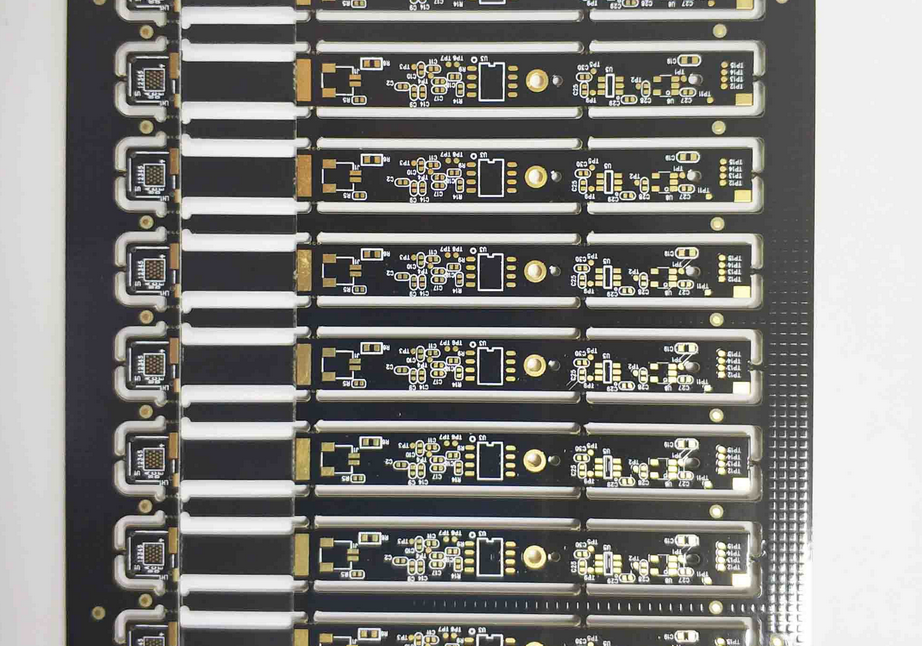
Wave Solder Pallet Design For Mixed Assemblies
A wave solder pallet is a carrier that holds a board through the wave soldering machine and shields the parts of it that must not be exposed to solder. It is the standard way of mixing surface mount and through hole technology on one board without masking each individual feature by hand.
The pallet is a process tool rather than a piece of packaging, and its design decides whether the wave process produces good joints or a trail of defects. The material, the masking layout and the clamping all affect the result.
What A Wave Solder Pallet Does
The pallet carries the assembly across the fluxer, the preheat zones and the solder wave. It masks the surface mount area so that solder does not reach it, and it opens the through hole pins to the wave so that they are filled and formed.
It also protects the board mechanically. A thin or flexible assembly is supported by the pallet, which stops it flexing under the thermal load and keeps the pins at a consistent depth in the wave.
Pallet Material And Temperature Rating
Pallets are made from a composite such as a glass filled epoxy or a machinable resin, chosen for a low thermal conductivity and for a temperature rating well above the solder temperature. A material that softens or chars will distort, and a distorted pallet no longer masks reliably.
The material should also resist the flux chemistry and the cleaning process. Some composites absorb flux and swell, which changes the fit of every board placed on them and eventually makes the pallet unusable.
Masking Off The SMT Area
Masking is the core of the pallet design. Solid material covers the surface mount area, and openings are machined where the through hole pins must see solder. The opening must be large enough for the wave to reach the joint and small enough to protect the neighbouring parts.

A typical opening leaves 1 to 2 mm of clearance around the pad, and the mask wall is chamfered so that the solder flows away cleanly. A sharp edge traps solder and produces a bridge or a icicle, so the chamfer is a functional feature rather than a finishing touch.
Thermal Shadow And Its Effect
Thermal shadow is the reduction in heat and solder flow caused by the pallet material around an opening. A tall mask wall shields the joint from the wave and from the preheat, so the pin runs cooler and the solder does not rise as far up the barrel.
The effect becomes serious on a dense board where the openings are close together. Where shadowing cannot be avoided, the solution is usually to increase the preheat, to slow the conveyor, or to change the pallet material to one with lower thermal conductivity.
Supporting Thin Boards
A board thinner than about 1 mm flexes under the thermal load of the wave, and the flexure changes the depth of the pins in the solder. The pallet should support the board from below with a machined ledge, and the ledge should be positioned where there are no components.
Support is also needed around the openings, because the masked areas are the stiff parts of the assembly and the open areas are the weak ones. A pin near a large opening can lift away from the wave if the board is not held down.
Clamping And Registration
The board must be located in the pallet precisely and held against the support ledge, otherwise the depth of the pins in the wave varies from board to board. Clamps, spring fingers or a hinged frame are all used, and each has a different effect on handling time.
Registration is provided by pins that engage the board tooling holes. The engagement should be gentle, because a tight fit damages the hole and slows the loading, while a loose fit allows the board to shift and defeats the purpose of the pallet.
Designing For The Process
The pallet should be designed from the assembly data rather than from a photograph of the board. Component heights, keepouts and the exact position of every through hole pin all matter, and a small error in the mask opening turns into a defect for every board in the batch.
The design should also consider how the board is loaded and unloaded. A pallet that can only be loaded in one orientation slows the line, while reversible pallets and clear identification marks reduce handling errors.
Life, Maintenance And Cost
A pallet is a consumable tool with a limited life. The mask edges wear, the openings grow, and eventually the pallet stops masking reliably. The life depends on the material, on the number of cycles and on how carefully the pallets are handled and stored.
The cost of a pallet is small compared with the cost of the defects it prevents, but it is not free. A design that needs a large pallet with complex machining should be reviewed with the process engineer before the assembly is released. How the process requirement is agreed is described under PCBA development process.
Verification And First Article
Verification starts with a dimensional check of the pallet against the board, followed by a first article run through the wave with the actual profile. The first article is inspected for solder fill, bridging, icicles and damage to the masked area.
The approved pallet then becomes the reference for production, and any change of material or of supplier requires a fresh first article. The board rules that the pallet must respect are described under board outline and mounting design.
Pallet Handling And Storage
A pallet is a precision fixture and should be treated as one. Stacking pallets on top of each other, dropping them on a bench or using them as a work surface all damage the mask edges and shorten the life of the tool.
Storage should be in a rack that holds each pallet flat and separates it from the next, with the pallet identity marked so that the correct one can be found quickly at changeover. The design rules that the pallet must respect are described under design guidelines for manufacturability.
Justifying The Pallet Cost
A pallet adds tooling cost and a handling step to every board, so it should be justified by the defects it prevents rather than adopted by default. Where the through hole content is only a handful of pins, selective soldering may be cheaper overall.
The comparison should include the pallet price, its expected life, the loading labour and the reduction in rework. For a board with a large masked area and hundreds of pins, the pallet is almost always the right answer and the numbers show it clearly.
FAQ
Can a pallet be used for a double sided assembly? It can, but the second side usually needs a different pallet or a different masking layout, because the components already fitted must not be disturbed by the support structure.
What causes solder to bridge on a masked board? A mask opening that is too large, a sharp edge that traps solder, or a conveyor speed that is too slow. The pallet geometry is the first thing to check.
How long does a pallet last? It depends on the material and on the handling, but a few thousand cycles is a typical expectation. The mask edges should be measured periodically to confirm that they are still within tolerance.