
Drill Registration and Machine Calibration in the Drill Room
Registration in the drill room decides whether a board has enough annular ring to survive thermal cycling, and it is one of the few process errors that cannot be corrected after the fact. The drill must place a hole inside a pad that was defined several process steps earlier, on a stack that has already moved during lamination. This article explains where the error comes from and how to keep it under control.
Why Registration Decides Yield at Small Annular Rings
The annular ring is the copper that remains around the hole after drilling. It has to be wide enough to survive the plating step, the thermal excursion of assembly and the tolerance of every process that contributed to the hole position.
As designs move to finer pitches, the pad shrinks faster than the hole, so the ring narrows and the whole error budget is consumed. A registration error that was invisible on a generous pad becomes a breakout on a tight one, and breakout is typically a reject rather than a rework.
Sources of Position Error in Drilling
Position error accumulates from several directions. The artwork itself has a tolerance, the inner layer images have their own registration, the laminate moves during lamination, and the drilling machine adds its own positional error on top.
Each contribution is small, but they add rather than average out in the worst case. That is why registration is managed as a budget with a defined allowance for each step rather than as a single number that the drill room is expected to hit.
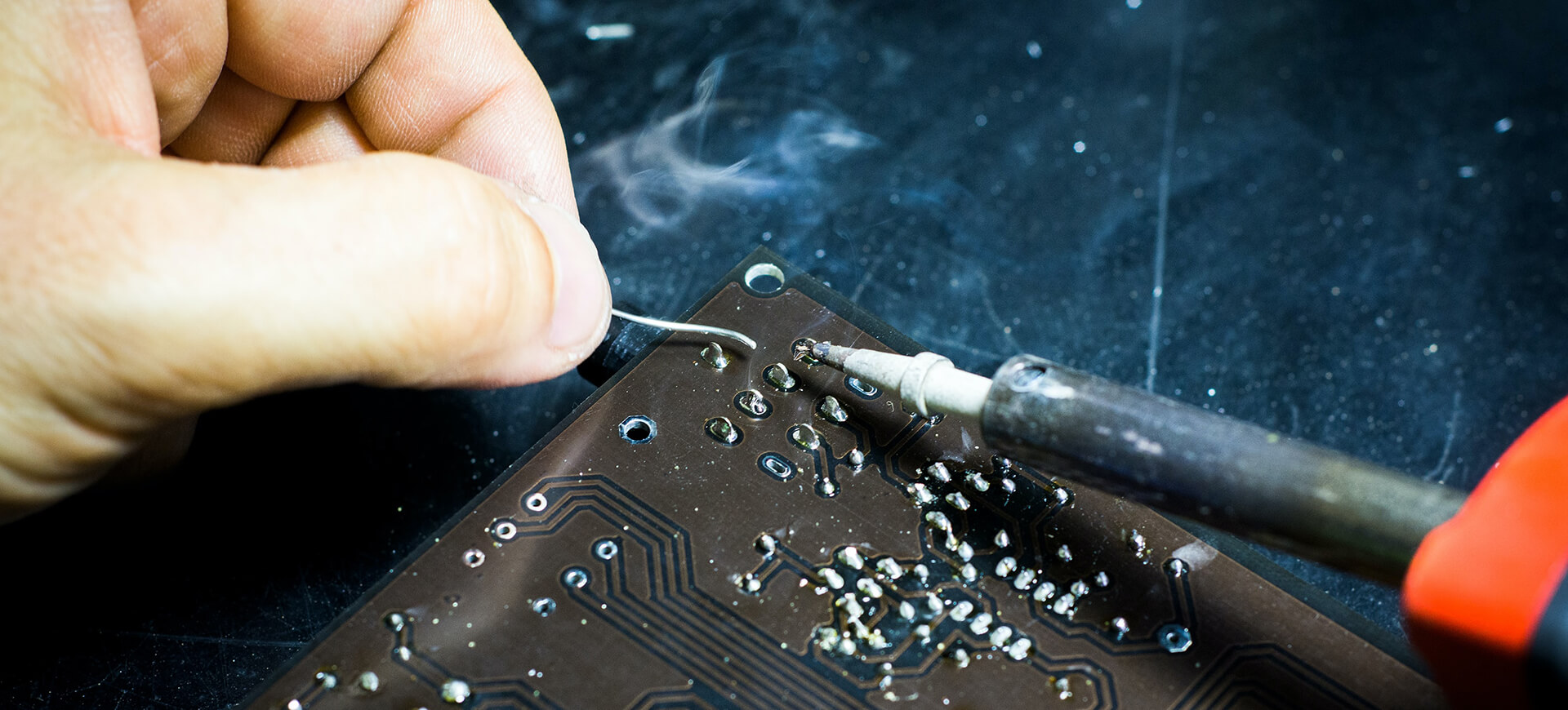
Fixturing and stack height also matter, because a tall stack amplifies any angular error and a poorly clamped panel can shift during the drill cycle.
X-Ray Targeting and Reference Systems
Most multilayer drilling uses X-ray targeting to locate the inner layer pattern through the laminated panel. Targets on the inner layers are imaged, the panel position is calculated, and the drill programme is offset to match the actual pattern rather than the nominal position.
The quality of the targets sets the ceiling for the whole process. A target that is blurred, partially covered by copper or inconsistently placed across the panel produces a registration error that no machine calibration can remove.
Spindle Calibration and Run-Out
Each spindle has a positional accuracy and a run-out, meaning the wobble of the bit as it rotates. Run-out enlarges the effective hole and produces a slightly tapered wall, which reduces the annular ring without changing the programmed position.
Spindle calibration confirms that the commanded position matches the drilled position, and it should be checked on a schedule and after any collision or maintenance event. A single spindle drifting out of tolerance is easy to miss, because only the boards drilled on that head are affected.
Drill Bit Deflection and Stack Height
A long, slender bit bends under the force of drilling, and the deflection grows with stack height and with the feed rate. The result is a hole that enters in the right place and exits slightly off, or a barrel that is not perpendicular to the surface.
Managing this means limiting the stack height, choosing appropriate feed and speed, and replacing bits before they dull enough to increase thrust. Bit wear increases both deflection and heat, and heat is what produces the smear that the desmear line then has to remove.
Material Movement and Panel Fixturing
Laminate moves during lamination and then relaxes over time, so a panel that was dimensionally stable when it was imaged may have shifted by the time it reaches the drill. The shift is not uniform, which is why registration is checked at several positions rather than at one.
Fixturing has to hold the panel flat and repeatable. Tooling holes that are worn, or pins that no longer fit snugly, allow the panel to move fractionally during the cycle and produce a random error that looks like a machine problem.
Layer to Layer Misregistration from Lamination
Registration between inner layers is set during lamination, long before drilling starts. Uneven copper distribution, incorrect press parameters and mismatched expansion between the layers all cause the layers to move relative to each other.
Those errors become visible at the drill because the hole must pass through all of them. Where layer to layer registration is poor, the fix belongs in the layup and press area rather than in the drill room, and diagnosing it correctly saves a great deal of wasted calibration effort.
Measuring Registration on a Coupon
A registration coupon with layer targets and drilled holes allows the error to be measured directly. The coupon is sectioned or imaged, and the offset between the hole centre and the pad centre is recorded for each layer and each position on the panel.
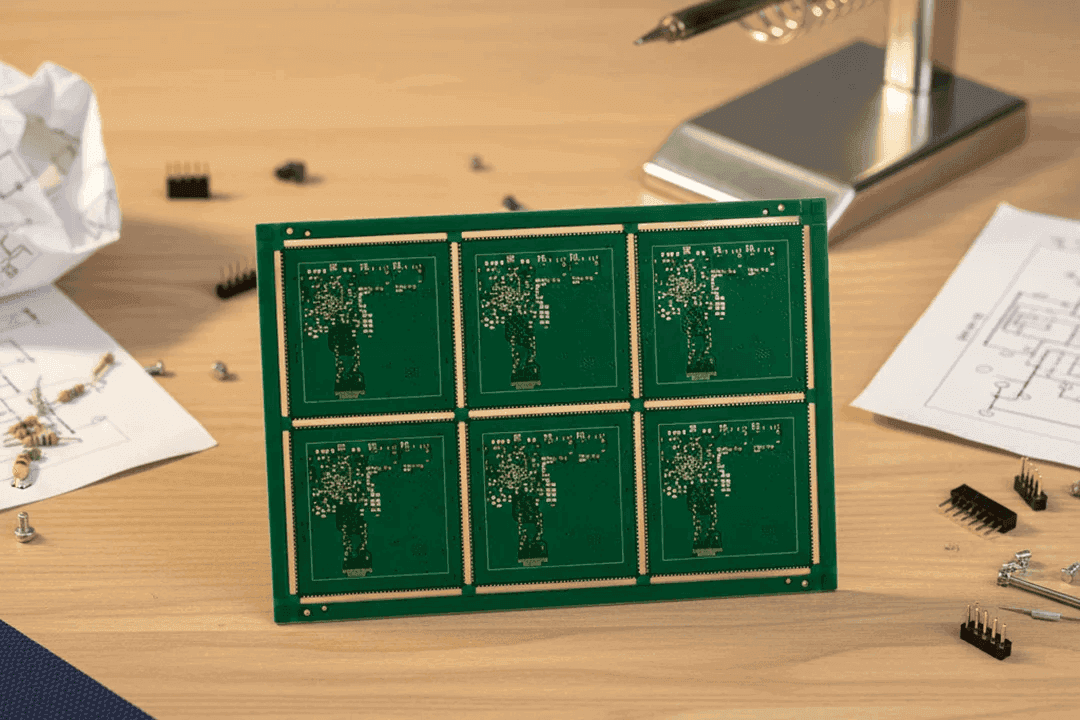
Measuring at a single position hides the trend, so the sample should include the centre, the corners and any position where the stack has a discontinuity. Recording the results over time turns an inspection into a control chart and shows whether the process is stable or drifting.
Maintenance and Monitoring Routine
The drill room routine should include spindle calibration at fixed intervals, tooling pin inspection, a check of the X-ray target quality and a review of the coupon data against the registration budget. Each item is cheap and each one catches a different class of error.
gopcb aligns the registration budget with the annular ring the design requires, because a tight ring on a dense board leaves little room for accumulated error, and the coupon results feed directly into the quality record. Reviewing the budget before production starts is the practical way to avoid a breakout that only appears on the fine pitch devices.
Points to Confirm at First Article
Where a process is at the edge of its capability, the margin should be bought deliberately rather than discovered during production. A record that identifies the operator, the date and the settings is worth more than a record that identifies only the result.
FAQ
What causes breakout on a drilled hole? Accumulated registration error, a drill that is not centred on the pad, or a pad that was already too small for the hole. The coupon data separates those causes.
How often should spindles be calibrated? At fixed intervals and after any collision or service event. A drifting spindle affects only the boards drilled on that head, so the symptom can be intermittent.
Can layer to layer misregistration be fixed in the drill room? No. Drilling can only match the pattern that exists. Poor layer to layer registration must be corrected in the layup, the press parameters or the copper balance.