Jet Dispensing for Solder Paste in Small Batch Production
Jet dispensing writes solder paste one dot at a time from a nozzle, without a stencil, without a squeegee and without a printing stroke. For small batches, for awkward board shapes and for assemblies where deposits of different heights are needed, that freedom is worth real money. This article explains what jetting requires from the paste, the programme and the maintenance routine.
How Jet Dispensing Differs from Stencil Printing
A stencil printer deposits paste on every aperture in one stroke, so the volume is set by foil thickness and aperture area. A jet dispenser fires discrete dots of a fixed volume and builds the required deposit by placing several of them, which means volume is set by the number of dots rather than by tooling.
The practical consequences follow from that difference. There is no stencil to order, no printing parameters to balance and no tooling change when the design changes, but the deposition rate is far slower, so jetting suits low volume or high mix work rather than high volume production.
Paste Requirements for Reliable Jetting
Jet dispensing punishes paste that would print perfectly well on a stencil. The material must flow through a small orifice under pressure, break off cleanly and recover its shape without stringing, so viscosity, thixotropy and particle size all sit inside narrower windows than printing requires.
Powder size matters because the orifice is small. A paste with particles close to the nozzle diameter will clog intermittently, producing missing dots that are hard to spot until the board reaches reflow. Type 4 powder is common for jetting, with finer grades used where the orifice is very small.
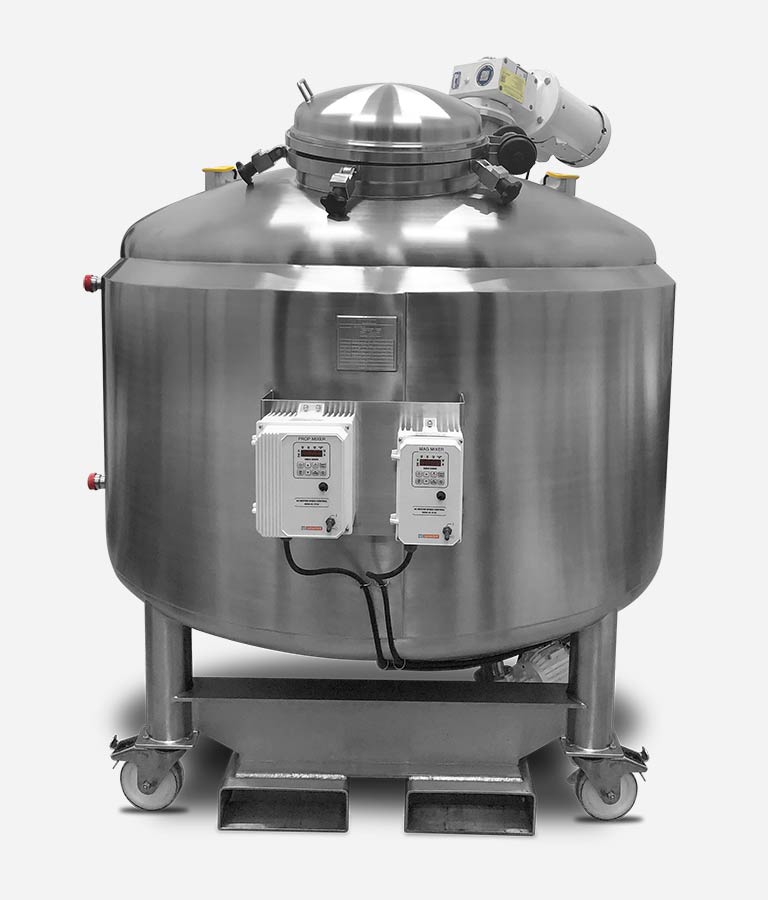
Temperature control of the syringe improves consistency, because viscosity changes with temperature far more than most operators expect during a shift.
Dot Size, Volume and Placement Accuracy
Dot volume is set by nozzle diameter, valve stroke, pressure and the open time of the valve. Increasing any of them raises the volume, but the relationships are not linear and they interact, which is why the process is normally characterised once and then held constant.
Placement accuracy comes from the machine vision system rather than from the dispensing head. Fiducial recognition locates the board, and the programme places dots relative to that reference. Where a pad is small, the dot has to land within a tighter window than a printed deposit, because there is no stencil to keep the paste in place.
Where Jetting Pays Off in Production
Jetting is attractive for prototypes and for small batches where the cost of a stencil and the lead time to obtain it dominate the budget. It also suits boards with unusual shapes, with components on both sides at different heights, or with recessed areas that a stencil cannot reach.
It is also used in volume for specific operations rather than for whole boards. Adding paste to a single connector, dispensing onto a board that has already been populated on one side, or repairing a print defect on a small number of pads are all cases where jetting complements a stencil line rather than replacing it.
Mixed lines often run both technologies, with the stencil printer handling the main pattern and the jet dispenser adding the deposits the stencil cannot make.
Programming and Vision Alignment
The programme defines a dot pattern per pad, the number of dots and their spacing. Spacing has to be tight enough that the dots coalesce during reflow without leaving a void, but not so tight that they pile up and slump before the board reaches the oven.
Vision alignment needs a clean fiducial and a stable lighting setup. Jetting places far fewer deposits than a printer, so a small systematic offset is easy to miss until a batch is complete, and the first article check is the main defence against it.
Nozzle Wear and Maintenance
The nozzle is a consumable. Paste is abrasive, and the seat and orifice wear with every cycle, changing the dot volume gradually. Tracking volume over thousands of cycles shows the drift and allows the nozzle to be replaced on evidence rather than on a fixed interval.
Cleaning discipline matters as much as replacement. Paste left in the nozzle during a break dries and blocks the orifice, and the blockage often appears as a partial dot rather than a missing one, which makes the defect hard to detect. A purge before stopping and a wipe at restart prevent most of these events.
Handling Tall Components and Uneven Surfaces
A jet dispenser works at a fixed stand-off from the board, so a component that stands above the surface changes the distance and therefore the dot. The programme normally segments the board into areas with different heights, and the head moves in Z between them.
Where the board surface itself is uneven, because of thick copper or a raised stiffener, the stand-off varies within an area. Mapping the surface with the machine’s height sensor, or measuring a sample board, keeps the stand-off inside the range the nozzle can tolerate.
Defects Specific to Jetted Deposits
The characteristic defects are missing dots, satellites from a poor break-off, stacked deposits that slump before reflow and volume variation between the first and last dots of a batch. Each points to a different cause, from a partially blocked orifice to a valve that is warming up.
Sattelite defects come from a poor break-off at the nozzle, and they are usually caused by paste that is too warm, by a worn nozzle tip or by a valve setting that leaves a thread of material behind. Because they are small and sit close to the pad, they appear at reflow as a scatter of tiny balls rather than as a bridging defect, and recognising them early avoids a long search through the reflow profile.
Inspection closes the loop. Because deposit volume comes from a programme rather than from tooling, the natural check is a three dimensional measurement of the deposits against a reference, taken at the start of a batch and periodically thereafter for consistency.
Deciding Between Jetting and a Stencil
The decision usually comes down to volume and change frequency. If a design will run in thousands and will not change, a stencil is faster and cheaper per board. If the design will change, or if the quantity is small, the tooling cost and lead time of a stencil often exceed the slower deposition rate of a jet.
gopcb advises customers to consider the assembly sequence as well as the volume, because a jet can add paste after one side has been populated, while a stencil cannot. Where that flexibility removes a process step, quality and cycle time both improve, and the machine earns its place on a mixed line.
FAQ
Can jet dispensing replace a stencil printer? For prototypes and small batches, often yes. For high volume production the deposition rate makes a stencil printer far more economical, and the two are usually used together.
Why do dots go missing? The usual cause is a partially blocked orifice or paste that is too coarse for the nozzle diameter. Check the nozzle first, then the powder grade and the storage history of the paste.
How is jetted volume verified? By measuring the deposits in three dimensions and comparing volume, area and height against a reference taken with a known good programme and nozzle.