
Resin Starved Laminates: 7 Rules Against Fiber Show and Dry Spots
A resin starved panel is one where there is not enough resin to fill the space between the glass fibres and around the copper features. The first sign is usually visual: the weave of the glass becomes visible through the surface as a pattern of fine lines, a condition called fiber show, and in worse cases there are dry spots where the fabric has never been properly wetted.
The defect goes beyond appearance. A starved area has less insulation between conductors, a weaker bond to the copper and a greater tendency to absorb moisture and process chemistry in later operations. A panel that looks faintly textured can pass a visual check and still fail an insulation or thermal stress test, which is why the condition has to be controlled at the press rather than sorted at the end of the line.
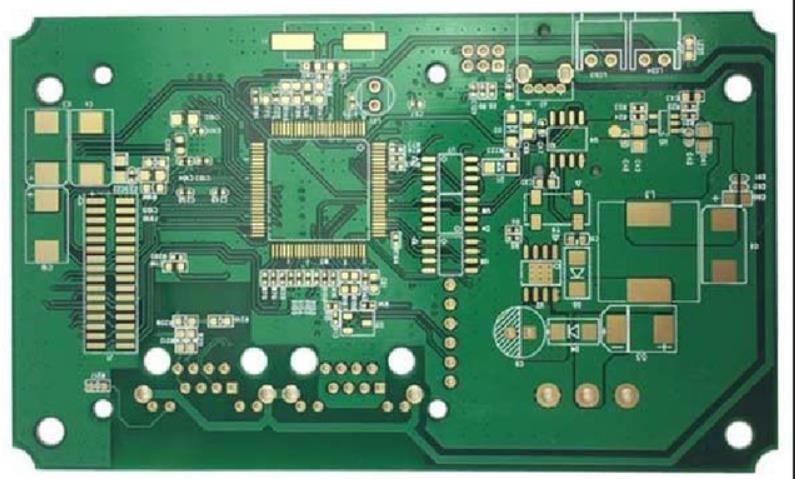
What Resin Starvation Looks Like
At the surface, resin starvation appears as an uneven gloss, a visible weave pattern or a patchy dull area that does not clear after the surface is cleaned. Where the resin is absent over a larger area, the glass is exposed and the surface takes on the colour of the fabric rather than the resin, which is the classic dry spot.
Inside the board the sign is a region where the resin has not filled the space between the glass bundles, and a microsection shows it clearly as porosity or as contact between the copper and the weave. Surface finish and plating defects often follow, because the chemistry of those processes can wick into a starved area that a sound laminate would have resisted.
Where the Resin Goes, and Where It Does Not
Resin moves during the press cycle. It flows out of the prepreg, fills the space around the copper, wets the weave and then gels. If the flow is too low, the resin never reaches the far parts of a heavy copper pattern, and the space around the copper stays empty. If the flow is too high, the resin leaves the panel edge and the stack loses resin as well as thickness.
The first cause to check is the amount of resin available. A prepreg with a low resin content, or a stack where the prepreg plies do not provide enough resin for the copper volume, will starve regardless of the press settings. The copper volume on a heavy board is substantial, and it has to be matched by the resin volume in the stack.
Press Cycle Causes
Pressure applied too early in the cycle pushes the resin out before it has had time to fill the features, and pressure that is too low at the gel point leaves the resin unable to close the last gaps. Both faults produce a starved board, and they are corrected in opposite directions, which is why the failure has to be diagnosed from the cycle record rather than from the panel alone.
Vacuum quality also matters. Where the vacuum is lost or applied late, air trapped in the stack becomes a void that the resin cannot fill, and the area around it is starved because resin has flowed away to another part of the panel. A cycle record that shows the vacuum curve, the temperature and the pressure is the minimum needed to diagnose a recurring problem.
Prepreg Condition and Moisture
Moisture in the prepreg is a double problem. It raises the volatile content, which produces voids and can push resin away from a feature, and it advances the resin so that the gel time shortens and the flow window closes. A material that has been stored in humid air behaves differently in the press even when the nominal grade has not changed.
Resin content and gel time are the two numbers that describe the material condition, and both should be checked on the batch rather than assumed from the certificate. Where a lot has drifted, the answer is usually to adjust the cycle for that lot or to reject it, not to run it through and sort the panels later.
Panel Design and Copper Balance
Resin has to fill the space between copper features as well as the space between layers, so the distribution of copper across the panel decides how far the resin must travel. A panel with large isolated copper areas next to areas with almost none is much harder to laminate than one with a balanced distribution.
Heavy copper is the extreme case. A thick copper layer leaves a deep space around each trace, and the prepreg has to deliver enough resin to fill it and still leave the intended dielectric. Where that balance is not achieved at the stack up stage, no amount of press tuning will produce a fully filled board, which is why the copper distribution belongs in the laminate void review.
Detection and Evidence
Visual inspection under a defined light source catches the surface cases, and it should be done before solder mask, because the surface treatment that follows can hide a light texture. Where the board is destined for a critical application, a microsection through a suspect area is the definitive check.
The finished board can also show the defect indirectly. Plating voids, surface finish staining and insulation failures that cluster in one area of a panel are all consistent with a starved region, and they should trigger a review of the lamination record rather than a repair of the individual board.
Prevention and Records
Prevention is a chain of small controls: verified prepreg, dry storage, a press cycle matched to the material, a stack design that matches resin volume to copper volume, and a vacuum system that works every time. Each one is cheap on its own and expensive to recover when it fails.
The records that support it are the prepreg batch, the gel time and resin content, the store history, the stack detail and the press cycle chart for each load. A defect that repeats on one product and not another is almost always explained by that data, and the same review supports the delamination checks described in the delamination control procedure and the vacuum conditions covered in the vacuum lamination notes.
Handling before the press matters as well. A prepreg roll that is opened in a humid room takes up moisture across its whole width, and the panels cut from the outer part of the roll are more affected than the inner ones. Cutting the plies and letting them stand while the stack is assembled adds exposure time that varies from load to load, so the time between opening the bag and closing the press should be limited and recorded like any other process window.
FAQ
Is fiber show always a defect? A faint weave texture can be acceptable on some cosmetic grades, but any visible exposure of the glass or a dull patch that does not clear is a defect, because it indicates that the resin did not fully wet the fabric.
Can a resin starved board be reworked? No. The condition is a property of the cured laminate, and the only remedy is to reject the panel. Repair by adding resin is not possible without affecting the dielectric and the surface finish.
Why did the same press produce good boards yesterday? Because the material changed. Moisture pickup, resin advancement in storage and a new prepreg batch all alter the flow, and the press cycle that suited the previous lot can be wrong for the current one.