During the PCB design stage, engineers sometimes assume that customized colors automatically make a product look more premium. Choosing black, white, or other customized solder mask colors, however, may introduce additional material costs, process requirements, inspection challenges, and production lead time.
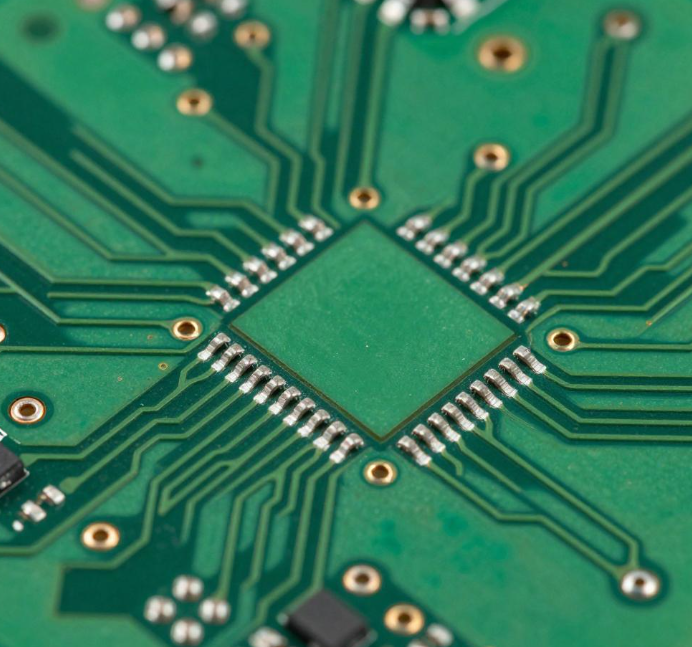
For most industrial control, power electronics, general consumer electronics, and standard electronic products, a customized solder mask color is usually unnecessary. Standard green solder mask remains one of the most widely used options in PCB manufacturing because it provides a practical balance of process stability, inspection visibility, availability, and cost.
The color of a solder mask primarily comes from differences in ink pigments and formulation. Color itself does not directly determine the fundamental electrical insulation, dielectric protection, or environmental resistance of a PCB. Therefore, unless a specific application requires a particular appearance or optical characteristic, standardizing the PCB solder mask color can be a simple way to control manufacturing costs without changing the basic functional requirements of the board.
For projects manufactured by Kingda, engineers can evaluate solder mask color requirements together with PCB structure, materials, surface finish, tolerances, and production volume to determine whether color customization provides genuine product value.
1. Understanding the Cost Differences Between Solder Mask Colors
The cost of different solder mask colors depends on several factors, including ink pricing, purchasing volume, color formulation, production setup, process control, and inspection requirements. Therefore, there is no universal surcharge that applies to every PCB manufacturer.
In general, standard green solder mask tends to have the most established manufacturing process. It is widely available, commonly supported by PCB production lines, and backed by mature process parameters. This makes it a practical choice for high-volume PCB production.
Other standard colors, such as blue, red, and yellow, may require different ink materials or additional color management. The actual cost impact depends on the manufacturer’s purchasing channels and production volume. For low-volume or prototype projects, the difference may be relatively small, while repeated production of large quantities can make material and setup differences more noticeable.
Black solder mask can provide a distinctive appearance and is commonly selected for consumer and industrial products. However, its dark surface can make certain PCB defects more difficult to identify visually. Process parameters and inspection methods may therefore require additional attention.
White solder mask is often used when appearance, LED reflection, or optical characteristics are important. At the same time, its light-colored surface can make contamination, staining, discoloration, and certain cosmetic defects more visible. This means that appearance control may require stricter process management.
Special colors such as purple, orange, transparent, or customized brand colors may require specific ink sourcing or formulation. For small production quantities, the additional setup and material management can have a greater impact on unit cost.
Rather than applying a fixed percentage of cost increase to every color, engineers should evaluate the actual quotation and manufacturing conditions with their PCB supplier. Kingda can assess color requirements according to the board type, production volume, and quality specifications before production.
2. Why Green Solder Mask Remains a Practical Standard
The popularity of green solder mask is not simply a matter of industry tradition. It is also related to manufacturing maturity, visual inspection, process familiarity, and supply availability.
Electrical and Protective Performance
The basic function of a solder mask is to provide a protective insulating layer over selected areas of the PCB while leaving solderable pads and other required conductive areas exposed.
When properly formulated and cured, different solder mask colors can be engineered to meet comparable electrical and environmental requirements. The actual performance depends more on the solder mask material, coating thickness, curing conditions, adhesion, PCB construction, and applicable specifications than on color alone.
For this reason, engineers should avoid treating color as the primary indicator of solder mask performance. Instead, the selection should be based on the actual requirements of the application, including operating temperature, insulation requirements, chemical exposure, humidity, mechanical conditions, and reliability expectations.
Stable Manufacturing Process
A mature PCB production process can provide significant advantages in repeatability. Green solder mask has been widely used across PCB factories for many years, so manufacturers generally have extensive experience with coating, exposure, development, curing, and inspection parameters.
This process familiarity can help reduce production variability and simplify process control, particularly for high-volume orders.
However, color alone does not guarantee higher yield. PCB quality is determined by multiple factors, including material selection, drilling, imaging, plating, etching, solder mask processing, surface finish, inspection, and final testing.
Easier Visual Inspection
One important advantage of green solder mask is its strong visual contrast with copper features and white silkscreen markings.
This can make common PCB conditions such as exposed copper, scratches, contamination, soldering problems, and solder mask defects easier to identify during visual inspection.
For AOI and other automated inspection systems, machine vision performance depends on lighting conditions, camera configuration, software algorithms, board design, surface finish, and contrast. Therefore, it is more accurate to say that green solder mask can provide favorable visual contrast rather than claiming that it is universally the highest-performing color for every AOI system.
For industrial control boards, power electronics, prototypes, and engineering samples that may require repeated debugging or repair, good visual contrast can also make manual inspection and maintenance more convenient.
3. When Should Engineers Avoid Solder Mask Color Customization?
For many standardized products, eliminating unnecessary color customization can simplify the manufacturing process.
High-Volume Standard Products
Products such as general-purpose power supplies, industrial control boards, motor control boards, and conventional electronic assemblies often do not require a customized PCB appearance.
When the PCB is installed inside a finished product and is not visible to the end user, a standard green solder mask can provide a straightforward solution while avoiding unnecessary customization requirements.
Prototypes and Engineering Samples
Prototype and validation boards are frequently revised during development. Engineers may change the schematic, PCB layout, component placement, or electrical specifications several times before final production.
In this situation, spending additional resources on customized solder mask color generally provides little technical benefit unless color is part of the testing requirement or product identification system.
Using a standardized color can help engineers focus resources on more important factors such as impedance control, layer stackup, thermal management, signal integrity, manufacturability, and reliability.
Industrial and Power Electronics
Industrial equipment and power electronics often prioritize electrical performance, thermal management, reliability, inspection, and long-term stability over PCB appearance.
For these applications, solder mask color should normally be treated as a secondary design consideration unless there is a specific customer or product requirement.
Engineers should also consider whether a particular color could affect inspection visibility, optical identification, or maintenance procedures.
Products With Strict Brand or Appearance Requirements
Color customization still has legitimate applications.
It may be appropriate when:
- The PCB is visible through the product housing.
- A company requires a specific brand identity.
- The PCB color is used to distinguish product versions.
- Optical reflection is important for LED-related applications.
- The customer specification explicitly requires a particular color.
- The board is part of a demonstration or premium consumer product.
In these cases, the additional cost and manufacturing complexity may be justified by the product requirements.
4. A Practical Decision-Making Framework for PCB Solder Mask Color
Instead of automatically selecting green or automatically choosing a customized color, engineers can evaluate the requirement through several questions.
First, is the PCB visible in the final product?
If the board is completely enclosed and cannot be seen by the customer, customized color may have limited value.
Second, does color affect the electrical or optical function?
For most conventional PCBs, color is primarily an appearance and manufacturing consideration. However, some specialized applications may have optical or identification requirements that should be evaluated separately.
Third, what is the production volume?
The effect of material sourcing, setup, and process management becomes more important as production volume and production frequency increase.
Fourth, does the customer specification require a specific color?
If the color is explicitly defined in the product specification, it should be treated as a controlled manufacturing requirement rather than an optional cosmetic feature.
Finally, will the customized color provide measurable product value?
If the answer is no, standardizing the PCB solder mask may be the more efficient manufacturing strategy.
5. How Standardization Can Improve PCB Manufacturing Efficiency
Standardization is one of the most practical approaches to controlling manufacturing complexity.
Using a standard solder mask color can simplify material management, reduce the number of special production requirements, and make process planning more predictable. For manufacturers handling many different PCB projects, reducing unnecessary variations can also simplify production scheduling and quality management.
For high-volume production, these advantages can become more significant because even a small difference in material cost, setup time, inspection effort, or production efficiency can accumulate across large quantities.
However, the actual savings should be evaluated on a project-by-project basis. Claims such as a fixed percentage reduction in manufacturing cost, a specific yield improvement, or a guaranteed reduction in lead time cannot be applied universally because PCB pricing and production performance vary according to board size, layer count, materials, surface finish, order quantity, technology level, and manufacturer capabilities.
Therefore, engineers should request a detailed quotation from their PCB supplier rather than assuming that a specific color will always produce a predetermined percentage of savings.
6. Kingda’s Approach to Solder Mask Color Selection
At Kingda, solder mask color selection can be evaluated as part of the overall PCB manufacturing strategy.
Rather than treating color as an isolated design decision, engineers can consider it together with PCB structure, material selection, copper thickness, surface finish, solder mask requirements, inspection methods, production volume, and application environment.
For standard industrial, power, and electronic products, green solder mask is often a practical starting point because of its mature manufacturing process and convenient visual inspection characteristics.
When a project requires black, white, blue, red, or another customized color, the requirement can be reviewed according to the intended application and production quantity. This helps determine whether the customization provides functional, optical, branding, or product differentiation value.
The goal is not to eliminate customized colors altogether, but to ensure that every customization requirement has a clear engineering or commercial purpose.
7. Conclusion: Make Solder Mask Color a Requirement, Not an Assumption
Solder mask color is an important PCB appearance parameter, but it should not automatically be treated as an indicator of PCB quality or product performance.
For most standard industrial control boards, power boards, prototypes, and general electronic products, standard green solder mask can provide a practical combination of manufacturing maturity, inspection visibility, supply availability, and cost efficiency.
Customized colors remain valuable when they serve a clear purpose, such as brand identification, visible product design, optical requirements, or customer specifications.
The most effective approach is therefore to distinguish between necessary customization and unnecessary customization. By evaluating the actual functional and commercial value of a color requirement, engineers can simplify PCB production, control manufacturing costs, and maintain the required level of PCB quality without compromising essential solder mask performance.
For PCB projects requiring customized solder mask colors or specific manufacturing specifications, Kingda can evaluate the requirements based on product application, production volume, board construction, and quality expectations.