Medical PCB: PCB Design, PCB Manufacturing, Standards & Applications
Printed circuit boards (PCBs) are a fundamental part of modern medical electronics. They provide the electrical interconnections, signal-processing infrastructure, power distribution, and control functions required by a wide range of medical devices. From patient monitoring systems and diagnostic imaging equipment to therapeutic devices and wearable healthcare products, reliable Medical PCB technology plays an important role in maintaining accurate and consistent operation.
Medical devices often process sensitive physiological data or perform safety-critical functions. As a result, their circuit boards may face stricter requirements for electrical safety, reliability, electromagnetic compatibility (EMC), traceability, environmental resistance, and manufacturing consistency than many general-purpose electronics.
This guide explains what a medical PCB is, the major types and materials used in medical electronics, important PCB Design considerations, applicable standards, the medical PCB manufacturing process, common applications, production challenges, and factors to consider when selecting a PCB Manufacturing partner.
What Is a Medical PCB?
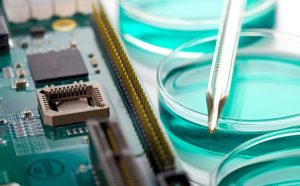
A Medical PCB is a printed circuit board specifically designed, manufactured, and assembled for use in medical equipment and healthcare electronics. It provides the conductive pathways and electrical infrastructure needed to connect components, process signals, distribute power, and control device functions.
Depending on the application, a medical PCB may be found in:
- Patient monitoring equipment
- Diagnostic imaging systems
- Ultrasound equipment
- Electrocardiogram (ECG) systems
- Medical laboratory equipment
- Wearable healthcare devices
- Surgical equipment
- Infusion and drug-delivery systems
- Therapeutic equipment
- Hospital automation systems
- Implantable or patient-contact electronic systems
The PCB itself is only one part of the overall medical device. Its requirements must be evaluated together with the complete system, including the enclosure, power supply, sensors, software, connectors, cables, mechanical structure, and intended patient environment.
For safety-critical equipment, PCB Manufacturing must therefore be integrated with appropriate design controls, verification, validation, risk management, supplier controls, and traceability.
Key Requirements for Medical PCBs
Medical electronics can have significantly different requirements depending on whether a device is patient-connected, patient-contacting, diagnostic, therapeutic, implantable, or intended for general laboratory or administrative use.
The following factors are particularly important when developing a medical PCB.
1. Regulatory and Standards Compliance
Medical electronics may be subject to different regulatory requirements depending on the device classification, intended use, market, and electrical architecture.
Commonly referenced standards include IEC 60601 series standards for medical electrical equipment and ISO 13485 for quality management systems applicable to medical devices.
Importantly, compliance is generally evaluated at the medical device/system level, rather than simply by declaring that an individual PCB is “medical compliant.” The PCB must support the applicable requirements of the complete product.
2. High Measurement Accuracy
Medical devices frequently measure small electrical, biological, optical, pressure, temperature, or other physical signals. PCB design must therefore minimize unwanted noise, interference, leakage, offset, and signal distortion.
Depending on the application, engineers may need to consider:
- Low-noise analog design
- Precision ADC/DAC performance
- Stable reference voltages
- Controlled impedance
- Power-supply noise
- Grounding strategy
- Electromagnetic interference
- Thermal drift
- Sensor interface design
3. Electrical Safety
Electrical safety is particularly important when equipment is connected to a patient or operator.
The design may need to address:
- Creepage distance
- Clearance
- Insulation systems
- Leakage current
- Dielectric withstand
- Protective earth
- Functional earth
- Isolation barriers
- Power supply architecture
- Patient-connected circuits
The exact requirements depend on the applicable medical-device standard and the device’s classification and architecture.
4. Compact and High-Density Design
Modern healthcare products increasingly require smaller and more portable electronics. This increases routing density and may require technologies such as HDI PCB, microvias, fine-pitch components, and multilayer construction.
However, miniaturization should not compromise electrical isolation, thermal performance, manufacturability, inspection accessibility, or reliability.
5. Long-Term Reliability
Medical equipment may operate continuously for thousands of hours. Some devices may also experience repeated cleaning, disinfection, sterilization, temperature changes, vibration, or humidity exposure.
A reliable medical PCB should therefore be designed around the complete environmental profile rather than only its nominal operating temperature.
6. Data Processing and Storage
Modern medical equipment can generate large quantities of sensor and imaging data. The PCB may incorporate high-speed processors, memory, communication interfaces, storage devices, and networking circuitry.
High-speed designs require careful attention to:
- Signal integrity
- Power integrity
- Return paths
- Differential-pair routing
- Impedance control
- Crosstalk
- EMI/EMC
- Thermal management
7. Traceability and Documentation
Traceability is particularly important in regulated manufacturing environments. Depending on the product and quality system, manufacturers may need to maintain records covering materials, components, manufacturing processes, inspections, test results, lot information, and nonconformance handling.
This makes documentation an important part of the overall Medical PCB Manufacturing process.
Types of Medical PCBs
Different medical applications require different PCB structures and materials.
1. Rigid Medical PCB
Rigid PCBs are widely used in medical equipment because they provide mechanical stability and support conventional surface-mount and through-hole components.
Typical applications include:
- Patient monitors
- Laboratory instruments
- Diagnostic equipment
- Medical computers
- Power-control systems
- Hospital equipment
FR-4 and high-performance FR-4-family laminates are commonly used when their electrical, thermal, and mechanical properties meet the application requirements.
2. Flexible Medical PCB
Flexible PCBs use flexible dielectric materials, typically polyimide-based constructions, to allow bending and folding.
They can be useful for:
- Wearable medical electronics
- Compact sensors
- Flexible monitoring devices
- Small medical probes
- Space-constrained interconnections
Flexible circuits can reduce wiring and connectors, but bend radius, dynamic flexing, stiffeners, copper type, and mechanical strain must be carefully considered during PCB Design.
3. Rigid-Flex Medical PCB
A Rigid-Flex PCB combines rigid circuit sections with flexible interconnect regions in a single structure.
This approach can replace some cables and connectors, reducing the number of mechanical interfaces and potentially improving system-level reliability.
Rigid-flex designs are particularly useful when medical equipment requires:
- Three-dimensional packaging
- Repeated movement
- Compact assemblies
- Reduced cable count
- Improved mechanical integration
4. HDI Medical PCB
An HDI PCB uses technologies such as microvias, fine lines, fine spaces, and sequential build-up structures to achieve high routing density.
HDI can be valuable for compact medical devices where conventional PCB technology cannot provide sufficient interconnection density.
However, advanced HDI processes require tight control of registration, laser drilling, plating, dielectric thickness, and microvia reliability.
5. Multilayer Medical PCB
A Multilayer PCB contains multiple conductive copper layers separated by dielectric materials and interconnected through vias.
Multilayer construction allows designers to separate signal, power, and reference functions while increasing routing capacity.
A carefully designed stackup can also improve:
- Signal integrity
- Power integrity
- EMI performance
- Thermal distribution
- Controlled impedance
- Component density
6. Metal-Core PCB
Metal-core PCBs use an aluminum, copper, or other thermally conductive core to improve heat dissipation.
They may be considered for medical equipment containing high-power components or concentrated heat sources, such as certain lighting, power-management, or therapeutic systems.
The thermal solution must be evaluated at the system level because the metal core alone does not guarantee adequate cooling.
7. Ceramic PCB
Ceramic PCBs use materials such as alumina or aluminum nitride when high thermal performance, electrical insulation, dimensional stability, or high-temperature capability is required.
They may be appropriate for specialized medical electronics where conventional organic laminates cannot satisfy the thermal or environmental requirements.
8. PCB for Implantable Medical Electronics
Implantable electronics require an especially demanding system-level design approach.
In addition to electrical and mechanical reliability, designers must consider:
- Biocompatibility
- Hermeticity or encapsulation
- Corrosion resistance
- Extremely low power consumption
- Long-term stability
- Miniaturization
- Reliability under the intended physiological environment
The PCB substrate, coatings, packaging, interconnects, and complete device enclosure must be evaluated together. A conventional PCB should not automatically be considered suitable for direct implantation or prolonged bodily contact.
Medical PCB Standards and Compliance Considerations
Several standards and regulatory frameworks can influence the development of medical electronics. The exact requirements depend on the product, market, classification, and intended application.
IPC-6012
IPC-6012 establishes qualification and performance requirements for rigid printed boards.
Medical products may require higher-reliability PCB construction and additional controls depending on the application. IPC documents should be selected according to the actual board technology and product requirements rather than assuming that one IPC class automatically defines medical compliance.
IPC-6012EM
IPC-6012EM provides additional guidance associated with medical applications of rigid printed boards.
For safety-critical products, engineers should determine whether this document and its requirements are applicable to the specific PCB and end product.
ISO 13485
ISO 13485 specifies requirements for a quality management system where an organization needs to demonstrate its ability to provide medical devices and related services consistently meeting customer and applicable regulatory requirements.
It is important to distinguish a manufacturer’s ISO 13485 certification from certification of an individual PCB. The quality-management certification concerns the organization’s quality system; the finished medical device still needs to satisfy its applicable regulatory and product requirements.
IEC 60601-1
IEC 60601-1 is a major standard for the basic safety and essential performance of medical electrical equipment.
For PCB designers, relevant design topics can include:
- Creepage
- Clearance
- Insulation
- Leakage current
- Dielectric strength
- Protective measures
- Isolation
- Electrical safety
These requirements should be translated into concrete PCB design rules according to the equipment architecture and applicable edition of the standard.
IEC 60601-1-2
IEC 60601-1-2 addresses electromagnetic compatibility for medical electrical equipment.
The goal is not simply to reduce emissions. Medical equipment must also demonstrate appropriate immunity to electromagnetic disturbances that could affect essential performance.
Therefore, medical PCB Design should consider both emission control and immunity from the beginning of the design process.
Medical PCB Design Considerations
Medical PCB design requires more than simply fitting components onto a small board. Electrical safety, EMC, signal integrity, thermal behavior, reliability, manufacturability, and regulatory requirements must be considered simultaneously.
1. Grounding and Isolation
Grounding is one of the most important aspects of medical PCB design.
Designers should establish a clear grounding and isolation strategy based on the system architecture. Sensitive analog circuits, digital circuits, power stages, patient-connected circuits, and communication interfaces may have different requirements.
Rather than automatically connecting every ground together, engineers should analyze:
- Return-current paths
- Isolation barriers
- Patient-connected circuits
- Protective earth
- Functional earth
- Common-mode noise
- Leakage-current paths
A chassis or enclosure connection can be useful for EMC, but its implementation must be evaluated together with electrical safety and leakage-current requirements.
2. Material Selection
Material selection affects electrical, mechanical, thermal, and reliability performance.
Depending on the application, designers may consider:
- Standard FR-4
- High-Tg FR-4
- High-CTI laminates
- Polyimide
- High-frequency laminates
- Metal-core materials
- Ceramic substrates
- Specialized build-up dielectric materials
For medical equipment, the material should be selected based on the actual electrical safety, thermal, environmental, and mechanical requirements.
3. Thermal Management
Excessive temperature can reduce component life, cause measurement drift, and affect system reliability.
Thermal design may involve:
- Adequate copper area
- Thermal vias
- Copper planes
- Heat spreaders
- Heat sinks
- Metal-core construction
- Appropriate component placement
- Controlled airflow
Simply increasing copper thickness is not always the most effective solution. The complete thermal path from the heat-generating component to the final heat-rejection mechanism should be analyzed.
4. Creepage and Clearance
Creepage and clearance requirements are particularly important in medical electrical equipment.
Designers should implement applicable requirements directly into CAD design rules where possible. This helps identify violations before manufacturing.
The required distances depend on factors such as:
- Working voltage
- Insulation type
- Pollution degree
- Material characteristics
- Overvoltage category
- Applicable standard
- Device architecture
Therefore, fixed spacing values should not be copied from another design without checking the applicable requirements.
5. Signal Integrity
Medical sensors may measure extremely small signals, making signal integrity particularly important.
Designers should minimize:
- Crosstalk
- Ground bounce
- Power-supply noise
- Electromagnetic coupling
- Impedance discontinuities
- Unnecessary trace length
For high-speed interfaces, controlled-impedance routing, continuous reference planes, appropriate termination, and well-designed return paths are essential.
6. EMC and EMI Control
Medical equipment may operate near other sensitive electronic systems. Poor EMC design can result in either excessive emissions or susceptibility to external interference.
Common techniques include:
- Continuous reference planes
- Appropriate grounding
- Filtering
- Shielding
- Controlled return paths
- Differential signaling
- Proper connector placement
- Via stitching
- Separation of noisy and sensitive circuits
EMC should be addressed during the initial PCB Design stage rather than treated as a final testing problem.
7. Design for Manufacturability
Medical PCBs often require tight tolerances and extensive testing. Therefore, design-for-manufacturing (DFM) should be incorporated early.
Engineers should review:
- Minimum trace width and spacing
- Hole sizes
- Annular rings
- Via structures
- Layer registration
- Component spacing
- Assembly clearances
- Solder-mask rules
- Surface finish
- Test-point accessibility
A design that is electrically functional but difficult to manufacture consistently may create unnecessary yield and reliability problems.
Materials Used in Medical-Grade PCB Manufacturing
FR-4 and High-CTI FR-4
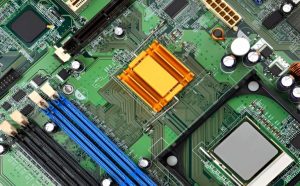
FR-4 remains an important PCB substrate for many medical electronics applications. However, not all FR-4 materials have identical electrical, thermal, or tracking characteristics.
For designs where creepage requirements are important, the laminate’s CTI and other relevant material properties should be verified from the manufacturer’s datasheet.
High-performance FR-4 families may offer higher Tg, improved thermal reliability, better dimensional stability, or higher CTI than standard materials.
Polyimide
Polyimide is widely used for flexible and rigid-flex circuits because of its flexibility and thermal performance.
It can be useful where repeated bending, compact packaging, or dynamic mechanical movement is required.
Aluminum and Copper Cores
Aluminum and copper can provide efficient thermal conduction for applications with significant heat generation.
Copper generally provides higher thermal conductivity but can increase weight and material cost. Aluminum offers a useful combination of thermal performance, weight, and cost for certain designs.
Ceramic Materials
Alumina and aluminum nitride are examples of ceramic materials used when thermal conductivity and electrical insulation are important.
Their application is more specialized than conventional FR-4 and should be evaluated based on the complete thermal and mechanical design.
Solder Mask and Protective Coatings
Solder mask protects exposed copper and helps reduce the possibility of solder bridging during assembly.
Additional protective coatings, including conformal coatings, may be considered when the medical device operates in environments involving humidity, contamination, chemicals, or repeated cleaning.
The coating must be compatible with the PCB materials, components, cleaning process, and intended device environment.
Lead-Free Solder
Lead-free solder alloys are widely used to meet applicable environmental and regulatory requirements.
The selected alloy and reflow profile must be compatible with the PCB materials and components while providing reliable solder joints.
ENIG and Other Surface Finishes
Electroless nickel immersion gold (ENIG) is commonly used where good solderability, surface flatness, and corrosion resistance are required.
Other finishes may also be appropriate depending on the component package, bonding technology, shelf life, and manufacturing process.
High-Frequency Laminates
Specialized high-frequency laminates can be considered for medical imaging, wireless communication, radar-like sensing, or other circuits where dielectric loss and signal stability are important.
The material should be selected using frequency-dependent Dk/Df data and the actual transmission-line requirements rather than simply labeling a material as “high frequency.”
Medical PCB Manufacturing Process
A typical Medical PCB Manufacturing workflow may include the following stages.
1. Design and Engineering
Engineers develop the schematic, component selection, PCB layout, stackup, power architecture, isolation strategy, and mechanical interfaces.
Design verification should address applicable electrical, mechanical, thermal, EMC, and safety requirements.
2. Material Selection
The manufacturer and design team select suitable laminates, copper thicknesses, surface finishes, solder masks, and other materials.
Material selection should be documented and controlled, particularly for regulated products.
3. PCB Fabrication
The PCB is manufactured using processes such as imaging, etching or additive circuit formation, drilling, copper plating, lamination, solder-mask application, and surface finishing.
Advanced medical boards may require HDI, microvia, sequential lamination, controlled impedance, or other specialized processes.
4. Lamination
For multilayer boards, individual circuit layers and dielectric materials are aligned and laminated under controlled temperature and pressure.
Registration control is critical for high-density medical boards because small dimensional deviations can affect vias, pads, and signal routing.
5. Solder Mask and Surface Finish
A solder mask is applied to protect appropriate copper areas, followed by surface finishing of exposed pads.
The selected surface finish must be compatible with the components and assembly process.
6. PCB Assembly
Components can be assembled using:
- Surface-mount technology (SMT)
- Through-hole technology (THT)
- Selective soldering
- Reflow soldering
- Other application-specific processes
For high-density boards, automated placement and controlled soldering processes help improve consistency.
7. Inspection and Quality Assurance
Inspection may include:
- Automated optical inspection (AOI)
- X-ray inspection
- Visual inspection
- Dimensional inspection
- Solder-joint inspection
- Electrical testing
The inspection strategy should be based on product risk and applicable quality requirements.
8. Electrical Testing
PCB assemblies may undergo:
- Continuity testing
- Isolation testing
- Insulation-resistance testing
- In-circuit testing (ICT)
- Functional testing
- Dielectric withstand testing where applicable
Testing should verify the intended electrical performance without confusing PCB-level testing with complete medical-device certification.
9. Reliability and Environmental Testing
Depending on the product, reliability testing may include:
- Thermal cycling
- Temperature-humidity testing
- Vibration
- Mechanical shock
- High-temperature exposure
- Connector durability
- Moisture resistance
The actual test program should be derived from the product requirements and risk analysis.
10. Final Verification and Traceability
Before release, manufacturing records, inspection data, test results, material information, and traceability records should be reviewed according to the applicable quality system.
For regulated medical products, configuration control and change management are also important because even apparently small material or process changes can affect validated performance.
Applications of Medical PCBs
Health and Patient Monitoring Equipment
Wearable and stationary monitoring equipment can use compact medical PCBs to acquire and process parameters such as heart rate, blood oxygen saturation, temperature, respiration, and other physiological measurements.
The PCB must support accurate sensor acquisition while controlling noise and power consumption.
Diagnostic Imaging Equipment
X-ray, CT, MRI, ultrasound, and other imaging systems contain sophisticated electronics for signal acquisition, processing, control, communication, and power management.
These systems may require high-speed digital circuitry, precision analog interfaces, specialized materials, and carefully controlled EMC performance.
Critical Care Monitoring Systems
Operating rooms and intensive-care environments require continuous monitoring and alarm functions.
Medical PCBs in these systems may support sensor interfaces, data processing, display systems, communication interfaces, alarm generation, and power management.
Therapeutic Equipment
Therapeutic devices can use PCBs to control energy delivery, stimulation, fluid delivery, temperature, pressure, or other treatment parameters.
The required PCB architecture depends heavily on the specific therapeutic function and associated safety requirements.
Laboratory Equipment
Automated laboratory analyzers and diagnostic instruments use PCBs for sensing, motor control, fluid handling, optical systems, data processing, and communications.
These boards often need consistent performance over long operating cycles.
Healthcare Automation
Hospitals increasingly rely on electronic systems for equipment monitoring, patient-data management, laboratory information systems, facility controls, and automated infrastructure.
Reliable PCB assemblies provide the hardware foundation for many of these systems.
Challenges in Medical PCB Manufacturing
Medical PCB production presents several challenges that are not always present to the same degree in general consumer electronics.
Strict Regulatory Requirements
Medical products can require extensive documentation, verification, validation, risk management, and traceability.
High Reliability
Safety-critical functions require carefully controlled manufacturing processes and robust quality assurance.
Miniaturization
Smaller medical devices require higher component density, finer routing, smaller vias, and more sophisticated PCB technologies.
Complex Multilayer and HDI Structures
Advanced medical electronics may use multilayer or HDI structures that require precise registration, microvia fabrication, and controlled impedance.
Signal Integrity
Weak biological signals and precision measurements can be highly susceptible to electrical noise and electromagnetic interference.
Material Qualification
Materials must be evaluated for their electrical, mechanical, thermal, environmental, and application-specific requirements.
For patient-contacting or implantable applications, additional system-level biocompatibility and material-safety requirements may apply.
Traceability
Detailed records of materials, components, processes, inspections, and tests can significantly increase manufacturing complexity.
Quality Assurance
Medical PCB production may require more extensive inspection and validation than conventional electronics, increasing development time and manufacturing cost.
How to Choose a Medical PCB Manufacturer

Selecting a medical PCB supplier should be based on documented capabilities and the requirements of the specific medical device rather than on price alone.
1. Evaluate Medical and High-Reliability Experience
Ask whether the manufacturer has experience with the relevant PCB technology, such as:
- HDI PCB
- Rigid-flex PCB
- High-Tg PCB
- High-CTI materials
- Controlled-impedance PCB
- Fine-pitch assembly
- Microvia structures
2. Review Quality Systems
Evaluate the supplier’s applicable quality-management certifications, process controls, inspection systems, corrective-action procedures, and traceability capabilities.
For medical products, ISO 13485 may be relevant to the organization’s quality-management system, but the appropriate qualification requirements should be determined according to the actual product and market.
3. Examine Process Capability
Ask for information about:
- Minimum line/space
- Minimum finished hole size
- Layer count
- Copper thickness
- Microvia capability
- Controlled impedance
- Surface finishes
- Material availability
- Assembly capability
- Inspection methods
4. Confirm Testing and Inspection
A capable supplier should be able to define an appropriate inspection and testing plan, potentially including AOI, X-ray, electrical testing, dimensional inspection, and reliability testing.
5. Consider Component Traceability
For medical assemblies, component authenticity, lot traceability, approved vendor controls, and change management can be important parts of the supply chain.
6. Evaluate Engineering Support
A strong manufacturing partner should be able to identify potential DFM, thermal, signal-integrity, material, and assembly issues before production.
7. Consider Cost and Lead Time Together
Medical PCB pricing is influenced by material selection, layer count, HDI technology, testing, traceability, assembly complexity, component sourcing, and production volume.
The lowest initial quotation is not necessarily the lowest total cost if poor manufacturability leads to rework, delays, low yield, or qualification problems.
Kingda Medical PCB Manufacturing Support
Kingda can support medical-electronics projects with PCB fabrication and assembly solutions tailored to the technical requirements of the application.
Depending on the project, the engineering and manufacturing process can address factors such as PCB material selection, multilayer construction, HDI structures, rigid-flex requirements, controlled impedance, thermal management, SMT assembly, inspection, and electrical testing.
For regulated medical products, the design team should provide the applicable product requirements, regulatory targets, reliability expectations, and traceability requirements at the beginning of the project. This allows the PCB manufacturing process to be aligned with the overall medical-device development and quality strategy.
Conclusion
Medical PCBs provide the electrical foundation for a broad range of healthcare technologies, from patient monitoring and laboratory instruments to diagnostic imaging and therapeutic equipment.
Unlike ordinary consumer electronics, medical electronics often require careful consideration of electrical safety, EMC, signal integrity, thermal performance, material properties, reliability, traceability, and regulatory requirements.
A successful Medical PCB Design therefore begins with the requirements of the complete medical device rather than the PCB alone. The appropriate substrate, layer structure, isolation strategy, copper thickness, surface finish, components, and manufacturing process should all be selected according to the intended application.
Likewise, reliable Medical PCB Manufacturing requires more than standard fabrication capability. Process control, inspection, testing, documentation, traceability, and change management all contribute to consistent product quality.
When these factors are addressed from the beginning, medical PCB technology can provide the compact, reliable, and high-performance electronic foundation required by modern healthcare equipment.