Access Control System PCB: Prototype and Volume Cost Guide
What an Access Control Board Includes
An access control board is the controller that sits between a card reader, a lock and a management system. On the board you typically find a reader interface such as Wiegand or OSDP, a microcontroller or secure processor, a secure element to hold keys, relay outputs to drive the lock, a power section that may include PoE, a network interface, and tamper detection. Some designs integrate the reader, the antenna and the controller on one board, while others separate the reader into a remote unit. That architectural decision, more than anything else, sets the cost, because it decides the board size, the layer count and the connector count.
Prototype Pricing versus Volume Pricing
Access control pricing has a very steep volume curve. At prototype quantity, the fixed charges dominate: fabrication setup, stencil, programming, first article inspection and any test fixture. A small two or four layer controller board can be built in small numbers for a modest sum, but the same board in thousands of units falls to a fraction of that per unit, because the fixed charges spread out and only the materials and placement time remain. The important consequence is that a prototype quote tells you almost nothing about the production price, and a production quote tells you nothing about the cost of the first build. Budget them separately and expect the ratio between them to be large.

What Drives the Prototype Price
Layer count. Two to four layers covers most controllers; six layers appear only when a dense processor or a high speed interface is present. Panel utilisation. Small boards make inefficient panels, so the per-board fabrication cost rises. Connectors and magnetics. Terminal blocks, reader connectors and PoE magnetics are expensive parts and slow to place. Fine pitch. A ball grid array processor drives up inspection and rework cost. Test. A functional test that exercises the reader interface, the relays and the tamper input needs a fixture, which is a fixed charge. Turnaround. Expedited fabrication and assembly carry a clear premium across the whole chain.
What Drives the Volume Price
Bill of materials. Once the fixed charges are gone, the components dominate, and the secure element, the PoE magnetics and the processor are usually the largest lines. Placement count. Every additional component adds machine time; consolidating the design pays off at scale. Panel utilisation. Board outline and array design determine how many units come from each panel, which directly sets the fabrication cost per unit. Test strategy. Automated in-circuit test with a fixture is expensive to set up but cheap per unit, while manual functional testing is the reverse, so the crossover volume matters. Certification. For a product that must meet safety and EMC requirements, the test and documentation cost is fixed and must be spread across the programme. Conformal coating and enclosure. If the board is coated or assembled into a housing, those steps add per-unit cost.
Design Choices That Reduce Cost
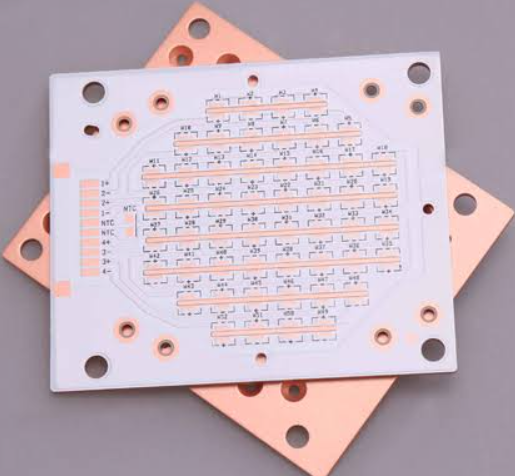
Keep the layer count to what the routing actually needs, and prefer four layers with a solid ground plane over six with a marginal benefit. Use a standard high-Tg laminate rather than a specialty material unless the environment demands it. Avoid fine pitch processors where a larger package will do, because the assembly cost difference is larger than the board area saved. Reduce the number of connectors by combining signals into a single terminal block where the wiring allows. Where PoE is required, use a proven module rather than a discrete implementation, because the magnetics and the controller cost more and take more area when built discretely. Finally, keep the board outline efficient so the panel is used well, since a small change in outline can move the fabrication cost more than a change in layer count.
Security Features and Their Cost
Access control products hold credentials, so a secure element and secure boot are usually required, and they add both component cost and engineering effort. The secure element itself is inexpensive, but the interface has to be routed carefully and the firmware has to support key provisioning, which is development cost rather than material cost. Tamper detection adds a switch or a mesh and a small amount of circuitry. Encryption in transit is a firmware matter for the most part, though it may push the processor selection upward. The mistake to avoid is treating security as an add-on at the end, because retrofitting it usually forces a board revision and a new certification cycle.
Cost planning for an access control product needs both the board and the process in view, so the design should be reviewed with the fabricator early. Review how PCB manufacturing handles small boards and panel utilisation, apply the layout rules in your PCB design and layout, and check the design and manufacturing considerations before release. A prototype PCB assembly run proves the reader interface and the relay drive before the production commitment.
How to Budget
Separate the budget into three lines. The first is the engineering and prototype line, including fabrication, assembly, stencil, fixture and first article, which is largely fixed. The second is the production line, driven by the bill of materials, placement count and panel utilisation. The third is the qualification line, covering EMC and safety testing, documentation and any certification renewal. Then apply the volume assumption to each line separately, because they scale very differently. A programme that looks expensive at ten units can be very competitive at five thousand, and the only way to see that is to keep the three lines apart.
FAQ
Why is my prototype ten times the volume price? Because fabrication setup, stencil, programming and fixture charges are fixed and spread across very few units.
Do I need six layers for an access controller? Usually not. Four layers with a solid ground plane handle most reader and network interfaces.
Is PoE expensive to add? It adds magnetics, a controller and board area, and a proven module is generally cheaper than a discrete design.
Does security add much cost? The components are inexpensive; most of the cost is the engineering effort and any certification impact.
Conclusion
Access control PCB cost splits cleanly into a fixed engineering and prototype line, a variable production line and a qualification line. Keep the design to four layers where possible, use standard materials, avoid unnecessary fine pitch, consolidate connectors and choose a proven PoE module. Do that in 2026 and the prototype will still be expensive, but the production price will land where the programme needs it.