A Channel That Changed the Hardware Business
In September 2026 an international consumer electronics exhibition hosted a Chinese cross-border platform showing AI smart glasses, bionic flapping-wing aircraft, three-dimensional printers and electric bicycles. Platform data indicates that exports in the AI hardware category doubled year on year during the first seven months of 2026, with August sales in the European Union rising ninety-seven percent year on year and brand penetration exceeding fifty percent in eleven European markets including Germany, France and Poland.
For the electronics supply chain, the significance is not the growth rate. It is the route to market. A brand selling through a global platform reaches customers in dozens of countries within the first year, which means its products face many regulatory regimes, many shipping conditions and many service expectations simultaneously, often before the company has built a supply chain designed for that reach.
This is a different problem from exporting components to a single large customer. There, the customer defines the requirements and the supplier complies. Here, the requirements vary by destination and change over time, and the manufacturing chain has to absorb that variation without redesigning the product.
Cost of compliance also scales with the number of markets. Testing in three regions costs three times as much as testing in one, and each additional market adds administrative effort that a small team cannot absorb. Designing a single hardware platform that satisfies the strictest of the target markets is usually cheaper than maintaining regional variants, though it constrains the component and layout choices available.
Compliance Stops Being a Single Certificate
Electronic products sold across markets need electromagnetic compatibility, safety, radio, battery transport and in some cases chemical compliance documentation. Each market accepts different marks and applies different limits. A product validated for one region may require testing and possibly redesign for another.
The boards inside the product sit at the centre of that requirement. Electromagnetic emissions depend on board layout, grounding and shielding as much as on the design of the enclosure. Changing a supplier or a stackup can affect compliance, which is why documentation of what was tested, on which revision, matters as much as the certificate itself.
Practical cross-border programmes therefore maintain a configuration record that links each certification to a specific board revision and component population. When a supplier substitutes a part or a fabricator changes a material, the record shows whether the change is inside the tested configuration. Without it, every change becomes a testing question and the schedule collapses.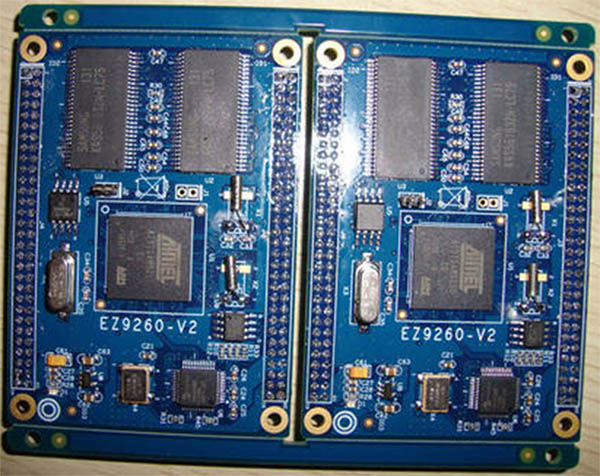
Fabrication consistency has a specific technical meaning here. It is the ability to hold impedance, registration and plating thickness within a narrow band across panels and across months. Those parameters are not visible to the end customer, but they determine whether the product behaves identically in Berlin and in Shenzhen, and identical behaviour is what makes a global warranty viable.
Consistency Travels Better Than Capability
A brand selling globally lives on its failure rate, not on its specification. Reviews are public, return rates are visible to the platform, and a batch with a higher defect rate damages the product in every market at once. Consistency in manufacturing therefore has a direct commercial value in this channel that it may not have in a business-to-business relationship.
Consistency is difficult to buy and difficult to verify from outside. It appears in the width of the process distribution rather than in its centre, which means a supplier that meets the specification is not necessarily a supplier that meets it repeatedly. Customers buying boards for a cross-border product should ask for performance data over time rather than a single qualification result.
The practical test, whether the product is a new design or a mature one, is whether the manufacturer can describe what it measures routinely, at what frequency, and what it does when a measurement moves toward a limit. A factory that measures and reacts is producing consistently; a factory that measures only at incoming and final inspection is detecting problems rather than preventing them.
There is one further consideration that catches exporters repeatedly: repairs and refurbishment. Products returned from one market and reconditioned may be resold in another, and the reconditioned unit must meet the same compliance requirements as a new one. That constrains how repairs may be performed and what parts may be used, which in turn influences how the product should be assembled in the first place.
Shipping Conditions Are an Engineering Requirement
Products sold across borders spend weeks in transit, often in containers that experience high humidity and temperature swings. Boards and assemblies that perform correctly in a laboratory can suffer in that environment if they are not protected. Conformal coating, moisture barrier packaging and desiccant management are not optional in long-distance distribution.
Battery-containing products add further constraints. Shipping regulations for lithium cells differ between modes of transport and destinations, and the state of charge at shipment may be regulated. That influences the battery management design and the final test procedure, because the unit must be shipped in a defined condition.
Handling damage is the third factor. Packaging that protects a domestic shipment may be inadequate for a journey involving several transfers. Design for logistics is a genuine engineering activity in this market, and it is best decided with the manufacturing partner who packs the units rather than by the brand alone.
Spare parts strategy follows from the same reasoning. A brand selling into eleven countries needs a spare board available in each region, which multiplies the inventory required for a low-volume product. Designing the product so that a small number of board types covers every variant reduces that burden substantially.
Service and Returns Across Many Markets
Returns are expensive when the product must travel back across a border. That gives manufacturers an incentive to design for replaceable modules and for diagnostics that a distributor can perform, rather than requiring every failure to return to the factory. The design decision affects connectors, mounting and how boards are tested.
Diagnostics also require data. If a unit is returned without a record of what failed, the engineering team learns nothing and the defect rate stays the same. Building a diagnosis path into the product, even something as simple as a self-test mode, converts returns into information.
This is where quality management extends beyond the factory. A programme that collects field failure data and feeds it back into manufacturing controls improves faster than one that treats returns as a logistics cost, and in a cross-border business the difference compounds because the feedback loop is longer.
A useful question when comparing suppliers is how they handle a specification change requested by a customer in another time zone. Programmes that rely on informal communication tend to lose changes at that boundary, and a change lost at the boundary between a brand and its manufacturer can reach the market as an untested product.
Supplier Selection in a Global Channel
Brands selling through cross-border platforms usually have small engineering teams and fast product cycles. They need suppliers who can handle prototype quantities quickly, hold the process stable as volume grows, and provide documentation suitable for certification in multiple markets.
That combination favours manufacturers who treat documentation as part of the product. Material declarations, process records, test reports and change notifications are all required by a brand whose customers are regulators and platforms, and assembling them afterwards is far more expensive than generating them during production.
Access to components matters too. A brand selling globally cannot afford a component shortage that stops a product mid-season, and it usually lacks the purchasing scale to resolve one alone. A manufacturing partner with established distribution relationships and an approved alternate list provides resilience that the brand cannot build independently. That is the practical value of component procurement support.
Where the Manufacturing Risk Actually Sits
Most failures in this market come from change, not from the original design. A supplier substitutes a component, a fabricator adjusts a laminate, a factory changes a reflow profile, and the product that passed certification is no longer the product being shipped. Controlling change is therefore the primary manufacturing discipline for a global product.
The control mechanism is unglamorous: a defined change process with notification requirements, validation criteria agreed in advance, and records that link every shipment to a configuration. Manufacturers with a documented production process can implement this without slowing down, while those without one tend to discover the need at the worst moment.
For brands entering the export channel, the practical recommendation is to choose manufacturing partners on their change control and documentation capability rather than on price alone, and to start the certification conversation before the first production run. The cost of doing otherwise appears later as a market withdrawal, and that is a more expensive failure than a higher unit price.
The Shape of the Next Phase
The growth in this category reflects a real shift: hardware categories that were once dominated by established brands are now entering markets through platforms, with small teams and fast iterations. That model works only when the supply chain can absorb compliance, logistics and consistency on behalf of the brand.
Manufacturers positioned to do that, with volume production experience, documentation discipline and reliable component access, become partners rather than vendors. As AI hardware continues to spread into wearables, home devices and small robotics, that partnership model is likely to become the standard way consumer electronics reaches international customers.
The platform data is a leading indicator of that shift, and the companies that respond by building export-ready manufacturing processes will capture the volume that follows it.