Assembly Pallet and Fixture Design for SMT Production
A pallet is the carrier that holds a board through the assembly line, and a well designed one is invisible: the board sits flat, the fiducials are visible, the conveyor grips it and nothing moves. A badly designed one produces placement errors, broken components and a thermal profile that nobody can explain, and the fault is often blamed on the machine rather than on the carrier. Pallet design is therefore part of process engineering, and the drawing deserves the same review as the stencil.
Why Pallets Are Used
A pallet carries a board that the conveyor cannot handle on its own, supports a thin or flexible board that would otherwise sag, and provides a stable datum for printing and placement. It also protects the underside of an assembly from the conveyor rails. Where the board carries components on both sides, the carrier is the only way to move it through the line without touching them.
The alternative is to run the board directly on the rails, which works for a rigid board of standard thickness with edges that are free of components. Where any of those conditions fails, a carrier becomes necessary. Our tooling guide explains how the datum and the tooling features are defined.
Pallet Materials
The common materials are a high temperature composite, an aluminium alloy with an insulating coating, and a machined engineering polymer. The choice is driven by the temperature of the process, the dimensional stability required and the weight the conveyor can carry.
Aluminium is stable and easy to machine, but it conducts heat and must be insulated to avoid shorting the board. The insulating layer also wears, so the resistance between the carrier and the board should be checked periodically. Composites are lighter and thermally insulating, which makes them the usual choice for a reflow process.
Board Retention and Clamping
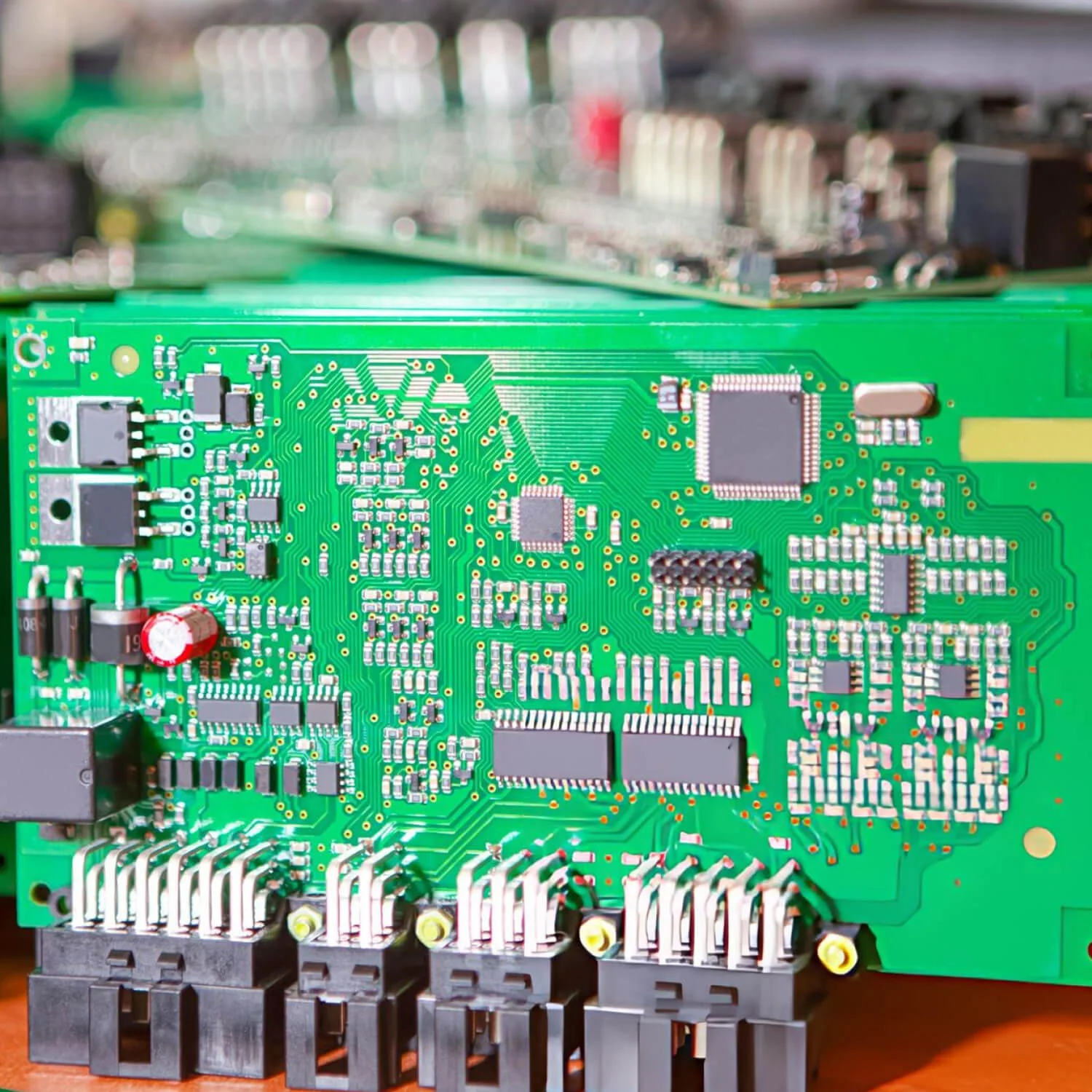
The board has to be held flat and in a repeatable position. Methods include edge clamps, vacuum hold down, spring loaded pins and magnetic retainers, and the choice depends on the board area available and on whether components are present on the underside.
Where the retention allows any movement, the placement machine will see the board in a slightly different position on every cycle. The result is a random placement offset that is difficult to diagnose because the machine itself is repeatable. Checking the board position after the clamping step, rather than only before it, is the quickest way to find this problem.
Support and Fiducial Placement
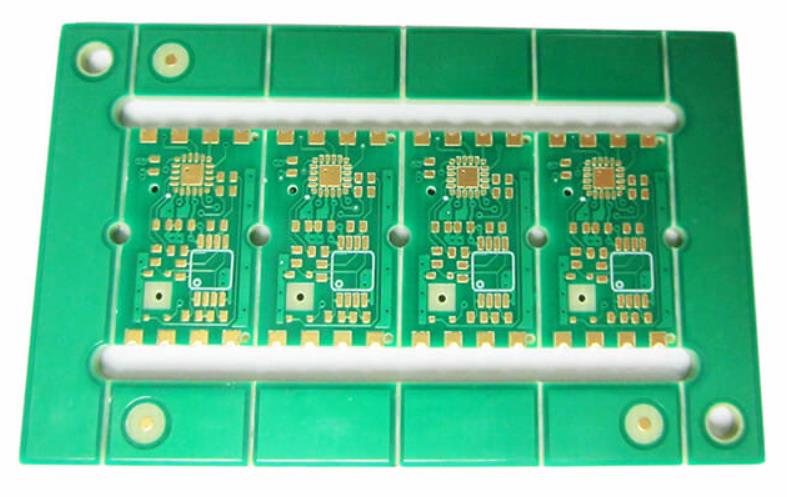
A thin board printed over an open area will flex under the squeegee, so the pallet should provide support pins or a support plate beneath the board. The support has to be positioned so that it does not press on a component or a via. A support pin under a via can crack the barrel, and a pin under a component can break it during the print stroke.
The fiducials have to be visible through or past the pallet. Where the board fiducials are covered, the pallet carries its own fiducials and the machine aligns to those, which introduces an additional tolerance between the pallet and the board. Where that tolerance is significant, the pallet fiducials should be replaced by board fiducials at the first opportunity. Our quality documentation describes how these conditions are classified at gopcb.
Conveyor Compatibility
The pallet has to interface with the conveyor of every machine in the line. Width, edge clearance, thickness and the position of any locating features differ between printers, placement machines and ovens, so a pallet designed for one machine may not fit the next. The carrier should be checked against the narrowest machine in the line rather than against the widest.
The line up between the machines is also a practical issue, because a pallet that is slightly out of specification will transfer with a bump that moves the board. Checking the transfer after a changeover is worth the few minutes it takes. A transfer failure usually appears as a placement offset on the first boards of a run, which is a useful early signal.
Effect on Thermal Profile
A pallet adds thermal mass and changes the way heat reaches the board. An aluminium carrier heats and cools quickly and draws heat from the board edges, while a composite carrier insulates and slows the ramp.
The profile therefore has to be measured with the board in its carrier rather than on the conveyor alone. A carrier that insulates the board can also delay the cooling rate, which affects the solder joint structure. Where a carrier is introduced after the profile was set, the profile should be re-measured before production. Our depaneling guide covers the following step, where the carrier often also provides support. Where the carrier is used for depaneling support, the two functions should be designed together rather than in sequence.
Maintenance and Cleaning
Pallets accumulate flux, solder paste and dust, and a deposit on a support surface raises a point that presses into the board. They should be cleaned on a schedule and inspected for damage to the retaining features.
Cleaning chemistry has to be compatible with the material and with the insulating coating. An aggressive cleaner that softens the coating will eventually create a short circuit path through the pallet. A cleaning schedule that names the chemistry and the temperature is more useful than a general instruction to keep the carriers clean.
Common Problems
The common problems are placement offset from poor retention, board flexing during printing, components broken by a badly placed support pin, and transfer failures on the conveyor. Each of them is traceable to the design of the carrier rather than to the machine.
A pallet that is shared between several products is a frequent source of trouble, because the support positions that suit one board will press on components on another. Dedicated pallets are more expensive and usually cheaper overall. Where a shared carrier must be used, the support positions should be reviewed against every product that will run on it.
Process Control Points
The controls are the pallet drawing and its revision, the material lot where it matters, the retention check before each run, the support pin positions, the conveyor interface dimensions and the cleaning schedule.
Each pallet should be identified and its condition recorded, so that a problem can be traced to a specific carrier rather than to the line. A carrier history is a small record that resolves a large number of production arguments. Our production flow guide places the carrier in the wider sequence from solder paste printing to final test.
FAQ
When is a pallet needed? When the board cannot be carried directly, when it is too thin to stay flat, when components are present on the underside, or when a machine in the line requires a carrier.
Does a pallet change the reflow profile? It does, because it changes the thermal mass and the way heat reaches the board. The profile should be measured with the board in its carrier.
Can one pallet serve several products? Sometimes, but the support positions that suit one layout can press on components on another. Where the layouts differ, dedicated carriers are usually the cheaper option.