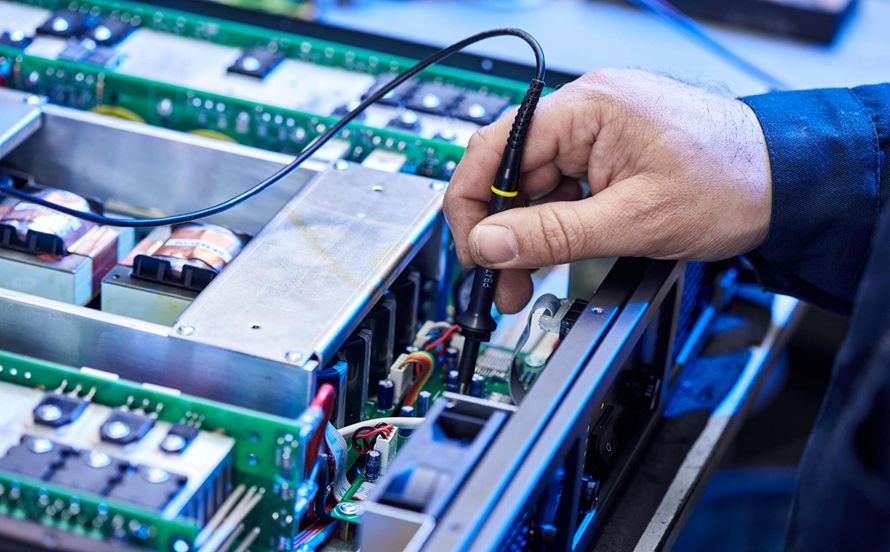
Assembly Work Instructions and Operator Training
A work instruction tells the operator what to do at one station. It works when it is written for that station rather than for the product as a whole, and when it changes at the same moment the product does.
What Belongs on the Drawing
The drawing carries the specification: values, positions, polarity and the acceptance criteria that apply. The instruction carries the method: which tool, which setting, which sequence.
Duplicating the specification in the instruction creates a second source of truth. Our design release notes describe the release that should precede it.
What Belongs in the Instruction
The instruction should state the tool, the setting, the quantity of material, the sequence and the check that ends the step. Anything an experienced operator would have to remember belongs in it.
It should also state what to do when the step cannot be completed. Our floor control notes describe the escalation that goes with it.

Visual Aids and Boundary Samples
A photograph of a correct and an incorrect joint is worth more than a paragraph of text. Boundary samples, kept at the station, do the same job for a judgement call.
The samples have to be replaced when the criterion changes. Our joint criteria notes describe the criteria they represent.
Revision Control
The instruction carries the revision of the drawing it implements, and the station should not be working to an old revision after a change. The withdrawal of the old instruction is the part that most often fails.
The change record should state the effect on each station. Our fabrication notes list the points to confirm.
Training and Qualification
Training establishes that the operator can perform the step, and qualification records it. The record should state which revision the operator was trained to.
A new operator on a changed process needs both. Our floor notes describe the matrix that tracks it.
Auditing the Instruction in Use
The useful audit observes the operator without warning and compares what happens with what the instruction says. A discrepancy is a signal about the instruction at least as often as about the operator.
Our yield analysis notes describe how the findings are followed up.
Verification
The verification is an instruction that names its drawing revision, a station that carries the current revision only, a boundary sample kept at the station, and a training record that states the revision trained to.
Our quality notes describe how the records are kept.
Additional Considerations for This Build
Practical attention to assembly drawing pays for itself here, because it decides whether the finished board behaves as the drawing intended. Where the requirement is not stated on the fabrication drawing or in the assembly notes, the shop has to assume a default, and that default is rarely the value the design was simulated with. Stating assembly drawing explicitly, together with the tolerance that applies, removes the assumption and keeps the result predictable from batch to batch.
Deliberate attention to operator training pays for itself here, because it decides whether the finished board behaves as the drawing intended. Where the requirement is not stated on the fabrication drawing or in the assembly notes, the shop has to assume a default, and that default is rarely the value the design was simulated with. Stating operator training explicitly, together with the tolerance that applies, removes the assumption and keeps the result predictable from batch to batch.
Process Control and Verification
On a design of this kind, work instruction is the item that decides how the rest of the board is arranged. Reviewing the design before the data is released is cheaper than correcting it after the panel is in the tank, because every step downstream inherits the decision made at the front end. Documenting the assumption is part of the design work, and a short note on the drawing prevents a question that would otherwise arrive a day later and cost a day of schedule.
The process window is set by the narrowest step in the flow, so an improvement anywhere else shows up as margin rather than as yield until that step is addressed. A short note on the drawing about handling, storage or packaging is often worth more than an extra decimal place on a tolerance.
Where a value sits close to a process limit, the drawing should say so, since the shop can then open the process window rather than working to a nominal figure that carries no tolerance. A stack-up that is drawn rather than described removes most of the ambiguity from a quotation, and it lets the fabricator price the board against the dielectric and copper weights that will actually be used.
Where the requirement is not written down, the shop supplies its own default, and the default is chosen for the process rather than for the design. The measurements that matter are the repeatable ones: conductor width and spacing, annular ring, finished hole size, plating thickness and surface finish are all verifiable on a coupon that travels with the panel.
Running a first article through the same checks as the production panel confirms that the two agree, and that comparison is the cheapest form of process control available at prototype stage. Keeping a sample from the panel turns a dispute into a measurement, because the same coupon can be re-examined by both parties without rebuilding the batch.
Process Control and Verification
On a design of this kind, work instruction is the item that decides how the rest of the board is arranged. Reviewing the design before the data is released is cheaper than correcting it after the panel is in the tank, because every step downstream inherits the decision made at the front end. Documenting the assumption is part of the design work, and a short note on the drawing prevents a question that would otherwise arrive a day later and cost a day of schedule.
The process window is set by the narrowest step in the flow, so an improvement anywhere else shows up as margin rather than as yield until that step is addressed. A short note on the drawing about handling, storage or packaging is often worth more than an extra decimal place on a tolerance.
Process Control and Verification
On a design of this kind, work instruction is the item that decides how the rest of the board is arranged. Reviewing the design before the data is released is cheaper than correcting it after the panel is in the tank, because every step downstream inherits the decision made at the front end. Documenting the assumption is part of the design work, and a short note on the drawing prevents a question that would otherwise arrive a day later and cost a day of schedule.
A first article check confirms that the process and the drawing agree on the points listed above, and that the coupon data supports the values used in the design.
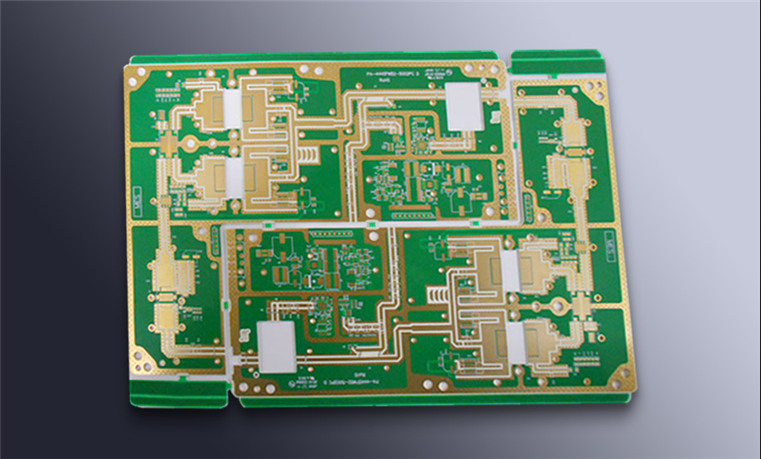
Where a measurement falls outside the expected window, the sample is retained so that the cause can be established before the balance of the batch is released.
FAQ
How long should an instruction be? Long enough to cover the step and short enough to be read at the station. If it runs to several pages it is usually covering more than one station.
Can the instruction be electronic? It can, provided the current revision is what the station sees and an old revision cannot be opened by accident.
What does gopcb provide for work instructions? We provide instructions written per station, a stated drawing revision on each, boundary samples kept at the station and replaced when the criterion changes, withdrawal of superseded revisions, and training records that name the revision trained to.