Lamination Press Vacuum Leak Test: Seals and Void Control A lamination press pulls a vacuum on the stack before and during the press cycle so that air and volatiles leave the layers. Any air that remains becomes a void or a thin spot in the finished board. The vacuum system…
Drill Room Temperature: Climate Control for Drilling Drill room temperature is one of the least glamorous settings in a PCB shop and one of the easiest to let drift. The room holds hundreds of small cutting tools, several precision machines and stacks of laminate, and all of them respond to…
Open Time on the Line: Keeping a Print Consistent Open time is the period during which solder paste can be out of its container and still print within specification. It is a property of the material and it is short, which means every pause in production consumes part of it.…
Etch Spray Uniformity: Nozzle Pattern and Delivery Etch spray uniformity is how evenly the etchant reaches the copper across the whole panel, and it decides whether a panel etches to the same result at its centre and at its edges. The chemistry may be perfectly controlled while the delivery is…
Edge Plating: Castellations and Sidewall Connections Edge plating is a conductive layer deposited on the sidewall of a board, and it serves three purposes: connecting a ground plane to the chassis, forming the half holes of a castellated module, and providing a solderable edge for a connector. Each purpose sets…
Press Bladder Care: Membrane Condition and Lamination A press bladder is the flexible membrane that transfers pressure and heat from the press platens to the stack of panels. It separates the hydraulic or pneumatic pressure from the board surface, and it also forms part of the vacuum enclosure. When the…
Copper Filled Via Planarity: Dimple and Cap Control Via planarity describes how flat a filled via is relative to the surrounding copper, and it decides whether a component can be placed over it. A filled via that is slightly dished leaves a dimple that traps paste and creates a void.…
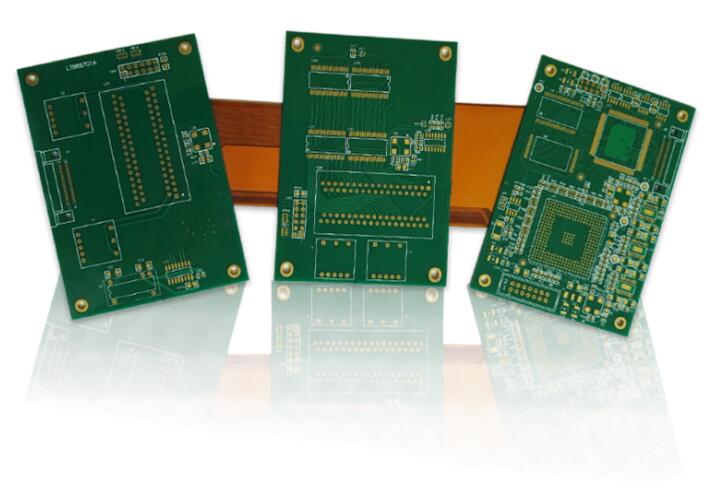
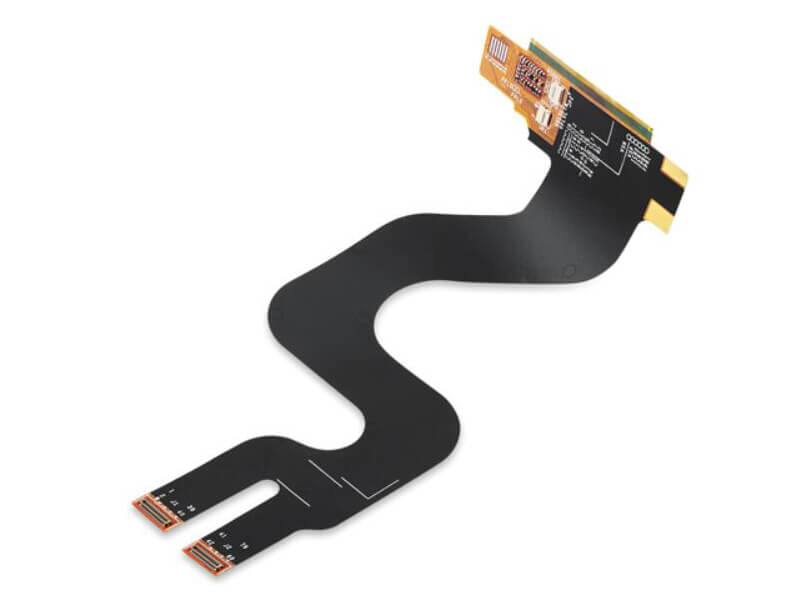
Rigid-Flex Bend Radius: Designing the Transition Zone A bend radius is the radius of the curve a flexible circuit is formed into, and it is the single number that most strongly determines whether the circuit survives. Bending stretches the copper on the outside of the curve and compresses the copper…
Solder Mask Ink Mixing Ratio: Two-Part Control The mixing ratio of a two-part solder mask ink decides how the chemistry cures, and it is one of the few settings that cannot be corrected later. Part A carries the resin and the pigment, and part B carries the hardener. Getting the…
Warpage and Reflow: Where the Stress in a Board Comes From Warpage is a change in the shape of a board, and it appears when the layers that make up the board expand or contract by different amounts. The movement is small in absolute terms and it is large relative…