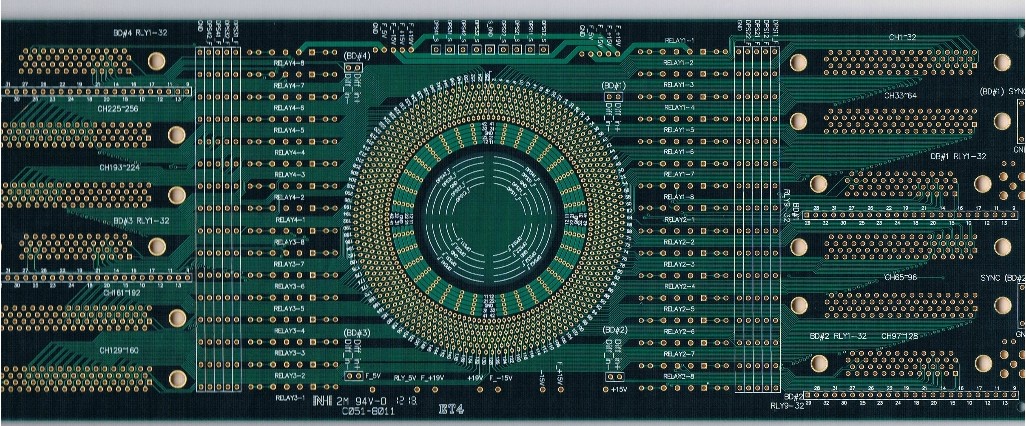
Antipads And Inner Layer Copper Voiding Every via passes through layers it does not connect to, and on each of those layers the copper must be removed around the barrel. That clearance is the antipad, and its size is one of the few layout parameters that affects impedance, manufacturability and…
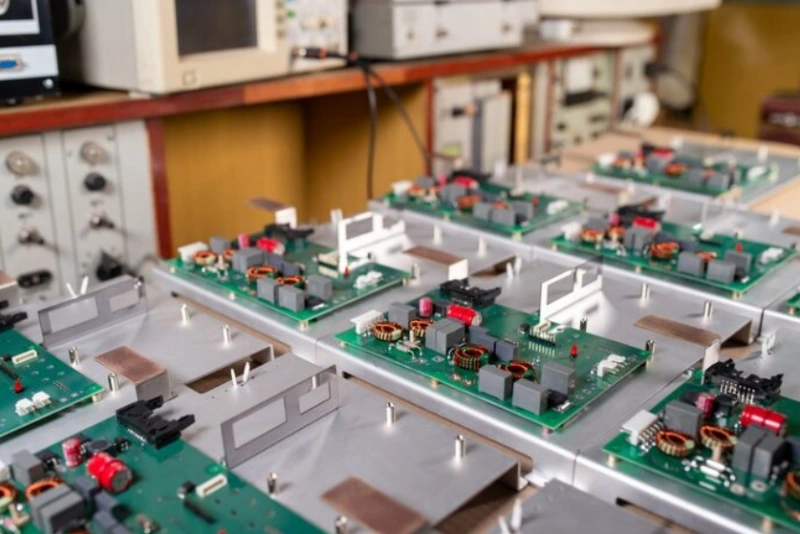
Edge Clearance: Preparation, Placement and Process Control Every surface mount line has a set of dimensional limits that are not written on the board drawing but are enforced every time the panel enters a machine. Understanding those limits explains why a design that is electrically perfect can still be difficult…
Differential Pair Matching And Phase Tuning A differential pair carries information in the difference between two conductors, and the receiver recovers it by comparing them. Anything that delays one member of the pair relative to the other reduces that difference before the comparison is made, and the loss is not…
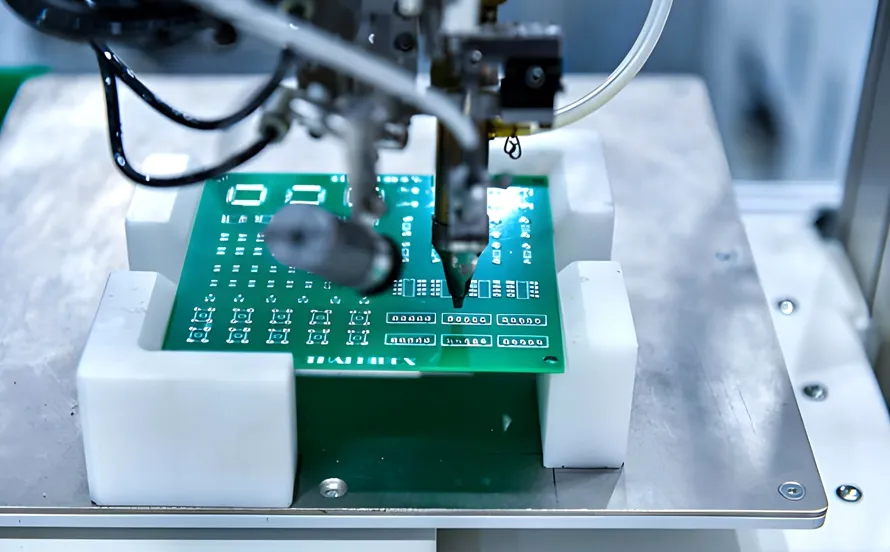
Adhesive Application Control on the SMT Line Adhesive application looks like the simplest operation on an SMT line: a dispensing head moves across the board and leaves a row of dots. In practice it is one of the most sensitive steps in the process, because the result, a dot a…
Drill Wear: PCB Drilling and Hole Quality: What Controls the Result The quality of a drilled hole determines the quality of everything that happens inside it, and the factors that control it are divided between the designer, who sets the geometry, and the shop, which sets the process. Understanding where…
How a PCB Unit Price Is Calculated: The Real Breakdown A unit price is an average, and averages hide their inputs. The number a buyer receives contains material, process time, yield, tooling amortisation and test, and each of those responds differently to volume and to design change. This guide explains…
Solder Paste Printing Parameters and Squeegee Control Solder paste printing is the step that decides how much alloy each pad receives, and almost every assembly defect can be traced back to it. Deposit volume, shape, and position all come from the interaction between a stencil, a squeegee, a paste, and…
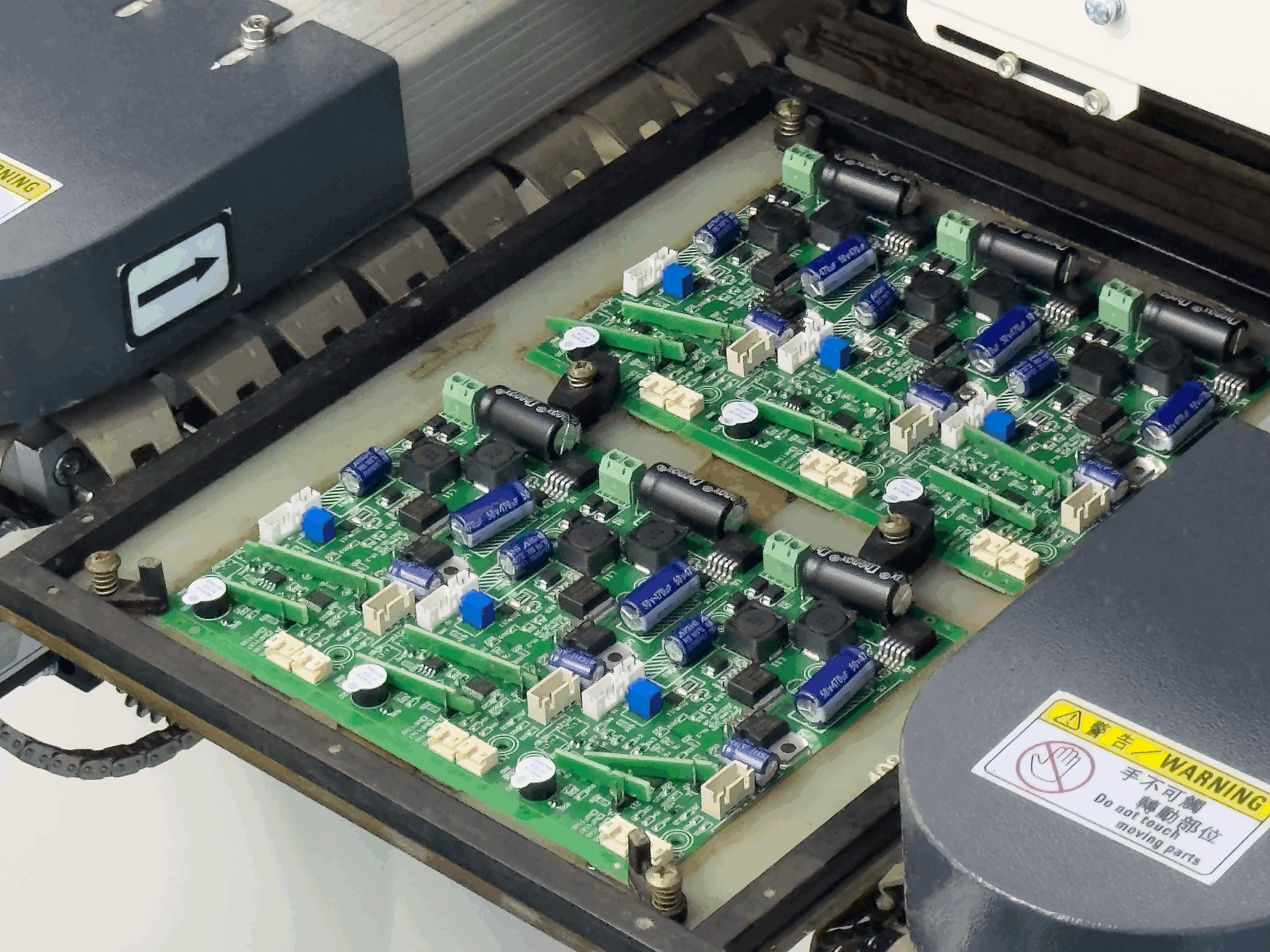
Edge Clearance: SMT Line Requirements: Clearance, Fiducials and Panel Size Every surface mount line has a set of dimensional limits that are not written on the board drawing but are enforced every time the panel enters a machine. Understanding those limits explains why a design that is electrically perfect can…
What Ages A Conformal Coating On A PCB A coating that still looks intact after five years in the field may already have failed electrically. The film is a barrier, and barriers degrade gradually: adhesion is lost at the edges first, moisture migrates along interfaces, and the ionic contamination trapped…
Clock Buffer Skew and Fanout Design for Converters Clock distribution is one of those design tasks that looks trivial until it is measured. A source oscillator drives several loads, a buffer fans the signal out, and the schematic shows a clean tree. On the bench the picture changes: two outputs…