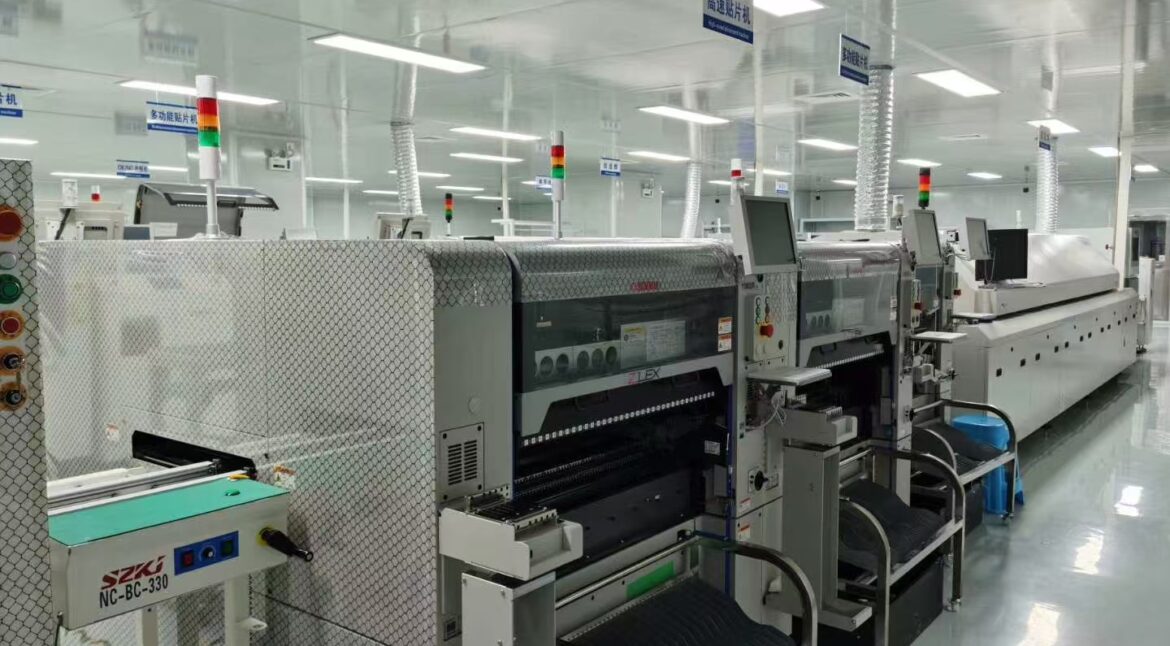
Oxygen Concentration: Design Rules and Process Limits The oxygen concentration inside a reflow oven decides how much of the flux is consumed by the atmosphere rather than by the solder. At the 210,000 ppm of ordinary air, oxidation competes with wetting throughout the profile; at 1,000 ppm in a nitrogen…
Anodic Bleed Under Conformal Coating: Causes and Controls Anodic bleed is the dark, sometimes glassy track that appears along a conductor on a coated assembly after the board has spent time under bias in humid air. It is a corrosion product rather than a coating defect, and it belongs to…
Solder Resist Dam Design: Dam Width and Component Spacing A solder resist dam is the strip of mask that separates two adjacent openings on a board. It prevents solder from bridging between pads during assembly, keeps the paste on the pad during printing, and provides the electrical isolation the design…
Surface Finish Shelf Life: Storage and Solderability Control Every board finish changes from the day it is applied. Oxide grows on the surface, intermetallic compounds grow between the finish and the copper beneath it, and the result is a surface that solders less readily than it did on the day…
Panel Utilization and Routing Margin in PCB Fabrication Panel utilization is the share of the panel area that ends up as delivered boards, and it is set at the moment the board outlines are nested. Everything else on the panel, the process edge, the gaps between boards, the tabs, the…
Copper Contamination in the Solder Pot: Signs and Limits Copper contamination is the slowest and most predictable way for a wave soldering bath to drift out of specification. Copper dissolves into the molten alloy from every plated through-hole, every exposed pad and every tinned lead that passes over the wave,…
Reflow Conveyor Vibration: Where Components Move Conveyor vibration is one of the few reflow variables that leaves no trace in the profile. The thermocouple records the peak temperature, the zones hold their setpoints and the boards come out at the right rate, yet a handful of small parts have moved…
Squeegee Speed Control: Aperture Fill and Paste Release Squeegee speed is the rate at which the blade travels across the stencil, and it sets the time each aperture has to fill with solder paste. It is the parameter most often changed to improve a marginal print and the one least…
Contact Printing: Exposure Energy and Registration Accuracy Contact printing forms the resist image by placing a photographic film directly against the resist-coated panel and exposing it through the film. The gap between film and resist is essentially zero, so the image is transferred with the resolution the film and the…
SMT Print Room Humidity: Control for Consistent Paste Printing Solder paste is sensitive to the air around it, and the print room humidity is one of the few variables that affects the paste before it is even printed. A room that is too dry dries the paste in the stencil…