Automotive PCB Price: FR4, High-Tg, HDI and Rigid-Flex Compared
What Makes an Automotive Board Different
A car is a hostile place for electronics. A board under the bonnet sees minus 40 degrees in winter and more than 150 degrees near the engine, along with vibration, humidity, salt and years of thermal cycling. The accepted quality framework reflects that: IATF 16949 for the manufacturing system, AEC-Q stress test families for components, and a documented zero defect expectation with full traceability. Those requirements, not the circuit, are what separate an automotive PCB price from a consumer one, because they change the material, the process window, the inspection level and the paperwork that accompanies every shipment.
FR4 Automotive Boards
Standard FR4 remains the workhorse for cabin electronics: infotainment, body control, lighting drivers and sensor modules that never see extreme heat. It is the cheapest option and, in the quantity a vehicle programme consumes, the price is set almost entirely by layer count, board area and surface finish. The limitation is temperature. Standard FR4 has a glass transition temperature around 130 to 140 degrees Celsius, which is adequate for a cabin module but marginal near a heat source, where the laminate softens, expansion rises and plated hole reliability falls.
High-Tg Automotive Boards
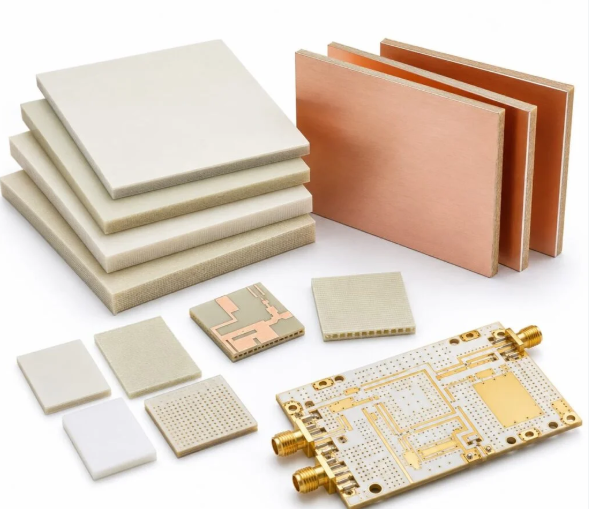
High-Tg laminate, with a glass transition temperature around 170 to 180 degrees Celsius, is the standard upgrade for anything mounted outside the passenger compartment or near a power stage. It keeps its mechanical stiffness at higher temperature, expands less during thermal cycling and tolerates the repeated reflow of a multi-step assembly. On paper the board is similar to standard FR4, so the artwork does not change much, which makes high-Tg the most efficient way to buy reliability. Expect a modest premium over standard FR4 rather than a step change.
HDI Automotive Boards
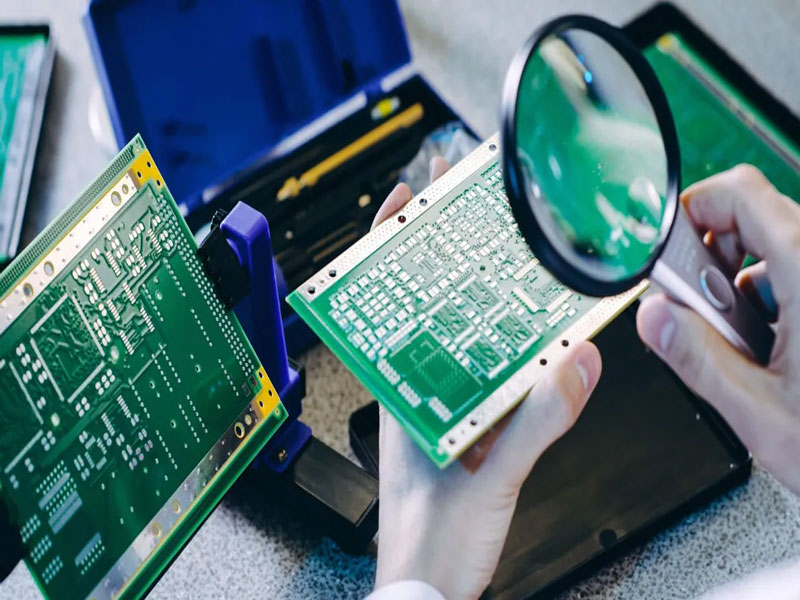
Driver assistance, radar, camera modules and central computing platforms have pushed automotive designs into high density interconnect territory. HDI uses laser drilled microvias, finer lines and multiple build-up layers, which lets a small board carry a dense package such as a radar SoC or a camera processor. The price reflects the extra steps: sequential lamination, laser drilling, finer registration and lower yield. HDI is also the enabler for a smaller board, which can offset part of the premium by saving enclosure space and weight, a factor that matters in a vehicle where every gram is counted.
Rigid-Flex Automotive Boards
Rigid-flex combines rigid sections that carry components with flexible sections that fold, replacing connectors and cables in tight spaces such as a camera module, a battery monitoring harness or a sensor cluster. It removes connector interfaces, which improves reliability, but it is the most expensive option because it needs flexible materials, multiple lamination cycles, and careful control of the bend radius and the coverlay. In a vehicle, rigid-flex is chosen when the mechanical packaging demands it or when connector reliability is critical, not to save board cost.
Price Comparison at a Glance
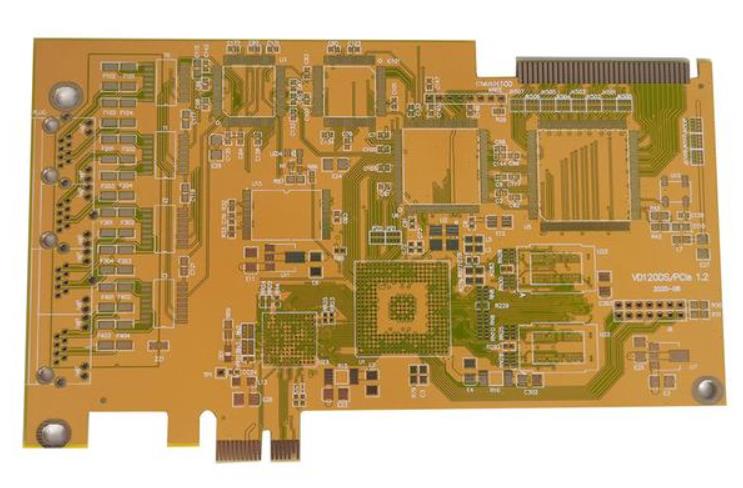
Standard FR4. Baseline cost, cabin applications, limited temperature range. High-Tg FR4. A modest premium, wider temperature range, the default for engine bay and power electronics. HDI. Roughly two to four times the cost of an equivalent FR4 board, used for dense computing and sensing. Rigid-flex. Roughly three to eight times the cost, used where folding and connector elimination justify it. On top of the board price, automotive programmes add qualification, traceability and documentation costs that are largely fixed, so they weigh more heavily on small volumes.
What Drives the Premium
Material class comes first: polyimide and high-Tg laminates cost more than standard epoxy. Process capability comes next, since laser drilled microvias, fine lines and sequential lamination each reduce yield and increase the number of steps. Surface finish matters for connectors and for corrosion resistance, and finishes such as hard gold or immersion gold carry their own premium. Testing and documentation are the third driver, because automotive customers expect electrical test, thermal stress, micro-section data and traceability records with the shipment. Finally, the volume commitment shapes the price more than anything else, as tooling and qualification costs are amortised over the programme.
An automotive board should be specified with the fabricator from the first prototype, because the material choice and the process capability are locked together. Review how PCB manufacturing qualifies automotive materials and processes, keep the design inside the achievable rules in your PCB design and layout, and check the design and manufacturing considerations before release. A prototype PCB assembly run with thermal cycling validates the stack-up before the qualification programme starts.
How to Budget
Start from where the board is mounted, not from the schematic. A cabin module usually justifies standard FR4 or a modest high-Tg upgrade. Anything near the engine, the inverter or a power stage should be high-Tg at minimum. Only move to HDI when the package density or the physical size genuinely requires it, and only move to rigid-flex when the mechanical assembly cannot be solved any other way. Build the budget around the qualification and documentation costs as a separate line, because they do not shrink with board size, and lock the material with the fabricator before the layout is frozen.
FAQ
Is high-Tg worth the extra cost? Yes for any board exposed to heat or repeated thermal cycling. It is the cheapest reliability improvement available.
When should an automotive design use HDI? When fine pitch packages and physical size limits cannot be met with conventional through-hole layers.
Why is rigid-flex so much more expensive? Because it uses flexible materials and multiple lamination cycles, and the bend radius and coverlay have to be tightly controlled.
Does automotive PCB price fall with volume? Yes. Tooling, qualification and documentation are largely fixed, so the per-unit price drops sharply as the programme volume rises.
Conclusion
Automotive PCB price is set by where the board is mounted and how dense it has to be. Standard FR4 covers the cabin, high-Tg covers heat, HDI buys density and rigid-flex buys mechanical freedom, each with its own premium on top of the same base board. Choose the lightest class that survives the environment, budget qualification and documentation separately, and lock the material with the fabricator before the layout is frozen in 2026.