Backplane PCB Guide: High-Speed Architecture, Design and Cost
The Board That Connects Everything
Modern telecom equipment, data center servers, and industrial control platforms share a common architecture problem: dozens of plug-in modules must talk to each other at very high speed without turning the wiring into a nightmare. The answer is a backplane pcb, a large, passive or lightly active board that carries power and signals between every module plugged into it. Think of it as a highway system for electronics: the modules are the vehicles, and the backplane provides the lanes, interchanges, and traffic rules. This guide explains how backplane PCBs are designed, built, and priced so engineers and buyers can specify them with confidence.
What a Backplane PCB Does
A backplane pcb does not usually process data itself. Instead, it creates the electrical paths between plug-in cards through high-density connectors, distributing power rails and routing thousands of high-speed signals from slot to slot. Because modules are inserted and removed throughout the life of the system, the backplane must combine precise connector registration, controlled impedance routing, and mechanical rigidity that survives repeated insertion forces. The result is a modular system that can be expanded, repaired, and upgraded by swapping cards, which is exactly why backplanes remain the backbone of routers, base stations, servers, storage arrays, and rugged defense computing.
Types of Backplane Boards
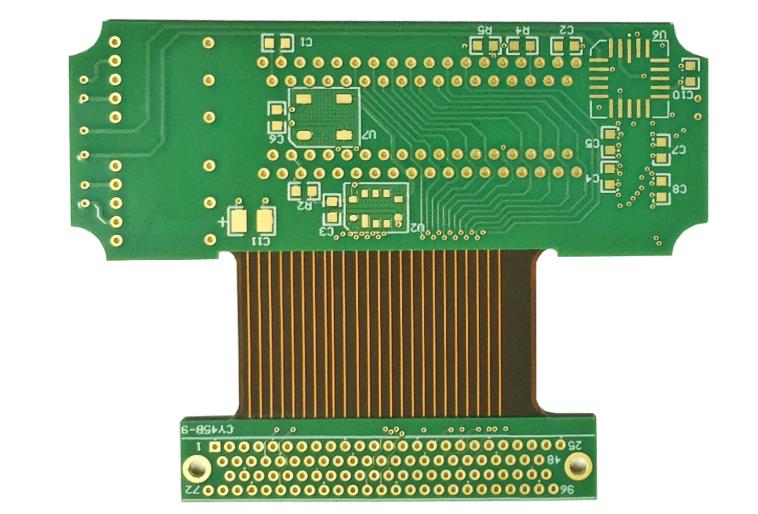
Backplanes fall into several families. A passive backplane contains no active components and simply connects slots, which maximizes reliability and makes every card responsible for its own signal conditioning. An active backplane adds buffer and driver ICs to boost signals across long runs, useful when a large chassis makes direct routing marginal. Construction can be rigid or rigid-flex where space and vibration demand it, and high-speed backplanes are purpose-built for 10 Gbps, 40 Gbps, and faster serial links using advanced connector ecosystems. Choosing the right type depends on system complexity, transmission rate, and serviceability requirements rather than on board size alone.
Design Features That Define a Backplane
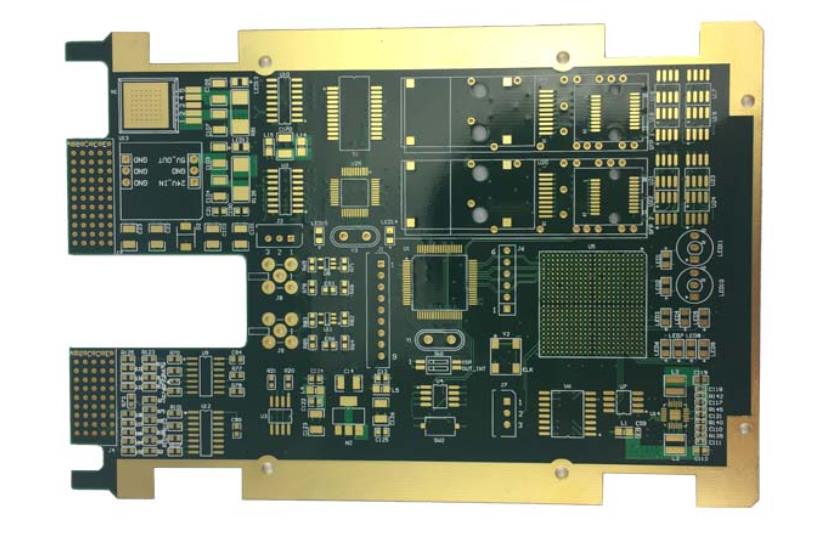
Layer count is the first signature of a backplane pcb. Most designs run from 8 to 32 layers, and large chassis backplanes regularly exceed 30 layers to provide dedicated planes for power and ground plus clean routing layers for differential pairs. Controlled impedance is non-negotiable: every high-speed pair must hit its target differential impedance with tight tolerance across the whole board, which demands disciplined stack-up design and consistent dielectric spacing. Connector compatibility matters just as much, with standards such as VME, VPX, CompactPCI, and ATCA defining slot pitch, connector types, and keying, while custom backplanes follow OEM-specific footprints. Mechanical strength is the fourth pillar, because a large board carrying heavy modules must resist flexing that would crack vias or shift connector alignment.
Materials and Stack-Up for High-Speed Signals
Signal integrity starts with the laminate. Standard FR-4 handles moderate rates, but 10 Gbps and faster serial links push designers toward low-loss materials with stable dielectric constant and low dissipation factor, often blended with FR-4 cores to control cost. The stack-up is designed symmetrically to prevent warpage during assembly, with signal layers referenced to solid planes and power distributed on thick, low-impedance layers. Via management is another discipline: backplane designs use back-drilling to remove unused via stubs that would reflect high-speed signals, and they carefully plan via placement under connectors. A manufacturer with real experience in PCB design and layout for high-layer-count boards is essential, because errors here are nearly impossible to fix later.
Manufacturing Challenges and Tolerances
Building a backplane pcb stresses every fabrication process. Drilling thousands of holes across a board that may exceed 20 inches requires excellent registration, and plating high-aspect-ratio vias demands consistent bath control. Copper weight and plane thickness must be balanced against impedance targets, and solder mask and surface finish must survive repeated connector insertion and environmental exposure. Bow and twist limits are tighter than on ordinary boards because a warped backplane misaligns every connector in the chassis. Quality checks include impedance verification across sampled traces, netlist testing against the design database, and automated optical inspection of fine features, followed by final dimensional checks against the connector layout.
Testing Before Modules Ever Arrive
Because a backplane is expensive and nearly impossible to repair once populated, testing happens early and often. Bare-board tests verify every net for opens and shorts, while impedance testing confirms that the fabricated traces match the design targets that guarantee signal quality. For active backplanes, functional testing with test cards exercises real link speeds and power distribution before the chassis ships. Thermal testing checks that power planes and connector areas stay within limits under load, and mechanical checks confirm connector seating forces. A partner that combines fabrication with PCBA testing can close this loop with one accountable team, which shortens the path from prototype to a chassis that works on the first try.
Cost Drivers and Realistic Ranges
Backplane pricing is driven by layer count, board size, material grade, and hole density. A modest 8-12 layer FR-4 backplane might cost USD 60-150 at prototype, while a 20-32 layer high-speed design in low-loss material can run USD 300-1,200 or more before connectors are even added. Panel size limits utilization, so large backplanes waste more material per panel, and controlled-impedance testing adds per-board cost. Assembly with high-density connectors is typically done by hand or selective process because the connector count and size defeat standard SMT placement, adding labor that scales with slot count. Connectors themselves often exceed the bare-board cost, so total backplane cost is best quoted as a complete assembly including connector population and testing.
Choosing a Backplane PCB Manufacturer
Look for a manufacturer that builds high-layer boards routinely rather than occasionally. Ask about maximum layer count, board size capability, impedance control tolerances, and experience with back-drilling and connector press-fit registration. Certification to IPC-6012 Class 2 or Class 3, a clean quality system, and documented test reports are the minimum bar. A full-service supplier offering PCB manufacturing and assembly under one roof can also advise on design changes that improve yield, because backplane DFM feedback is worth more than any discount on unit price.
Backplane PCB FAQ
Q1: How many layers does a backplane need? Most backplanes use 8-32 layers; large chassis systems with dense high-speed routing regularly exceed 30 layers.
Q2: Passive or active backplane? Passive backplanes suit most systems and maximize reliability; active designs add buffering for very long or heavily loaded signal paths.
Q3: Why is back-drilling used? Back-drilling removes the unused stub of a plated via that would otherwise reflect high-speed signals and degrade the link.
Q4: What does a backplane cost? Prototype boards range from about USD 60-150 for simple designs to USD 300-1,200 plus connectors for large high-speed backplanes.
Q5: Can a backplane be repaired if a trace fails? Bare backplanes are rarely repaired because rework on boards with 20 or more layers is difficult and risky, so the practical strategy is redundant design plus thorough bare-board testing that catches defects before expensive connectors are ever installed.
Conclusion
A backplane pcb is the quiet foundation of every modular high-performance system. Its layer stack, materials, connector design, and manufacturing discipline decide how fast modules can talk and how long the chassis lasts. Choose an experienced manufacturing partner, verify impedance and netlist integrity, and the backplane you install today will still carry tomorrow’s faster cards without a redesign.