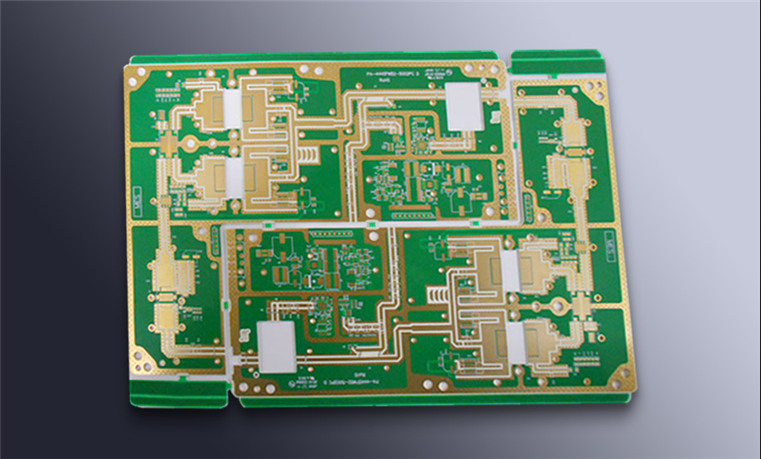
BGA Rework with Local Heating
A ball grid array is removed and replaced with local heat, and the difficulty is that the joint is underneath the package and the heat has to pass through the package to reach it. Every parameter is a compromise between reaching the joint and protecting everything around it.
What the Rework Has to Achieve
The replacement package has to be placed within the placement tolerance, the joints have to form across the whole array, and the board and the neighbouring parts have to survive the excursion.
Those three requirements define the profile. A profile that reaches every joint also heats the board and the neighbours, which is why the window is narrower than a reflow profile. Our profile notes describe how the measurement is arranged.
Bottom Side Preheat and Its Purpose
The board is preheated from below so that the top side nozzle only adds the last part of the heat. That reduces the top side dwell and the temperature the neighbouring components see.
The preheat is measured on the board at the site rather than read from the heater, because the ground planes under the package draw heat away. Our board quality notes describe how the result is judged.
The Nozzle and Its Airflow
The nozzle has to cover the package and not the neighbours, and the airflow has to be uniform across the array. A nozzle that is smaller than the package leaves the outer joints cold; one that is much larger heats the neighbours.
The airflow is often divided into a central and a peripheral flow, with the peripheral flow set to keep the edges warm. The balance is developed on a scrap board rather than on a product.

The package is removed while the alloy is molten, and the site is then cleaned of residual alloy. The cleaning is done with wick or with a vacuum and it is where most of the pad damage occurs.
The pads have a limited tolerance for that operation, which is why the removal is counted. A site that has been reworked several times is a site with thinner pads and weaker adhesion. Our joint criteria notes define the pad condition that follows.
The replacement package is aligned on the vision system or by the local fiducials on the package, and it is placed with the same accuracy as the original. A part that is placed with an offset produces a joint that is thin on one side of the array.
Sphere condition matters as well. A package whose spheres have been deformed by a previous removal does not collapse uniformly, so a reballed or new package is used.
Verification is by X-ray for the joint across the array, by a visual check of the package alignment and, where the joint is critical, by a dye and pry on a sample. X-ray catches the open and the section explains the shape.
A reworked package is a different population from one that has been through the oven once, and the record should say so. Our <a href="https://www.gopcba.com/bga-inspection-x-ray-vs-aoi-guide/” title=”inspection”>inspection notes describe how the result is read.
Acceptance and Its Evidence
Where the supplier and the user both measure the same property, they should agree on the method before the first delivery. A parameter that is set once and never re verified drifts, and the drift is usually discovered by a defect rather than by the record.
The first article confirms that the setup matches the intent, and it is the cheapest point at which a wrong setup can still be corrected. The cost of verification is small compared with the cost of a field failure, and it is paid at a point where the product can still be corrected.
Documentation exists so that a person who was not present can reproduce the work and reach the same conclusion. The acceptance criteria should be written before the work starts, so that the decision is made by the specification rather than by the person inspecting.
The environment around the process, including temperature, humidity and cleanliness, sets limits on what the process can hold. A result that cannot be reproduced is not a result, and reproducibility should be demonstrated rather than assumed.
The tooling, the material and the profile form one system, and a change to any of them should be assessed against the other two before it is released. Handling between operations is part of the process, and the damage it causes is often attributed to the operation that preceded it.
Checks Before Release
Where a decision is made by judgement, a boundary sample makes the judgement repeatable between operators and between shifts. Where the process window is narrow, the measurement resolution has to be better than the window, or the data cannot distinguish a good part from a marginal one.
The narrowest feature on the board usually sets the process window for the whole product, so it deserves the closest attention at review. Sampling is a compromise between cost and confidence, and the sample size should follow from the failure rate that has to be detected.
Where a process is at the edge of its capability, the margin should be bought deliberately rather than discovered during production.
Verification and Records
A change that is not recorded is a change that cannot be explained when the result moves, which is why the record is part of the process.
Can a BGA be reworked more than once? It can within a limit set by the pad condition, and the limit is recorded per site.
Is hot air or infrared better? Hot air transfers heat to the whole array and infrared heats the surface, so the choice follows the package and the neighbours.
What does gopcba provide for BGA rework? We provide preheat measured on the board at the site, a nozzle and airflow balance developed on a scrap board, a profile verified at the joints, removal and site cleaning counted per site, alignment verified before reflow, and X-ray verification after it.