Air Conditioner PCB: Design, Failure Modes and Repair An air conditioner board is a study in hostile conditions. It lives beside a compressor, switches high current, is exposed to condensation, dust and temperature extremes, and is expected to run for a decade with occasional service. Its design reflects each of…
Energy Storage PCB Design Guide Boards that sit next to a battery pack are designed against a different set of rules from ordinary control electronics. The voltage may be low but the current is not, the failure mode of the assembly is a fire rather than a lost signal, and…
Radio PCB Design: Layout Rules for RF Boards A radio board is judged by measurements that are invisible on a schematic. Sensitivity, spurious emission, phase noise and harmonic content all depend on the physical layout of the copper, and a design that simulates correctly can still fail compliance testing because…
PCB Sample Board: What a Prototype Proves Before Volume A PCB sample board is the first physical article of a design, and its purpose is to be wrong in a controlled way. Every assumption made during the layout, about a footprint, a clearance, a connector height or an impedance, becomes…
High Frequency PCB Laminate: Materials and Selection Guide Above a few hundred megahertz, the laminate stops being a passive insulator and becomes part of the circuit. Its dielectric constant sets the geometry required for a given impedance, and its dissipation factor, together with the roughness of the copper beneath it,…
Bendable Circuit Boards: Materials, Structure and Uses A bendable circuit board is not simply a thin rigid board. It is a different construction, built from materials chosen for fatigue resistance rather than stiffness, and its behaviour is governed by rules that have no equivalent in ordinary printed circuit work. Getting…
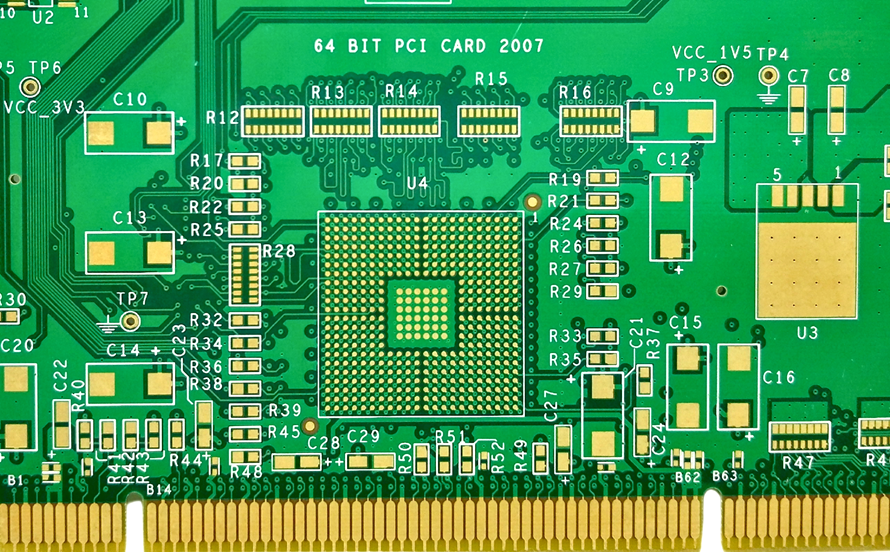
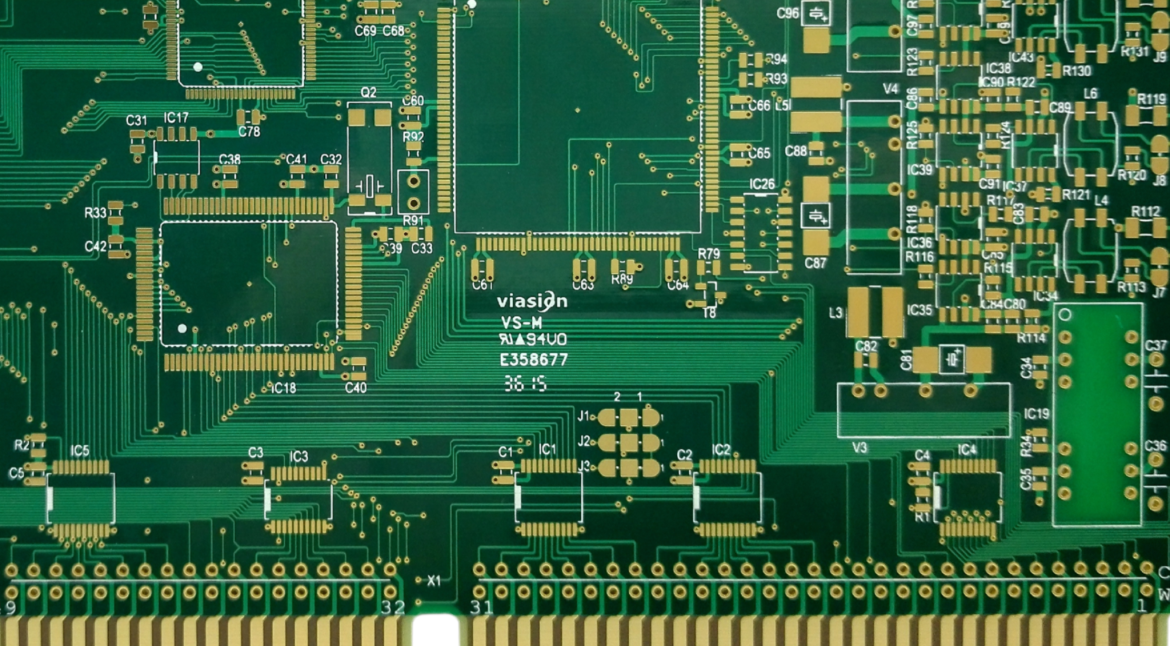
PCB Gold Fingers: Design, Plating, and Cost An edge connector is the part of a board that carries everything: power, ground, and every high-speed signal that leaves the card. On memory modules, graphics cards, and expansion cards, that interface is a row of gold-plated contacts along the board edge, and…
Double-Sided Rigid-Flex PCB: Structure and Process Products keep getting smaller while the amount of electronics inside them keeps growing, and the board has to absorb that contradiction. A double-sided rigid-flex PCB is one of the answers: it combines the flexibility of a flexible circuit with the structural rigidity of a…
AI Accelerator PCB: Design and Cost Factors for High-Core-Count Boards An AI accelerator PCB sits at the extreme end of board design. A single package may consume hundreds of watts and present thousands of high-speed differential pairs, and the board must deliver both the power and the bandwidth without exceeding…
Telecom PCB Cost Factors: What Drives the Price of Network Hardware Boards Telecom PCB cost is driven by requirements that do not appear on consumer boards: very high layer counts, low-loss materials, tightly controlled impedance, back-drilled vias and extensive test coverage. Each of those items adds process steps, and each…