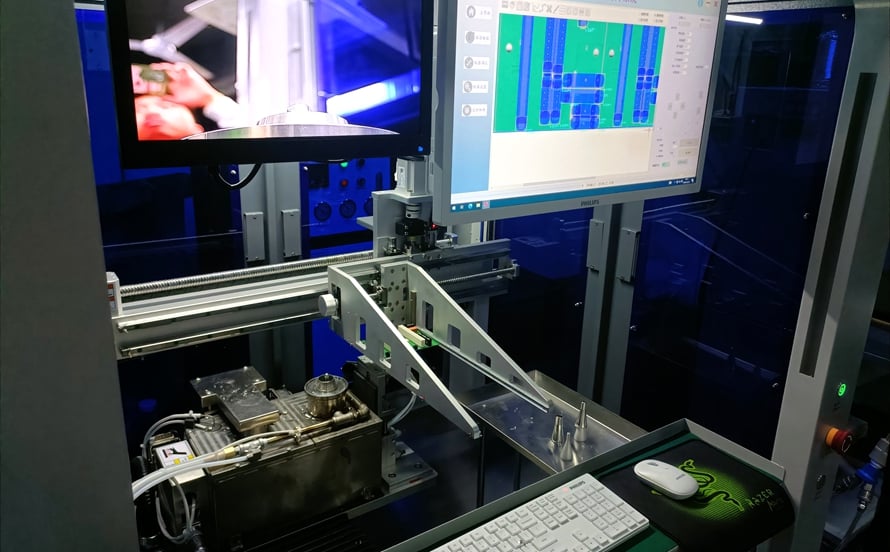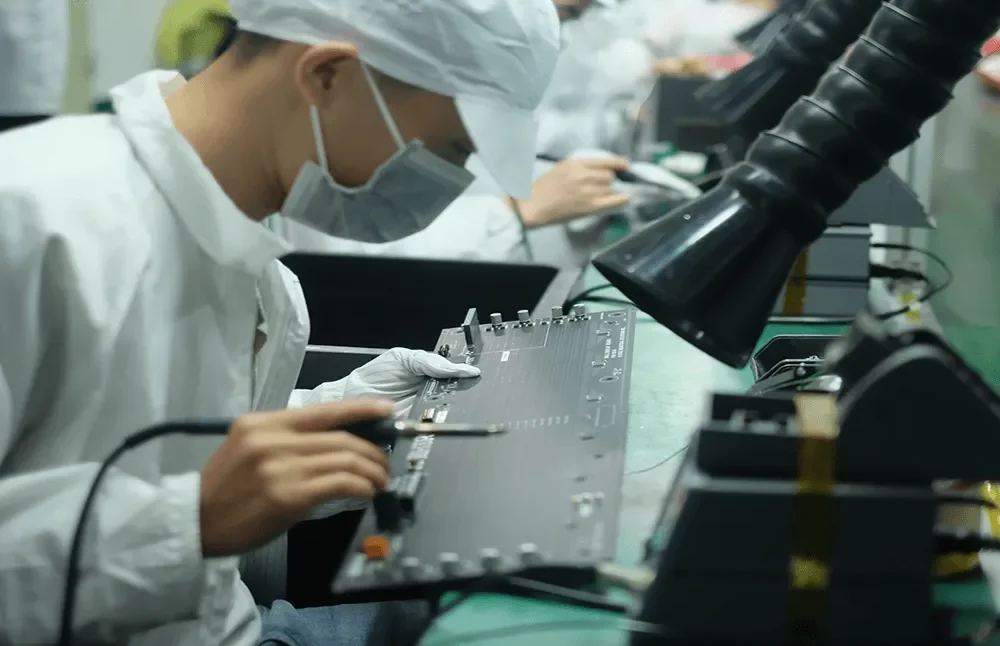
SMT Processing Cost: What Drives the Price of an Assembly Run SMT processing cost is quoted as a single number, but it is assembled from a handful of measurable items: setup time, tooling, the number of placement points, the number of unique components, inspection requirements and the volume of the…
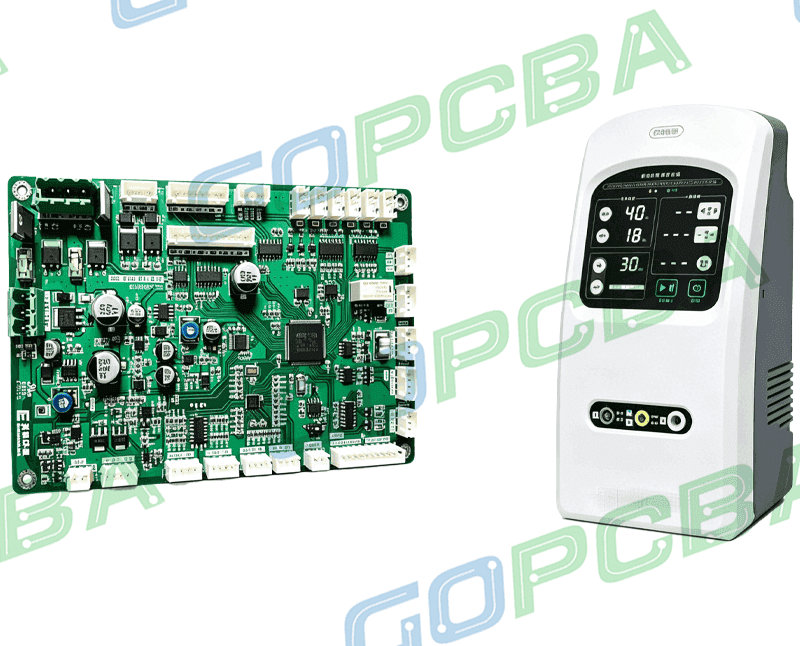
Thermal Management in PCB Design Heat is the most common reason an electronic product fails early, and the board is usually the only heatsink available. Thermal management in a PCB is not a single feature but a path: from the device, through the solder joint, into the copper, across the…
PCB Types and How Each One Is Built Printed circuit boards are usually discussed as if there were one kind. In practice there are several constructions, each with its own process, its own cost structure and its own appropriate use. Choosing between them is one of the first decisions in…
Single-Sided PCB: Where a One-Layer Board Still Makes Sense A single-sided PCB carries copper on one side and components on the other. The construction is the oldest and the simplest in electronics, and it is still the cheapest way to build a large number of low-complexity products, from power supplies…
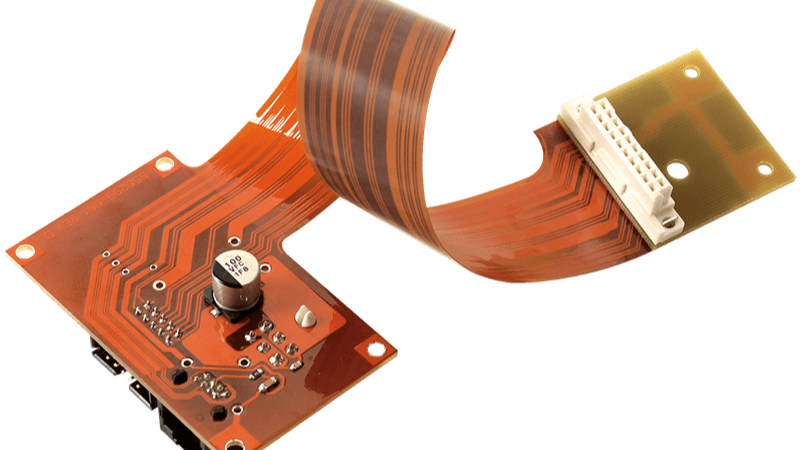
Flex PCB Assembly vs Rigid PCB Assembly: Differences and Challenges Flex circuits and rigid boards travel through the same SMT line, but they behave differently at almost every station. A polyimide flex panel is thin, compliant and dimensionally unstable compared with a 1.6 mm FR-4 panel, and those three properties…
Multilayer PCB Design: From Basic Concepts to Layer Assignment A multilayer PCB is not simply a board with more copper. It is a construction in which dedicated layers provide return paths, power distribution and shielding, and the routing layers above them behave predictably because a reference plane is always nearby.…
Metal Core PCB: Structure, Materials and Thermal Design A metal core PCB replaces the usual glass-fibre laminate with a metal plate, and moves the heat-generating components onto that plate through a thin dielectric layer. The change is simple in principle and far reaching in practice, because the base material now…
PCB Assembly Cost Breakdown: Where the Money Actually Goes Most quotations for assembled boards look similar in shape and differ by a factor of three in total. Understanding why requires separating the PCB assembly cost into its components, because the levers that move a quotation are not evenly distributed across…
PCB Test Technology Selection: AOI, ICT, Flying Probe and X-ray Testing is the part of PCB production that decides whether a defect reaches the customer or is caught on the line. Every available method sees a different slice of the board, and none of them sees everything, so the useful…
High-Frequency Laminate PCB: PTFE Materials and Properties Above a few gigahertz, the laminate stops being a passive backdrop and becomes part of the circuit. Signal loss, phase delay and impedance all depend on the dielectric properties of the material, and that is why a high-frequency laminate is chosen for reasons…