How SMT Assembly Is Priced: The Placement Point and the Setup The question of what an assembly costs is often answered with a single number per placement placement point, and that number is real but it is only part of the price. An order also carries a setup cost, a…
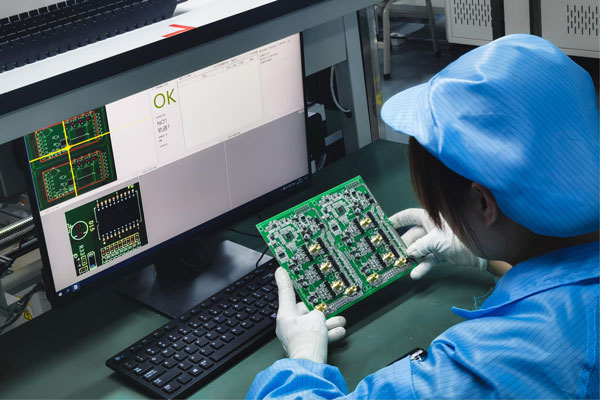
PCB Low Volume Hand Assembly: When a Robot Is Not the Answer Modern electronics depend on boards that are assembled correctly the first time. Every product – a phone, a charger, a medical instrument or an industrial controller – relies on thousands of solder joints that must conduct current for…
Final Inspection Before Shipment: What Is Checked and Why The last check before a batch leaves the building is the cheapest place to find a problem and the last place where one can be found at all. Once the cartons are sealed and dispatched, a defect becomes a return, a…
Batch Management and Traceability in PCBA Production Batch management is the part of production that nobody notices until it is needed. As long as every unit works, the record of which material was used and which settings were applied is invisible overhead. On the day a problem appears, the same…
PCB Tape and Reel Packaging Spec: How Parts Arrive Buyers and engineers often focus on the finished product and forget the production line behind it. In practice, most field failures can be traced back to process decisions made during assembly. Understanding PCB tape and reel packaging spec gives you a…
PCB Component Baking Before Assembly: Drying Parts Before Reflow Modern electronics depend on boards that are assembled correctly the first time. Every product – a phone, a charger, a medical instrument or an industrial controller – relies on thousands of solder joints that must conduct current for years. This article…
Common Soldering Defects and How the Process Prevents Them Most soldering defects are not mysterious. They appear in recognisable forms, they have a limited number of causes and the causes are almost always upstream of where the defect becomes visible. The difficulty is not in understanding the mechanism but in…
Aging Test and Burn-in for Industrial PCBA A board that passes its functional test on the day it is built has demonstrated that it works, not that it will continue to work. The distinction matters most for industrial, medical and automotive products, where the equipment is expected to run for…
PCB Component Storage Conditions: Keeping Parts Ready to Use Electronics manufacturing has become a discipline of small details. Solder paste volumes, placement accuracy, temperature profiles and inspection limits all add up to the final result. This guide looks at PCB component storage conditions from the perspective of a PCBA factory…
PCB Cleaning After Assembly: Residue, Cleanliness and Coating Whether an assembled board has to be cleaned is a decision that belongs to the product rather than to the process, and making it by default in either direction causes problems. Cleaning a board that did not need it adds an operation,…