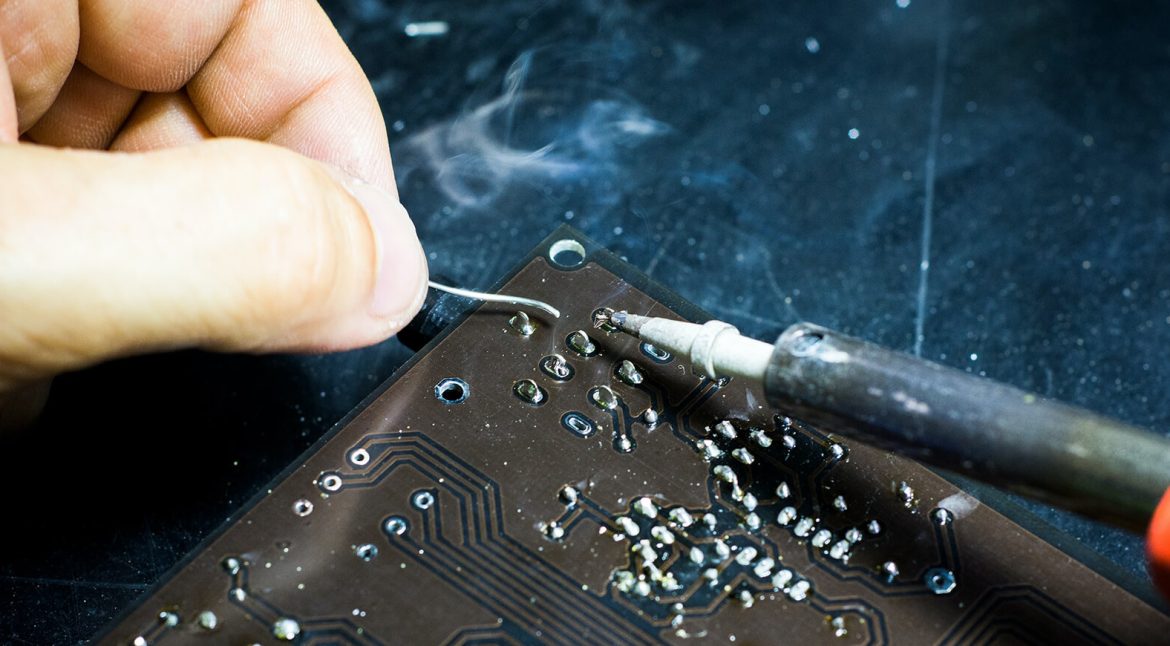
Turbulent Wave: 6 Setup Rules for Through-Hole A turbulent wave is the second, rougher wave in a wave soldering machine, and it exists to push solder up into plated barrels and around tall leads. The first wave is laminar and fast, and it does most of the wetting. The turbulent…
PCB Customer Complaint Selection: Choosing What Fits Electronics manufacturing has become a discipline of small details. Solder paste volumes, placement accuracy, temperature profiles and inspection limits all add up to the final result. This guide looks at PCB customer complaint selection from the perspective of a PCBA factory floor, covering…
Dry Film Lamination: Preparation, Placement and Process Control Dry film lamination is the step that bonds a photosensitive resist to the copper surface, and it silently sets the limit on what the imaging line can produce. Every fine line that later fails to develop, every trace that lifts in the…
PCB Customer Complaint Control: Holding It Steady Buyers and engineers often focus on the finished product and forget the production line behind it. In practice, most field failures can be traced back to process decisions made during assembly. Understanding PCB customer complaint control gives you a practical advantage when you…
Test Probe Cleaning: Preparation, Placement and Process Control Test probe cleaning is the maintenance step that keeps an in-circuit test fixture reading the same board the same way, shift after shift. Probes collect flux, solder dust and plating debris, and the film they build up adds resistance to every measurement…
PCB Customer Complaint Improvement: Getting Better Each Lot Electronics manufacturing has become a discipline of small details. Solder paste volumes, placement accuracy, temperature profiles and inspection limits all add up to the final result. This guide looks at PCB customer complaint improvement from the perspective of a PCBA factory floor,…
Solder Pot Analysis: 6 Tests for Wave Solder Health Solder pot analysis is the laboratory check on the alloy sitting in a wave soldering bath. The pot is not a fixed material: it dissolves copper from boards, picks up iron and zinc from plating and tooling, and concentrates whatever the…
Cleanroom Class: 7 Choices for PCB Assembly A cleanroom class is a limit on how many particles of a given size may exist in a cubic metre of air, and it is written as an ISO 14644 number. Class 8 is roughly the old Class 100,000, class 7 is ten…
Nozzle Wear: 7 Checks on a Placement Head Nozzle wear is the slow loss of the tip geometry that a vacuum nozzle needs to seal against a component. The tip faces thousands of contacts a day with ceramic, metal and plastic bodies, and every contact removes a little material. The…
Test Probe Cleaning: 5 Rules for Stable Yields Test probe cleaning is the maintenance step that keeps an in-circuit test fixture reading the same board the same way, shift after shift. Probes collect flux, solder dust and plating debris, and the film they build up adds resistance to every measurement…