Solder Pot Contamination in Wave Soldering: 6 Warning Signs Solder pot contamination is the slow accumulation of metals, oxides and residues in a wave soldering bath until the alloy no longer behaves like the alloy that was specified. It rarely announces itself. The pot keeps running, the wave keeps pumping,…

PCB Cycle Time Selection: Choosing What Fits Electronics manufacturing has become a discipline of small details. Solder paste volumes, placement accuracy, temperature profiles and inspection limits all add up to the final result. This guide looks at PCB cycle time selection from the perspective of a PCBA factory floor, covering…
Paste Tack: Why Deposits Lose Hold Before Reflow Paste tack is the adhesion that a printed deposit offers to a component lead or body before reflow. It is what holds a chip capacitor in place while the board travels to the oven, and it is the reason a placement machine…
PCB Cycle Time Control: Holding It Steady Electronics manufacturing has become a discipline of small details. Solder paste volumes, placement accuracy, temperature profiles and inspection limits all add up to the final result. This guide looks at PCB cycle time control from the perspective of a PCBA factory floor, covering…
Entry Material and Backup Board: 6 PCB Drill Stack Choices Entry material sits on top of the drill stack and backup board sits underneath it, and together they decide much of the quality of a drilled hole. Both are consumables that are chosen in seconds and then influence burr height,…
Flux Solids Content: What the Datasheet Tells You Flux solids content is the mass fraction of a liquid flux that is not solvent: the resin, the activators, the inhibitors and the additives that do the work at the joint. A flux listed at 35 percent solids carries 35 grams of…
Resin Recession: 5 Causes at the Drilled Hole Wall Resin recession is the retreat of the resin away from the drilled hole wall, which leaves a gap between the laminate and the plated copper barrel. It is found in microsection rather than on the surface, and it is often only…
Copper Wrap Plating: 5 Rules for PCB Edges Copper wrap plating is the copper that runs from the surface of a board, around the profiled edge and onto the opposite side or onto an internal plane. It is used where the edge of the board has to carry current, where…
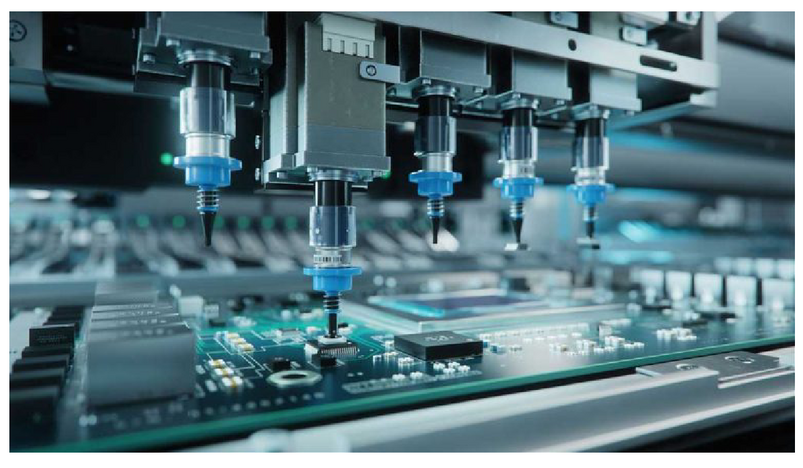
Nozzle Contamination: 5 Cleaning Rules for SMT Nozzle contamination is the build-up of flux, paste, adhesive and airborne dust on the tip of a placement nozzle. It arrives slowly and it displays itself as an increase in pickup errors, a drifting placement offset or a part that is dropped somewhere…
Compressed Air Quality in SMT: 6 Checks for Clean Air Compressed air quality is usually treated as a facility matter until a nozzle clogs or a cylinder sticks. The air that reaches a placement head passes through the same lines as the assembly equipment, and whatever it carries ends up…