Wave Solder Flux Residue: Cleaning Under Components Wave soldering applies flux to the whole underside of the board, and the solder wave then heats everything on that side, including the flux that ran under the components before the board arrived. The flux residue that results is trapped in the least…

Conveyor Speed: Reflow Conveyor and Rail Maintenance: Holding the Profile A reflow oven is calibrated as a system, and the profile it delivers depends on the conveyor speed being what the profile assumes. Rails wear, drive belts slip and edge supports bend, and the resulting change is a slow drift…
Inspection Gauge R&R: Proving an Inspection Method Works An inspection method is a measurement system, and like any measurement system it has variation. Gauge R&R separates the variation that comes from the parts being measured from the variation that comes from the inspectors and from repeatability, and in assembly work…
Laser Depaneling: Cutting Thin Boards Without Damage Laser depaneling separates boards without touching them, which is why it suits thin board assemblies where a router would flex the panel and a punch would shock the components. The trade is that the cut is a thermal process, and the heat affected…
Stencil Aperture Wall Quality and Laser Cut Finish The aperture wall is the surface the paste touches on its way to the pad, and its condition decides whether the deposit leaves the stencil or stays behind. Two stencils cut from the same foil with the same geometry can release very…
Wave Height and Nozzle Control in Wave Soldering Wave height sets how deeply the board touches the molten solder, and the contact depth that results decides whether holes fill and whether bridges form. It is a mechanical setting with a chemical consequence, and the nozzle that produces the wave is…
SMT Floor Humidity Control: Paste, Floor Life and ESD Humidity is the one process variable that affects printing, assembly and static control at the same time, and it is usually the last one to be instrumented. A floor that drifts above its range shows up as solder balling and short…
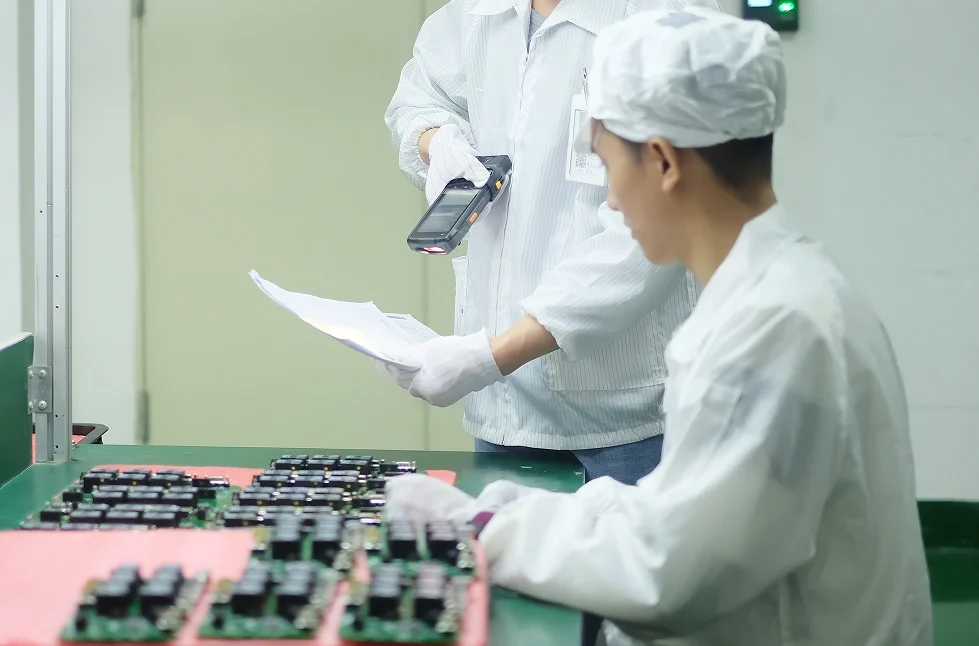
Serialization: Design Rules and Process Limits Traceability is often treated as a labeling task, and it is really a data task. A board that carries a barcode but has no record of which paste lot, which profile or which operator produced it is not traceable; it simply has a number.…
Intermetallic Growth: How Solder Joints Age Every solder joint contains a layer of intermetallic compound where the alloy meets the copper, and that layer is the reason the joint bonds at all. It is also the reason joints fail late, because the layer continues to thicken with time and temperature,…
Stencil Tension and Frame: Why Tension Sets Print Quality Stencil tension is the least visible variable in a printing process and one of the most influential. A slack foil does not peel away from the paste, it sags into the board, and the aperture that was laser cut to a…