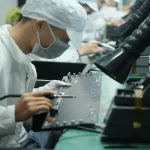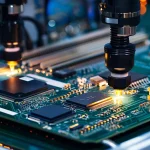
As the adoption of artificial intelligence (AI), the Internet of Things (IoT), industrial automation, and connected technologies continues to expand, demand for sophisticated electronic products is increasing across many industries. Electronics are now essential to industrial equipment, telecommunications, medical devices, automotive systems, consumer products, energy systems, and test and measurement equipment.
As product complexity increases, manufacturers must establish reliable and scalable production capabilities. Outsourcing manufacturing to an experienced electronics manufacturing service (EMS) provider can help OEMs reduce internal production requirements while gaining access to specialized engineering, assembly, testing, and supply chain resources.
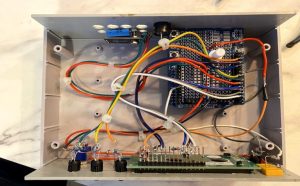
One important outsourcing model is Box Build Assembly. Unlike conventional PCB assembly, which primarily focuses on populating components onto a bare circuit board, box build manufacturing integrates the completed PCB with mechanical parts, cables, connectors, power supplies, displays, cooling components, firmware, and other subassemblies to create a functional finished product.
What Is Box Build Assembly?
Box Build Assembly is a complete product integration process in which electronic and mechanical components are assembled into an enclosure or finished system. Depending on the product, the process can include PCB assembly, mechanical assembly, cable and wire harness installation, software or firmware programming, configuration, labeling, functional testing, and final packaging.
It is sometimes referred to as systems integration, system-level assembly, or complete product assembly.
A typical box build product may include:
- PCB assemblies
- Metal or plastic enclosures
- Cable and wire harnesses
- Connectors and switches
- Displays and user interfaces
- Power supplies or batteries
- Fans and thermal-management components
- Mechanical brackets and fasteners
- Sensors and communication modules
- Firmware and software
- Labels and product packaging
The exact manufacturing flow depends on the product architecture, assembly requirements, regulatory requirements, and testing strategy.
Key Steps in Box Build Manufacturing
1. Design Review and DFM
The manufacturing process should begin with a detailed design review. Before production starts, the OEM and manufacturing partner evaluate the electronic, mechanical, and manufacturing requirements.
DFM (Design for Manufacturability) helps identify potential production problems before they become costly manufacturing issues. Engineers may review:
- Component availability and lifecycle
- PCB dimensions and mounting locations
- Mechanical tolerances
- Connector accessibility
- Fastener locations
- Cable routing
- Thermal management
- Assembly sequence
- Test access
- Enclosure design
- Manufacturing tolerances
For complex products, DFM should cover the complete system rather than only the PCB.
2. Design for Assembly
DFA (Design for Assembly) focuses on making the product easier, more consistent, and more efficient to assemble.
A good DFA strategy can reduce unnecessary assembly operations and minimize the possibility of incorrect installation. Engineers may evaluate whether components can be installed in a logical sequence, whether connectors are easy to access, and whether fasteners, brackets, cables, and mechanical parts can be assembled without interference.
DFA is particularly important for products containing multiple subassemblies.
3. Material and Component Procurement
After the design is reviewed, the required components and materials must be sourced.
Depending on the manufacturing arrangement, the customer may provide some or all materials, or the EMS provider may manage procurement. Materials can include:
- Electronic components
- Bare PCBs
- PCB assemblies
- Enclosures
- Cables and wires
- Connectors
- Mechanical hardware
- Labels
- Packaging materials
Procurement planning should consider component availability, minimum order quantities, lead times, lifecycle status, approved vendors, and potential alternatives.
For long-lead components, early purchasing and inventory planning can help reduce production interruptions.
4. PCB Assembly
The completed PCB serves as one of the main electronic subassemblies in a box build product.
Depending on the product, PCB Assembly may include surface mount technology (SMT), through-hole technology (THT), or a combination of both.
A typical PCB assembly process includes:
- Solder paste printing
- Solder paste inspection (SPI)
- SMT component placement
- Reflow soldering
- Through-hole component insertion
- Wave or selective soldering when required
- AOI inspection
- X-ray inspection for selected hidden solder joints
- Electrical testing
The PCB assembly must meet the electrical and mechanical requirements of the final system before being integrated into the enclosure.
5. Cable Harness Assembly
Cable and wire connections are essential in many box build products.
Cable Harness Assembly may involve cutting, stripping, crimping, soldering, terminal insertion, connector installation, labeling, and electrical testing.
Harnesses can be standard off-the-shelf products or custom-designed assemblies.
Proper cable management is important because cables must not interfere with:
- Moving mechanical parts
- Cooling fans
- Heat-generating components
- Connectors
- Enclosure covers
- PCB components
Cable routing should also account for bend radius, strain relief, electromagnetic compatibility, and serviceability where applicable.
6. Mechanical Assembly
The next stage involves assembling the PCB, enclosure, brackets, panels, fasteners, thermal components, and other mechanical parts into the final product.
Mechanical assembly may include:
- Screw fastening
- Snap-fit installation
- Bracket installation
- Heat sink attachment
- Fan installation
- Display installation
- Connector installation
- Shielding installation
- Adhesive application
For precision products, mechanical dimensions and tolerances should be controlled according to the engineering drawings and applicable GD&T requirements.
7. Software and Firmware Programming
Some box build products require firmware or software to be installed before final testing.
Programming may include:
- Firmware flashing
- Device configuration
- Serial number assignment
- Parameter configuration
- Calibration
- Software installation
- Functional initialization
Version control is essential. The production team should use approved software and firmware versions to prevent configuration errors between production batches.
8. Inspection and Testing
Inspection and testing are critical parts of Box Build Manufacturing because the final product must operate as an integrated system.
Depending on product requirements, testing may include:
- Visual inspection
- Dimensional inspection
- Electrical continuity testing
- Insulation or dielectric testing
- Functional testing
- Communication testing
- Power-up testing
- Firmware verification
- Safety testing
- Environmental testing
- Burn-in testing
The test plan should be established early in the project. Acceptance criteria, test parameters, test fixtures, measurement equipment, and failure-handling procedures should be clearly defined.
Testing should reflect the actual risks and functional requirements of the finished product rather than relying on a single generic inspection method.
Benefits of Box Build Assembly
Simplified Manufacturing Management
Using a qualified manufacturing partner for multiple production stages can reduce the number of suppliers involved in final product integration.
Instead of coordinating separate PCB assembly, cable assembly, mechanical assembly, programming, testing, and packaging suppliers, the OEM can consolidate more activities within one manufacturing workflow.
This can simplify communication, production scheduling, and issue management.
Potential Cost Optimization
Box build manufacturing can reduce certain indirect costs by minimizing repeated material handling, transportation, supplier coordination, and inventory transfers.
However, the lowest unit assembly price does not necessarily represent the lowest total product cost. Material utilization, labor, testing, packaging, logistics, tooling, engineering, and inventory costs should all be considered when evaluating the total manufacturing cost.
Shorter Production Cycles
An integrated manufacturing process can reduce waiting time between production stages.
When PCB assembly, cable assembly, mechanical integration, testing, and packaging are coordinated through one production plan, fewer handoffs may be required.
Actual lead time still depends on product complexity, material availability, production volume, testing requirements, and supplier capacity.
Improved Quality Control
A centralized production process can provide better control over assembly procedures and product traceability.
Quality checkpoints can be established at different stages, including PCB assembly, harness assembly, mechanical integration, programming, and final testing.
This allows manufacturing teams to identify problems closer to their point of occurrence.
Greater Manufacturing Flexibility
Box build services can support different production models, including prototypes, low-volume production, and higher-volume manufacturing.
Depending on the product, the manufacturing partner may also support:
- Custom cable assemblies
- Different enclosure materials
- Alternative approved components
- Customized packaging
- Special labeling
- Product configuration
- Firmware programming
- Functional testing
Common Challenges in Box Build Assembly
Although box build manufacturing provides an integrated production solution, it also introduces additional manufacturing challenges.
Complex Assembly Requirements
A finished system may contain hundreds of components from different disciplines. Electronic, mechanical, thermal, and software requirements must work together correctly.
A problem with one subsystem can affect the entire product.
Manual Assembly Accuracy
Many box build products contain operations that cannot be fully automated.
Operators may need to install cables, connectors, brackets, fasteners, or other mechanical components manually. Appropriate work instructions, operator training, fixtures, and inspection procedures can help maintain consistency.
Supply Chain Coordination
Box build products typically require more types of materials than a standalone PCB.
A shortage of one connector, cable, enclosure, fastener, or mechanical component can delay final assembly even when the PCB itself is ready.
Therefore, material planning should cover the entire product BOM rather than focusing only on electronic components.
Design Changes
Engineering changes can affect multiple production stages simultaneously.
For example, changing the enclosure dimensions may require modifications to the PCB mounting structure, cable length, brackets, packaging, and test fixtures.
Effective engineering change control and revision management are therefore essential.
Testing Complexity
Testing a complete system is generally more complicated than testing an individual PCB.
The final product may require interaction between hardware, firmware, mechanical systems, communication interfaces, and power systems. Test fixtures and software may therefore need to be developed specifically for the product.
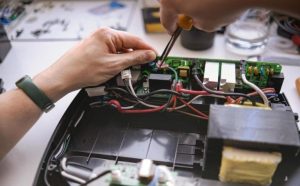
Applications of Box Build Assembly
Because most sophisticated electronic systems require mechanical protection and system-level integration, box build manufacturing is widely used across different industries.
Common applications include:
- Industrial control systems
- Telecommunications equipment
- Medical electronics
- Consumer electronics
- Energy management systems
- Power equipment
- Test and measurement instruments
- Automation equipment
- Robotics
- Networking equipment
- Data communication systems
- Security and monitoring equipment
- Transportation electronics
The level of integration varies according to the application. A simple product may require only PCB installation and enclosure assembly, while a complex industrial system may require multiple PCB assemblies, cable harnesses, cooling systems, firmware, calibration, and functional testing.
Four Key Factors for Successful Box Build Manufacturing
1. Collaboration Between OEM and EMS
Successful System Integration requires close communication between the OEM and EMS provider.
Important information should be established early, including:
- Product specifications
- Mechanical drawings
- PCB documentation
- BOM and approved vendor lists
- Assembly instructions
- Quality standards
- Testing requirements
- Packaging requirements
- Software and firmware versions
- Engineering change procedures
Clear documentation reduces misunderstandings and prevents unnecessary rework.
2. Manufacturing Quality Control
Quality control should cover the entire production process rather than only the final inspection.
Important quality measures may include:
- Incoming material inspection
- PCB assembly inspection
- Cable and harness inspection
- Mechanical inspection
- Torque verification
- Firmware verification
- Functional testing
- Final visual inspection
- Serial-number traceability
Traceability can help manufacturers identify affected products when a component or process problem is discovered.
3. Optimized Manufacturing Processes and Work Instructions
Production processes should be documented and continuously improved.
Work instructions should clearly define:
- Assembly sequence
- Tools and equipment
- Torque requirements
- Cable routing
- Connector installation
- Soldering requirements
- Inspection points
- Test procedures
- Packaging methods
Fixtures can also improve repeatability and reduce assembly errors, particularly for products requiring precise mechanical positioning.
4. Supply Chain Management
A reliable supply chain is essential for box build production because the finished product may depend on a large number of electronic and mechanical components.
Effective supply chain management includes:
- Approved supplier management
- Component lifecycle monitoring
- Alternative component evaluation
- Inventory planning
- Material traceability
- Purchase-order management
- Incoming inspection
- Logistics coordination
- Shortage management
For critical components, qualified alternative sources can reduce supply chain risk when technically and commercially appropriate.
Quality Control and Traceability
Quality management should be designed around the complete product lifecycle.
A practical quality system may include inspection at several stages:
Incoming Materials → PCB Assembly → Subassembly → Mechanical Assembly → Programming → Functional Testing → Final Inspection → Packaging
Traceability can be maintained using:
- Serial numbers
- Barcodes
- Lot numbers
- Component date codes
- Production records
- Test results
- Firmware versions
- Inspection records
Electrostatic discharge (ESD) protection is also important when handling sensitive electronic assemblies. Appropriate grounding, ESD workstations, storage procedures, and handling practices should be established according to the product’s sensitivity and applicable standards.
How to Select a Box Build Assembly Supplier
When selecting a Box Build Manufacturing partner, OEMs should evaluate more than assembly price.
Important factors include:
Engineering Capability
The supplier should be able to understand PCB, mechanical, cable, testing, and system integration requirements.
Manufacturing Capability
Evaluate whether the supplier has appropriate equipment, production processes, assembly areas, inspection equipment, and testing resources for the product.
Quality Management
Review documented quality procedures, inspection methods, traceability systems, corrective-action processes, and relevant compliance requirements.
Supply Chain Capability
A supplier should have an effective process for managing electronic components, mechanical parts, cables, connectors, packaging materials, and potential shortages.
Testing Capability
The supplier should be able to develop or execute the required electrical and functional tests and provide appropriate test records.
Engineering Change Management
The supplier should have a clear process for handling BOM revisions, PCB revisions, mechanical changes, firmware updates, and production documentation.
Communication
Because box build manufacturing involves many interconnected processes, clear communication between the OEM and EMS provider is essential throughout development and production.
Kingda Box Build Assembly Services
Kingda can support customers with integrated electronics manufacturing and system-level assembly requirements. Depending on the project, services can include PCB Assembly, cable and harness integration, mechanical assembly, product integration, programming, inspection, and functional testing.
Kingda can work with customer-provided manufacturing documentation and product requirements to establish an appropriate production workflow. Engineering review can also help identify potential manufacturing issues related to PCB design, mechanical integration, component selection, cable routing, assembly sequence, and testing.
For box build projects, the specific manufacturing process, inspection requirements, materials, testing methods, and production arrangements should be determined according to the customer’s product specifications and project requirements.
Best Practices for Box Build Assembly
To improve manufacturing consistency and reduce production risks, OEMs should consider the following practices:
- Complete DFM and DFA reviews before production.
- Maintain accurate and revision-controlled BOMs.
- Define mechanical drawings and tolerances clearly.
- Establish cable and harness specifications.
- Confirm approved component alternatives in advance.
- Develop test procedures before mass production.
- Use appropriate fixtures for repeatable assembly.
- Maintain firmware and software version control.
- Establish product-level traceability.
- Monitor material availability throughout the production cycle.
- Define acceptance criteria before production begins.
- Use corrective and preventive actions to address recurring defects.
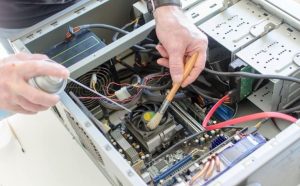
Box Build Assembly vs. PCB Assembly
| Feature | PCB Assembly | Box Build Assembly |
|---|---|---|
| Main focus | Electronic circuit board | Complete electronic product |
| PCB population | Yes | Usually included |
| Mechanical assembly | Limited | Extensive |
| Cable and harness | Usually limited | Common |
| Enclosure | Generally not included | Usually included |
| Firmware programming | Sometimes | Frequently required |
| Functional system testing | Product-dependent | Common |
| Final packaging | Usually separate | Often included |
| System integration | Limited | Core function |
PCB assembly and box build assembly are therefore complementary rather than interchangeable. A completed PCB assembly can serve as a subassembly within a larger box build product.
Conclusion
Box Build Assembly provides a system-level manufacturing approach that combines PCB assembly, mechanical integration, cable and harness installation, programming, testing, and final product assembly.
For OEMs, the main value of this approach is the integration of multiple manufacturing activities into a coordinated production process. However, successful box build manufacturing requires more than simply placing a PCB into an enclosure. DFM, DFA, material planning, mechanical design, cable management, quality control, traceability, testing, and supply chain management must all be considered.
By establishing clear technical documentation, controlled manufacturing processes, appropriate testing methods, and effective communication between the OEM and EMS provider, manufacturers can create a more structured path from prototype development to production.