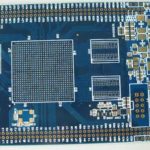
Brown Oxide Before Lamination: Control Points That Matter
Brown oxide is the conversion coating grown on inner layer copper before lamination so that the resin has something to grip. Bare copper bonds weakly to prepreg, while an oxide layer with a needle like crystal structure gives the resin a mechanical anchor. A sound layer is thin, uniform and brown, and a poor one is powdery, patchy or pink.
The oxide treatment sits between the etch line and the layup room, so it is exposed to the habits of both. Over etched traces, residues carried over from plating, and panels handled without gloves all produce the same result at press: a laminate that looks sound until thermal stress opens the interface. This note covers the controls that matter.
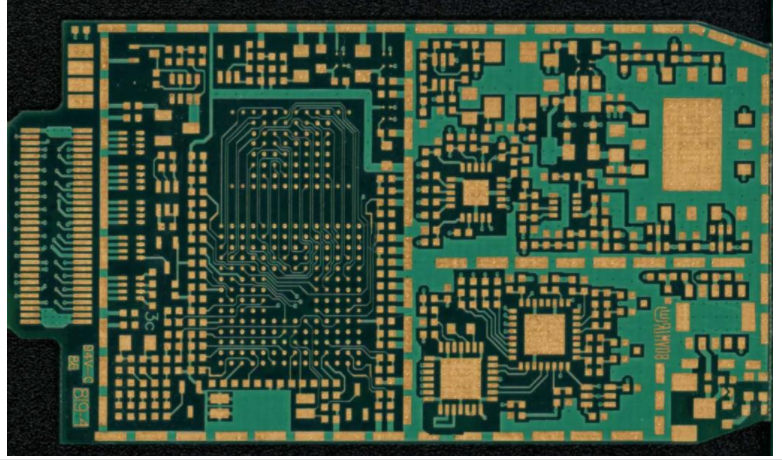
What Brown Oxide Does at the Interface
The oxide is not a glue. It roughens the copper at a scale the resin can wet, and it presents a surface chemistry that bonds to the prepreg as the resin flows and cures. The bond is mechanical in the main, with a chemical contribution from the oxide and the coupling agents in the resin.
Because the bond is mechanical, the crystal structure matters more than the total weight of oxide. Long, fine crystals that stand up from the copper give a deep anchor, while a dense granular layer of the same thickness gives far less. This is the reason thickness alone is a poor acceptance criterion.
Brown Oxide, Black Oxide and the Chemistry
Alkaline chlorite chemistry grows the classic oxide. A shorter cycle leaves a brown layer and a longer one produces black oxide, which is thicker and darker. Black oxide gives the highest bond strength on some resin systems, and a higher risk of thermal stress induced cracking on others, because the thick crystal layer is more brittle.
Alternative treatments include reduced oxide and oxide alternatives based on organic coatings. These produce a thinner layer with a milder chemistry, which reduces pink ring and improves resistance to acid attack, at the cost of a narrower process window. The choice should follow the resin system rather than the habit of the shop.
Thickness, Colour and Crystal Structure
Colour is a rough guide and a poor specification. Brown indicates a light oxide, black a heavy one, and pink means the oxide has been reduced or stripped back to copper. Operators use the colour to catch gross errors, but the acceptance limits should come from a weight measurement and from peel strength data.
Oxide weight is measured by stripping the coating from a coupon and weighing the difference, and a typical window for brown oxide runs from about 0.2 to 0.4 milligrams per square centimetre. Below the window the anchor is too shallow, above it the layer becomes brittle and powders off during handling.
Checks Before the Panel Reaches the Press
The panel should be dry, cool and free of oxide dust before layup. Oxide that rubs off on a glove is oxide that will not bond to the resin, so a simple wipe test with a clean white cloth belongs in the routine. Any transfer of colour means the layer is too heavy or has not been rinsed properly.
Time between treatment and layup is the second control. Oxide takes up moisture from the air and slowly hydrolyses, and a panel left overnight in a humid room bonds less well than one pressed the same shift. Where the queue cannot be shortened, the panels should be stored in a dry cabinet with a record of the entry and exit times.
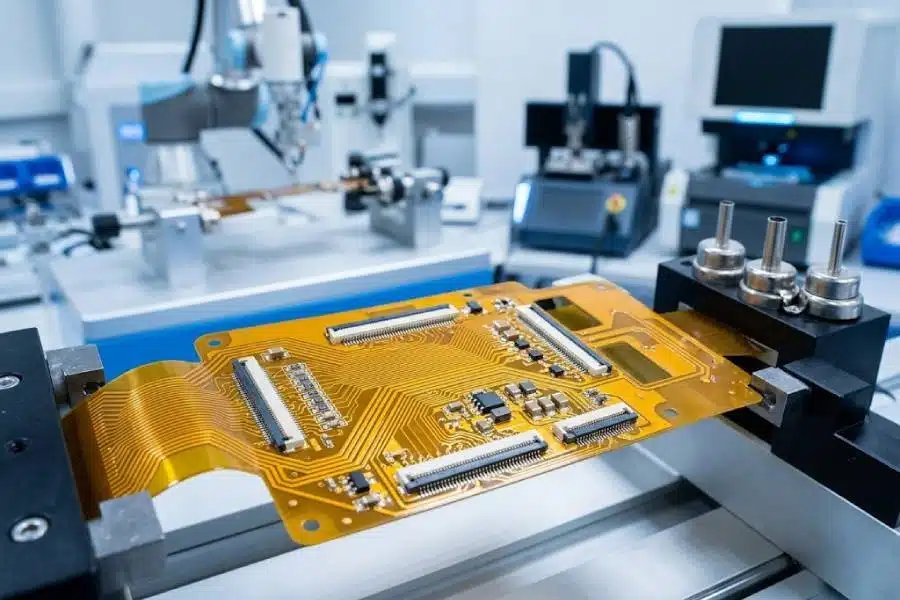
Prepreg Flow, Pressure and the Bond
The oxide needs resin to wet it while the resin is still fluid. Prepreg with too little flow cannot fill the space around the crystals, and prepreg with too much flow pushes resin past the trace edges and leaves a resin starved interface. Both end in a weak bond, which is why the lamination cycle is matched to the resin rather than to the oxide.
Pressure matters for the same reason. The press has to close the stack before the resin gels, and the vacuum has to remove air from between the layers. Residual air at the interface becomes a blister, and a blister that forms at press time usually appears later as a measurable delamination after reflow.
Pink Ring and Other Failure Signs
Pink ring is the pale halo that appears around a plated hole after thermal stress, where the oxide has been attacked by process chemistry and the copper beneath is visible. It starts on the inner layer surface at the hole wall, which is the one place where the oxide is exposed to drilling, desmear and plating.
The other classic sign is measling or a blister in the laminate after reflow. Both point at the same interface. Where a failure is found, cut a section through the site and look at the bond line rather than at the copper, because the copper will usually be sound while the oxide layer is missing.
Oxide Control in Etch and Plating
Oxide grows best on a clean, slightly micro roughened surface. Etch chemistry that is out of balance leaves a smeared or passivated surface, and the oxide that forms on it is thin and uneven. Post etch rinsing also matters, because drag out from an aggressive bath can attack the layer before the dryer.
Plating and desmear steps later in the process can damage the oxide where it is exposed, especially at the hole wall. The link between drilling quality and interface damage is covered in our notes on etch quality and undercut, and the same principle applies to the bond line: a rough start cannot be corrected downstream. Peel strength testing is the practical way to confirm the bond, and the methods are described in our notes on peel strength measurement.
Handling, Storage and Rework Rules
Oxide is fragile. Bare hand contact transfers oils that block the resin, and stacking panels face to face abrades the crystals on both surfaces. Gloves, interleaving and edge handling are cheap controls that decide the bond quality far more than the chemistry does on a well run line.
When a panel has to be reworked, the oxide layer must be stripped and regrown rather than touched up, because a locally damaged region cannot be repaired without disturbing the surrounding layer. Send the panel through the treatment again and re-inspect it, then release it with a note. The full cycle and its parameters are described in our guide to the PCB lamination process, which also gives the press settings that suit each resin type.
FAQ
Is black oxide always stronger than brown oxide? Not always. It is thicker and darker, and it often scores higher on peel strength with epoxy prepreg. With resins that cure at higher stress it can crack and lift, so the resin supplier and the fabricator should agree the type before the stack is released.
How long can treated panels wait before layup? Most shops allow a single shift, and some work with a limit of a few hours to reduce hydrolysis of the layer. The limit should be measured rather than assumed, by pressing coupons at intervals and pulling them apart.
Can pink ring be prevented entirely? Not with a conventional oxide, because the geometry exposes the interface to drilling and desmear chemistry. Reduced oxide and oxide alternative coatings reduce it sharply, and better drilling and desmear control reduce it further. The testing methods published by IPC set the acceptance criteria that apply here.