
Component Sourcing: Authorised Distribution and Open Market
Where a part is bought decides how much is known about it. The same part number from an authorised distributor and from an open market broker is not the same level of confidence, and the difference is invisible until it matters.
The Channels
An authorised distributor buys from the manufacturer under an agreement that covers traceability, storage and returns. The part can be traced to a manufacturing lot and the manufacturer stands behind it.
A broker buys and sells whatever is available, and the traceability ends where their records end. The part may be genuine and it may be a reclaimed, relabelled or remanufactured item. Our obsolescence notes describe how a shortage pushes a buyer into that market.
What the Difference Costs
The broker price is usually lower and the total cost is often higher, because the risk has to be managed. The risk management is incoming inspection, testing and the possibility of a recall.
Where the part is on the critical path for a delivery, the decision is usually made on schedule rather than on price, and it should still be made explicitly.
Incoming Inspection
The inspection for a broker part has to establish the identity and the condition, which is more than a visual check. It includes the marking, the packaging, the date code and the electrical behaviour.
Where the part is a programmable device, the contents of the memory may be a different version from the one that was qualified, which is a functional difference rather than a counterfeit. Our storage notes describe the condition checks that apply.
Tests That Add Confidence
X-ray inspection of the die and the lead frame shows whether the internal construction matches the expected part, and decapsulation can confirm the die marking.
Electrical testing at the specified conditions shows whether the part behaves as the datasheet says, and a curve trace against a known good part shows the differences that a pass or fail test misses. Our failure analysis notes describe the comparison.
Where the Risk Cannot Be Reduced Enough
For a part in a safety related function or in a long life product, the residual risk may be unacceptable at any inspection level. The answer then is a design change rather than a sourcing change.
Where the part is functionally critical and available only on the open market, the design should be revisited rather than the risk accepted. Our component selection notes describe how the choice is made.
Records
The channel, the supplier, the lot and the inspection result should be recorded for every purchase, so that a failure can be traced to the source rather than to the part number.
Where a batch is used across several products, the record is what allows a recall to be scoped. Our fabrication notes notes list the records that should be kept.
Policy and Its Exceptions
The purchasing policy should state which channels are approved for which part classes, and it should state how an exception is authorised and recorded.
A policy without an exception route is a policy that is bypassed. The exception should require a technical justification rather than only a manager’s approval.
Process Control and Verification
On a design of this kind, sourcing is the item that decides how the rest of the board is arranged. A stack-up that is drawn rather than described removes most of the ambiguity from a quotation, and it lets the fabricator price the board against the dielectric and copper weights that will actually be used. Where the requirement is not written down, the shop supplies its own default, and the default is chosen for the process rather than for the design.
The measurements that matter are the repeatable ones: conductor width and spacing, annular ring, finished hole size, plating thickness and surface finish are all verifiable on a coupon that travels with the panel. Running a first article through the same checks as the production panel confirms that the two agree, and that comparison is the cheapest form of process control available at prototype stage.
Keeping a sample from the panel turns a dispute into a measurement, because the same coupon can be re-examined by both parties without rebuilding the batch. Reviewing the design before the data is released is cheaper than correcting it after the panel is in the tank, because every step downstream inherits the decision made at the front end.
Documenting the assumption is part of the design work, and a short note on the drawing prevents a question that would otherwise arrive a day later and cost a day of schedule. The process window is set by the narrowest step in the flow, so an improvement anywhere else shows up as margin rather than as yield until that step is addressed.
Process Control and Verification
On a design of this kind, sourcing is the item that decides how the rest of the board is arranged. A stack-up that is drawn rather than described removes most of the ambiguity from a quotation, and it lets the fabricator price the board against the dielectric and copper weights that will actually be used. Where the requirement is not written down, the shop supplies its own default, and the default is chosen for the process rather than for the design.
The measurements that matter are the repeatable ones: conductor width and spacing, annular ring, finished hole size, plating thickness and surface finish are all verifiable on a coupon that travels with the panel. Running a first article through the same checks as the production panel confirms that the two agree, and that comparison is the cheapest form of process control available at prototype stage.
Keeping a sample from the panel turns a dispute into a measurement, because the same coupon can be re-examined by both parties without rebuilding the batch.
Process Control and Verification
On a design of this kind, sourcing is the item that decides how the rest of the board is arranged. A stack-up that is drawn rather than described removes most of the ambiguity from a quotation, and it lets the fabricator price the board against the dielectric and copper weights that will actually be used. Where the requirement is not written down, the shop supplies its own default, and the default is chosen for the process rather than for the design.
The measurements that matter are the repeatable ones: conductor width and spacing, annular ring, finished hole size, plating thickness and surface finish are all verifiable on a coupon that travels with the panel.
A first article check confirms that the process and the drawing agree on the points listed above, and that the coupon data supports the values used in the design.
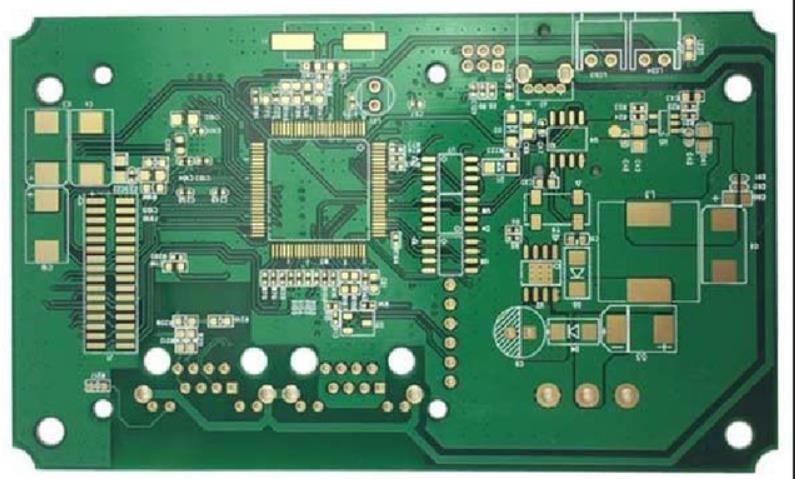
Where a measurement falls outside the expected window, the sample is retained so that the cause can be established before the balance of the batch is released.
FAQ
Is a broker part always counterfeit? No, and the problem is that it cannot be shown to be genuine without testing. The absence of evidence is the risk.
Does a certificate of conformance help? It helps when it comes from the manufacturer. A certificate from a broker describes the broker’s belief rather than the manufacturer’s evidence.
What does gopcb provide for component sourcing? We provide an approved channel policy by part class, incoming inspection covering marking, packaging, date code and electrical behaviour, X-ray and decapsulation for identity, curve trace comparison against a known good part, lot level records that allow a recall to be scoped, and a documented exception route with a technical justification.