Conformal Coating Materials: Choosing the Right One
The coating on an electronic board decides how long the product survives, and it is usually chosen last. That order is backwards. Conformal coating materials differ in flexibility, chemical resistance, temperature range, cure behaviour, and cost, and the wrong choice shows up years later as a cracked barrier, a delaminated film, or a short caused by moisture that reached a trace the coating was supposed to protect.
The materials worth comparing
Six families cover most of the market: polyurethane, epoxy, acrylic, silicone, polyester, and conductive coatings. Beyond those, polyimide and fluoropolymer coatings handle specialised requirements such as very high temperature or aggressive chemical exposure, and they are used where the environment justifies the price.
The comparison below is organised around what each material does well, what it does badly, and where it is normally specified.
Polyurethane coating
Polyurethane is chosen for flexibility and durability. It resists moisture, dust, and harsh environmental conditions well, and it tolerates physical impact and mechanical stress without cracking, which is why it is common in applications where abrasion and corrosion resistance matter.
Its weaknesses are in processing. Cure times are longer than for other materials, and achieving a uniform thickness usually requires specialised equipment and trained operators. Typical applications include automotive electronics, military and aerospace equipment, and consumer products used outdoors.
Epoxy coating
Epoxy is chosen for adhesion and chemical resistance. It bonds strongly to most substrates, resists chemicals and solvents, and provides excellent electrical insulation, which prevents shorts and protects sensitive components in industrial environments.
The trade-off is mechanical. Epoxy films are more brittle than polyurethane and can crack under impact or bending, and they also need a long cure to reach full hardness. Medical devices, industrial electronics, and equipment installed in harsh environments are the usual applications.
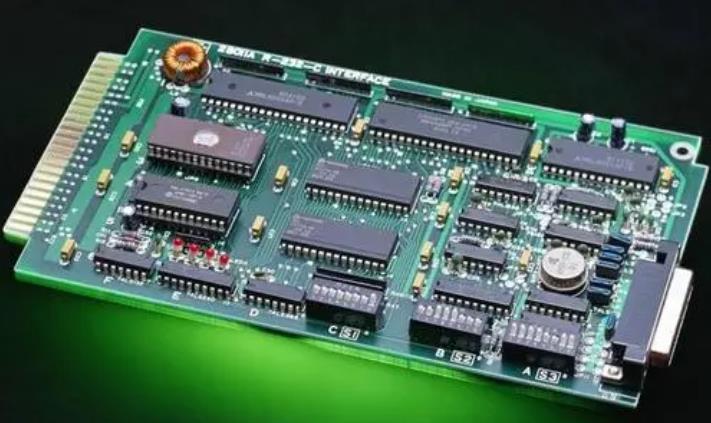
Brittleness is the failure mode to watch with epoxy. A film that passes a chemical soak can still crack when the assembly flexes during enclosure mounting.
Acrylic coating
Acrylic coatings are transparent, light, and easy to apply by spraying or brushing without specialised equipment. They offer a useful balance between protection and appearance, which is why they appear on consumer products where the board may be visible, and they resist ultraviolet exposure well enough to avoid yellowing outdoors.
Their limits are durability and moisture. An acrylic film wears more quickly than epoxy or polyurethane and is more sensitive to humidity, so it is a poor choice for permanently wet environments. Smartphones, tablets, decorative electronics, and interior applications are the normal uses.
Silicone coating
Silicone is chosen for temperature range. It stays flexible from very low to very high temperatures, resists moisture, dust, and a wide range of chemicals, and keeps that flexibility under conditions that would embrittle other films. Automotive sensors and connectors, aerospace components, and equipment exposed to extreme temperatures are its natural applications.
Two problems limit its use. Adhesion to some substrates is weak, and a film that does not bond well will delaminate over time; and the material costs more than the alternatives. Where adhesion is critical, a primer or a different coating is usually the better answer.
Polyester coating
Polyester is chosen for toughness at a moderate price. It resists mechanical wear, corrosion, and environmental stress, provides good moisture and dust resistance, and costs less than the high-performance materials, which makes it attractive for volume production.
Its flexibility is limited compared with polyurethane or silicone, so it can crack under mechanical stress, and its temperature resistance is moderate. Consumer and industrial products that live in benign environments are the usual fit.
Where a board will be handled during assembly and enclosed in a housing, polyester is often the most economical material that still meets the requirement.
Conductive and specialty coatings
A conductive coating serves a different purpose from the insulating films. Silver or carbon loaded materials are applied where electromagnetic interference must be controlled, so the layer acts as a shield rather than as a barrier. Loaded films are also used for low-friction, wear-resistant surfaces in industrial automation and mechanical electronics, where durability matters more than dielectric strength.
Specialty materials cover the extremes. Polyimide tolerates high temperature and is specified for automotive and aerospace electronics, while fluoropolymers such as PTFE add outstanding chemical resistance for environments that include solvents and acids.
Matching the material to the environment
Environment is the first filter. Extreme heat points towards polyimide or a fluoropolymer, while low-temperature flexibility favours silicone. Moisture and humidity are handled well by polyurethane and silicone. Aggressive chemicals call for epoxy or PTFE. Ultraviolet exposure, which affects outdoor equipment, favours acrylic or a UV-cured material, because both resist yellowing and degradation under sunlight.
It helps to describe the environment in numbers rather than adjectives. Peak temperature, hours at that temperature, condensing humidity, salt spray, and cleaning solvents are the inputs that decide the answer far more often than general expectations about indoor or outdoor use.
Mechanical and electrical requirements
Mechanical stress is the second filter. High vibration or impact favours polyurethane or epoxy. Wearable and flexing electronics need a film that moves with the assembly, which points to silicone or a flexible polyurethane, while a rigid board inside a rigid enclosure can use epoxy for maximum protection.
Electrical function is the third. Where complete isolation from the environment is required, epoxy, acrylic, or polyimide offer high insulation resistance. Where shielding is the requirement, a conductive coating loaded with silver or carbon becomes part of the electromagnetic design rather than a protective layer, and the techniques behind that requirement are set out in EMI suppression design principles.
Cost and application complexity
Cost decides the remaining cases. Acrylic and polyester are economical and can be sprayed or dipped with simple equipment, which suits high-volume production. Polyurethane and epoxy may need controlled curing or more precise application, and polyimide and PTFE sit at the high end of both cost and performance.
The variable that is easiest to underestimate is process difficulty. A material that is hard to apply evenly produces thin spots, and a thin spot in a moisture barrier is a failure waiting to happen. Thickness uniformity is a process property rather than a material property, so the same coating applied two different ways can perform very differently.
Combining materials and coating selectively
One film does not have to do everything. A multilayer coating combines materials: a polyurethane layer for moisture protection under an epoxy or polyimide layer that adds chemical and mechanical resistance. The result balances flexibility, wear resistance, chemical resistance, and temperature range in a single system, which is often cheaper than searching for one perfect material.
Selective coating applies the same idea spatially. Vulnerable features such as connectors or exposed traces may get an extra epoxy layer for chemical protection, while areas that must remain flexible get polyurethane. Conductive coating is applied only to the regions that need shielding, with insulating material elsewhere. The general practice of protecting a finished assembly this way is covered in our guide to conformal coating for board protection, and the related materials used to fill and seal assemblies are discussed under potting and dispensing adhesives for PCBs.
Regulatory and environmental constraints
Material selection is also a compliance decision. Products sold in many regions must satisfy restrictions on hazardous substances, so the coating has to be verified against RoHS-type requirements along with the rest of the bill of materials. Volatile organic compound content matters as well: water-based acrylic and UV-cured materials reduce emissions and are increasingly specified for that reason alone.
The practical conclusion is that coating selection is a design decision with an early deadline. Deciding it while the enclosure and the assembly process are still open costs a specification change; deciding it after qualification costs a requalification.
FAQ
Which coating is the best general-purpose choice? Acrylic for benign indoor products where cost and repairability matter, and polyurethane where moisture and mechanical stress are present. Neither is best everywhere, which is why the environment drives the choice.
Can a board be repaired after coating? Yes, but the repair is a process of its own. The coating must be removed locally without damaging the base material or neighbouring components, and the area has to be re-coated afterwards.
Does a thicker coating always protect better? No. Beyond a point the film becomes prone to cracking under thermal cycling, and it can trap solvent or moisture during cure. Uniformity matters more than thickness.