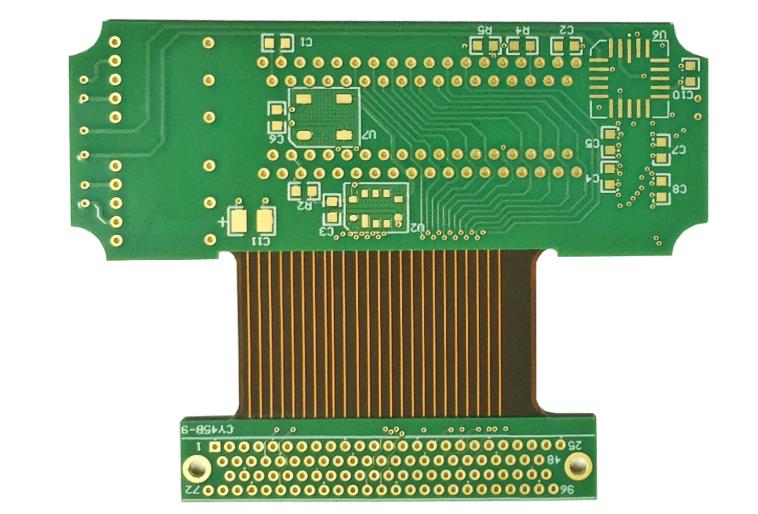
Depanelization: Design Rules and Process Limits
Depanelization is the step where the finished panel becomes individual boards. It happens after all the assembly work, which means the components, the solder joints and the board itself are all exposed to the separation force. A method that is chosen for speed can crack a ceramic capacitor or leave a burr on the edge, and the damage is often found only at the functional test, long after the panel has been scrapped.
Why Separation Matters
Separation is the last mechanical event in the assembly process, and it applies a force to the whole board. The force travels through the laminate, through the solder joints and into the components, and it is the highest stress that the assembly will see before it leaves the factory.
The choice of method therefore sets a floor on the mechanical robustness of the product. A method that bends the board will break the largest ceramic capacitors first, because they are the most brittle parts on the assembly.
The method also sets the edge quality. A separated edge has a burr, a roughness and a tolerance that all appear on the finished product, and a visible edge in a consumer product is a cosmetic feature rather than a technical one.
Depanelization belongs in the process plan from the beginning, because the panel layout, the tab placement and the material all depend on it.
Routing and Tab Removal
A router cuts the board out of the panel with a rotating bit, following the board outline and leaving the tabs holding the board. The tabs are then broken by hand, with a fixture or with a cutter.
The router leaves a clean edge with a small radius that is set by the bit diameter, and it produces a fine dust that has to be extracted. The dust is abrasive and conductive, so a board that is routed after assembly needs cleaning.
The tab is the weak point of the method. It has to hold the board through the line and then break cleanly, and the broken edge is a witness mark that cannot be removed. The tab design and the number of tabs are a compromise between strength and cleanliness.
A tab that is too strong leaves a ragged edge and a jagged corner, and one that is too weak lets the board fall out in the machine. The tab design guide covers the dimensions that work.

V-Score and Snap
A v-score is a pair of shallow cuts on the two faces of the panel along a straight line. The board is separated by bending the panel until the remaining material fractures, which takes a fraction of a second per board.
The method is the fastest and the cheapest available, and it leaves a clean straight edge with a defined chamfer. It requires a straight separation line and a rectangular board, so it cannot be used for a board with a curved edge or an internal cutout.
The depth of the score is the critical parameter. Too shallow and the edge tears and takes laminate with it, too deep and the board separates during handling. The blade is set for the panel thickness and the same setting is used for the whole order.
The bending force is applied to the whole board, which is why the method is not used on a dense assembly. The stress at the score line is high, and a large ceramic capacitor near the edge is the part that fails first.
Laser and Water Jet
A laser cuts the laminate by ablating the material along a programmed path. It produces a narrow kerf, a very clean edge and no mechanical force at all, which makes it attractive for a densely populated board.
The laser heats the material, so it leaves a carbonised edge and a heat affected zone. The carbonised layer is conductive and has to be removed, which means a cleaning step, and the edge is not suitable for a board that has to meet a surface insulation resistance requirement.
A water jet cuts with an abrasive slurry at high pressure. It applies almost no heat and very little force, and it can cut any shape, but the edge is rougher than a routed edge and the equipment is expensive.
A third option is to cut the tabs with a hand tool or a small shear, which is common for a prototype panel. The edge is rough and the operator applies an uncontrolled force, so the method is acceptable for a first article and not for production.
Both methods are used where the panel cannot tolerate the force of a router or a score, which usually means a thin board, a dense assembly or a fragile component near the edge.
Edge Quality and Stress
Edge quality is measured by the burr, the roughness and the tolerance. A routed edge has a small burr and a tolerance set by the machine, while a snapped edge has a clean line and a chamfer but a broken surface where the material fractured.
The stress is measured by the strain that the board sees during separation, and it is highest at the score line and at the tab. The usual limit is a few hundred microstrain, and a board that exceeds it will have cracked components even though the separation looked perfect.
The position of the components relative to the separation line is therefore a design rule. A brittle part should be kept away from the tab and from the score, and the rule should be checked on the panel drawing rather than left to the assembly house.
The outline tolerance also depends on the method, since a routed outline is more accurate than a snapped one, and the finished product has to be designed for the method that will be used.
Choosing a Method
The first question is the shape of the board. A rectangle with straight sides can be v-scored, and anything else has to be routed or cut, which immediately reduces the options.
The second is the density of the assembly and the brittleness of the parts. A board with large ceramic capacitors near the edge should not be snapped, and a board with a dense layout is better cut with a low force method.
The third is the volume and the cost. A v-score is nearly free per board, a router is a machine time cost and a laser is a capital cost, so the choice is different for a thousand boards and for a million. The cost reduction review should include the separation step.
The final check is the first article, where the separated boards are inspected for edge quality and the assembly is checked for cracked parts. The quality judgement on the finished board starts at the edge.
FAQ
Is v-score always cheaper than routing? Per board it is, because the separation is a snap. It only works for a rectangular board and it applies more stress to the assembly.
Can a laser cut a populated panel? It can cut the laminate without force, but the carbonised edge has to be cleaned and the heat affected zone has to be acceptable for the product.
How far should a brittle component be from a tab? Far enough that the strain at the tab does not reach it. A few millimetres is a common starting point, and the value should be confirmed by a strain measurement.