
Electrical Test: Flying Probe Versus Bed of Nails
Electrical test is the step that proves the nets are connected as the design intended and are not connected to anything they should not be. Two methods do most of that work: the bed of nails, which contacts every point at once through a dedicated fixture, and the flying probe, which moves a small number of probes to each point in turn.
What Electrical Test Is For
A test program checks continuity between points that should be connected, isolation between points that should not be, and in many cases the value or presence of a component. It catches assembly defects that inspection cannot see: an open joint under a package, a wrong component, a short inside a connector.
The value of the test depends on test coverage: the proportion of the possible defects that the program can actually detect. A program that covers ninety percent of the nets is not the same as one that covers ninety percent of the defects, and the difference is what makes method selection a design question rather than a purchasing one.
Bed of Nails: Fixture and Access
A bed of nails fixture carries a spring-loaded probe for every test point and presses the board onto them in one motion, so all measurements are available at the same moment. That makes the method fast, and the fixture provides a stable contact for measuring component values as well as continuity.
The fixture is the cost. Tooling a new fixture takes one to three weeks and costs from a few thousand to tens of thousands depending on the count and density of probes. It also requires every net to have an accessible test point, which is a layout requirement that has to be met during design rather than discovered at test.
Flying Probe: Programming and Speed
A flying probe tester moves two or more probes to each test point in sequence, so no fixture is needed and the program is generated from the CAD data. That makes it ideal for prototypes, low volume and products whose design may still change, and it eliminates the fixture lead time entirely.
The cost is time. Each measurement requires the probes to move, land and settle, so a board with a thousand nets takes far longer than the same board on a fixture. Throughput is typically a fraction of the fixture method’s, which is the reason flying probe is used where volume is low rather than where volume is high.
Coverage and What Each Method Misses
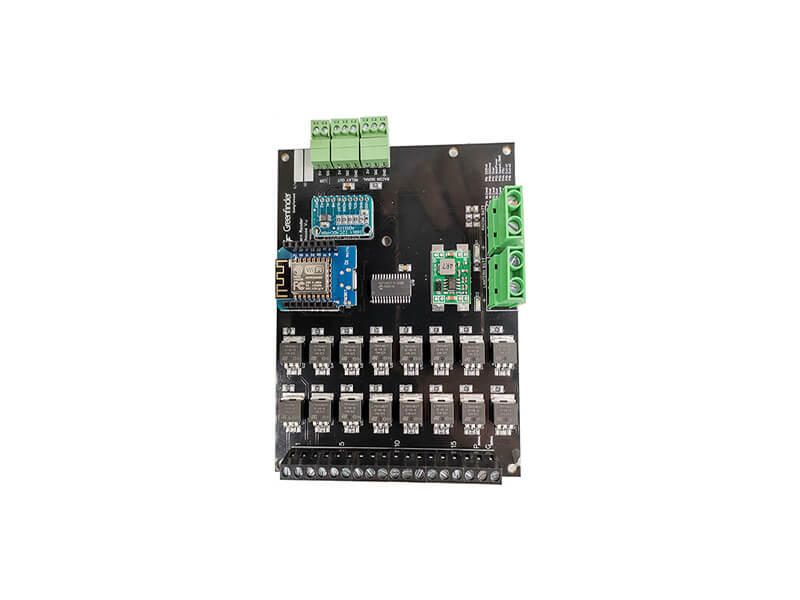
Both methods detect opens and shorts on the nets they can reach. The differences appear in the inaccessible: a net with no test point cannot be probed by either method, and a joint under an area array package may be unreachable without a via specifically provided for test. Coverage is therefore determined by the layout before the method is chosen.
Both methods also miss defects that do not change the electrical signature at the test conditions. A joint that is cracked but still touching at room temperature measures as connected, and only a functional test at temperature or a mechanical stress reveals it. Recognizing that limit is what keeps a passing test result in perspective.
Volume and Cost Thresholds
The fixture cost is amortised over the production volume, so the decision usually turns on how many boards will be built. A few hundred units rarely justify a fixture, while several thousand usually do, and the crossover depends on the fixture cost, the test time saved and the value of the product.
The threshold moves with the design. A product whose layout provides generous test points and whose volume is stable is a good candidate for a fixture, while one with fine-pitch devices and a short production life is usually better served by a probe program that can be revised as the design changes.
Test Point Design and Its Effect
The layout determines which method is even possible. A bed of nails needs test points on a compatible grid, with clearance for the probe and the fixture, and with a diameter large enough for reliable contact. A flying probe needs far less clearance but still needs the point to be reachable by the probe body.
Test points also consume board area, and a design that provides them everywhere may not be practical on a dense board. Where a net cannot have a test point, the alternative is to make it testable through another net, or to accept the reduced coverage and record the decision.
In-Circuit, Functional and Boundary Scan
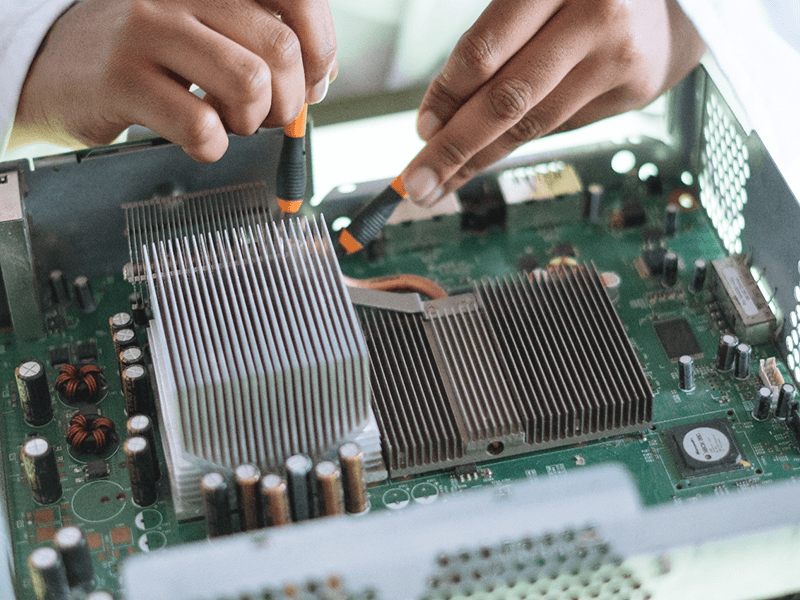
In-circuit test measures individual components and connections, which requires access to the nets between them. A functional test exercises the assembly as a working unit, which requires far less access but gives less precise information about a failure. Boundary scan uses a device’s own JTAG capability to test connections without physical probes at all.
The three are complementary. A program that combines in-circuit coverage with a boundary scan pass often achieves higher coverage than either alone, particularly on boards where the fine-pitch devices have no accessible test points. Choosing the combination is the coverage decision rather than a detail of the test program.
Programming, Debug and Maintenance
A probe program is generated from the design data and then debugged on real boards, and the debug effort is real: false failures from probe contact, from residue on a pad or from a marginal test point all have to be resolved before the program is useful. A fixture program has the same debug effort plus the fixture build.
Maintenance differs as well. A fixture needs its probes replaced as they wear and its alignment checked, while a probe machine needs its probe tips and its calibration maintained. Both should have a defined interval and a defined acceptance check, since a tester that has drifted produces results that look like product defects.
Choosing for a Product
The choice follows the volume, the design life and the access. Low volume or a design still in development points to flying probe; stable high volume with good access points to a fixture; and a board with fine-pitch parts and no access points to boundary scan, whatever the other methods offer.
Whichever is chosen, the program should be qualified: a known-good board must pass, a board with a deliberate defect must fail, and the false call rate should be measured. A tester that passes everything is indistinguishable from a tester that works until a defect escapes, and the process around it is what makes the difference.
Related reading: our fabrication notes, board quality and design release notes cover the same ground.
FAQ
When is flying probe better than a bed of nails? At low volume, for prototypes and for designs that may still change, because there is no fixture cost or lead time. At high volume a fixture is usually faster and cheaper per board.
Can either method test a joint under a BGA? Only if a via or test point provides access. Otherwise the joint is invisible to both, which is where boundary scan or a functional test adds coverage.
What coverage should an electrical test program achieve? It should be stated as a percentage of the defects the program can detect, not just of nets tested, and the inaccessible nets should be recorded as an accepted limitation.