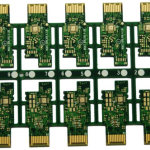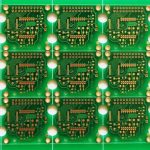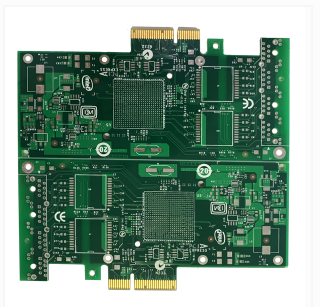
Ink is an essential material used in the manufacturing and protection of HDI PCB and other advanced circuit boards, including blind-via and buried-via boards. In PCB manufacturing, ink is primarily used to protect exposed copper from oxidation, provide electrical insulation, and improve the long-term reliability and appearance of the finished board.
For HDI Circuit Board applications, ink quality is particularly important because HDI technology involves fine lines, microvias, high-density component placement, and increasingly compact circuit structures. The performance of PCB Ink must therefore meet demanding requirements for printing accuracy, adhesion, thermal resistance, chemical resistance, and mechanical durability.
Key Performance Characteristics of PCB Ink
The quality of PCB Ink is determined by several important physical and chemical properties. These properties directly affect printing quality, coating uniformity, curing performance, and the reliability of the finished PCB.
1. Viscosity
Viscosity describes the resistance of ink to flow under an applied force. In technical terms, it is related to the ratio between shear stress and the velocity gradient within the flowing material and is commonly expressed in Pa·s or related units.
For HDI PCB Ink, viscosity must be carefully controlled. If the viscosity is too high, the ink may not spread evenly across fine features. If it is too low, the ink may flow excessively, reducing printing definition and potentially contaminating areas that should remain clear.
Therefore, the appropriate viscosity range should be selected according to the printing method, mesh, substrate, pattern geometry, and curing process.
2. Plasticity
Plasticity refers to the ability of ink to maintain its shape after being subjected to an external force.
Good plasticity helps PCB Ink maintain accurate printed patterns and reduces deformation during the printing process. This is especially important for HDI PCB applications, where fine traces, small pads, and closely spaced features require precise ink deposition.
3. Thixotropy
Thixotropy describes the property of a material that behaves like a gel or has relatively high viscosity when at rest but becomes more fluid when subjected to shear.
This characteristic is useful during PCB screen printing. When the squeegee applies pressure, the ink becomes easier to transfer through the screen. After printing, the ink gradually recovers its viscosity and remains in the intended position.
Proper thixotropy helps improve print definition and prevents excessive spreading.
4. Drying and Curing Performance
The drying and curing characteristics of PCB Ink are critical to production efficiency and final board reliability.
The ink should remain printable long enough to achieve stable transfer during the printing process, while curing must be sufficiently fast and complete after application. Depending on the ink system, curing may involve thermal, UV, or other controlled processes.
For HDI PCB production, the curing process must provide consistent adhesion and hardness without damaging sensitive materials or affecting dimensional stability.
5. Hiding Power
Hiding power refers to the ability of ink to cover the underlying surface effectively.
For HDI Circuit Board applications, high hiding power can help provide uniform coverage over copper patterns and substrate areas. This is particularly useful when a consistent solder mask appearance and reliable insulation layer are required.
However, excessive ink thickness should also be avoided because it can affect dimensional accuracy, via coverage, and subsequent assembly processes.
6. Viscoelasticity
Viscoelasticity describes the combination of viscous and elastic behavior of an ink.
During printing, the ink is subjected to shear forces from the squeegee and screen. After the force is removed, the ink should recover appropriately rather than spreading uncontrollably.
Good viscoelastic behavior contributes to stable printing, clear pattern edges, and consistent coating thickness.
7. Fluidity
Fluidity describes how easily the ink flows under an external force such as pressure or gravity. It is closely related to viscosity.
Ink with excessive fluidity may spread beyond the intended printing area, while insufficient fluidity may result in incomplete transfer or uneven coverage.
The balance between viscosity, plasticity, and thixotropy is therefore essential for achieving stable PCB Ink Performance.
8. Stringing and Filament Formation
Stringing occurs when ink forms thin filaments during separation between the printing tool and the PCB surface.
Excessive stringing can create unwanted fine strands of ink across the board. On high-density HDI PCB designs, these defects may cause contamination, visual defects, insufficient clearance, or even electrical reliability problems.
Ink formulation and printing parameters should therefore be optimized to minimize stringing.
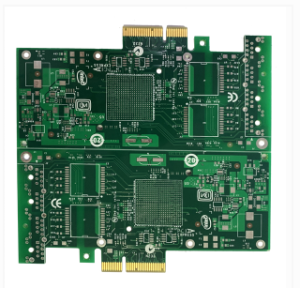
Reliability Requirements for HDI PCB Ink
After printing and curing, the ink must withstand the environmental and mechanical stresses encountered during PCB manufacturing, assembly, and product operation.
High-quality HDI PCB Ink should provide:
- Strong adhesion to the PCB surface
- Good resistance to scratches and abrasion
- Resistance to thermal shock
- Resistance to chemicals used during PCB processing
- Good insulation performance
- Stable dimensional and surface characteristics
- Adequate resistance to mechanical stress
- Reliable performance during soldering and assembly
- Appropriate environmental and safety compliance
These properties are particularly important for high-density boards because the smaller feature sizes and tighter spacing of HDI technology leave less tolerance for manufacturing defects.
Common Ink Colors Used on HDI PCB
Green is traditionally the most widely used solder mask color in PCB manufacturing. Many HDI PCB manufacturers also offer other colors according to customer requirements, product applications, inspection requirements, and visual design.
Common PCB ink colors include:
| Ink Color | Typical Characteristics and Applications |
|---|---|
| Green | The most commonly used solder mask color; provides good contrast for inspection and component identification. |
| Black | Used for specific appearance requirements and selected electronic products; may require additional consideration for inspection and optical systems. |
| White | Commonly used where high reflectivity or a specific visual appearance is required. |
| Yellow | Used for identification, special applications, or specific product designs. |
| Red | Often selected for product differentiation, identification, or customized appearance. |
| Blue | Used for customized PCB appearance and product identification. |
| Other Colors | Custom colors may be available depending on the ink supplier, PCB manufacturer, and application requirements. |
Green solder mask remains popular because it provides a practical balance between manufacturing performance, visual inspection, readability, and cost.

Why Ink Color Matters in PCB Manufacturing
Although ink color is often considered an aesthetic choice, it can also affect manufacturing and inspection processes.
For example, the contrast between the solder mask, copper features, silkscreen markings, and components can influence visual inspection. Certain colors may also interact differently with automated optical inspection systems or machine-vision equipment.
Therefore, when selecting Ink Color Classification for an HDI Circuit Board, manufacturers should consider more than appearance. Important factors include:
- Optical inspection requirements
- Solder mask thickness
- Curing conditions
- Surface finish compatibility
- Component assembly requirements
- Product identification
- Customer appearance specifications
- Environmental and reliability requirements
Solder Mask Ink and HDI Applications
Solder Mask Ink is one of the most important types of PCB ink. It forms a protective insulating layer over selected areas of the PCB while leaving solderable pads exposed.
For HDI designs, solder mask printing requires particularly good process control because the board may contain fine-pitch pads, microvias, small clearances, and dense routing structures.
The interaction between Solder Mask Ink, copper features, surface finish, and the HDI structure must be carefully controlled to prevent defects such as insufficient coverage, excessive coating, poor adhesion, pinholes, or registration errors.
How Kingda Controls PCB Ink Quality
For advanced PCB Manufacturing, ink selection and printing parameters should be considered together with the overall PCB process.
Kingda can evaluate ink requirements based on board structure, surface finish, line/space, via configuration, solder mask requirements, and end-use conditions. During production, parameters such as ink viscosity, screen-printing conditions, coating thickness, curing temperature, and curing time should be controlled consistently.
For HDI PCB, these controls are especially important because small variations in printing and curing can have a greater impact on fine-pitch structures and high-density interconnections.
Conclusion
The performance of HDI PCB Ink directly affects PCB appearance, insulation, manufacturing consistency, and long-term reliability. Important properties include viscosity, plasticity, thixotropy, drying and curing behavior, hiding power, viscoelasticity, fluidity, adhesion, and resistance to mechanical and thermal stress.
At the same time, Ink Color Classification provides manufacturers with different options for product identification, visual design, and inspection requirements. Green remains the most common choice, while black, white, yellow, red, blue, and customized colors are also available for different applications.
As HDI PCB technology continues to develop toward finer lines, smaller microvias, higher interconnection density, and more compact designs, the requirements for PCB Ink Performance will continue to increase. Selecting the appropriate PCB Ink and maintaining stable printing and curing processes are therefore essential for achieving reliable, high-quality PCB Manufacturing.