High-Precision PCB for Proton Therapy Systems
In modern cancer treatment, proton therapy has become an important technology for delivering highly targeted radiation to tumors while helping reduce radiation exposure to surrounding healthy tissue. The precision of a proton therapy system depends not only on the accelerator, beam delivery equipment, sensors, and control software, but also on the electronic hardware responsible for signal transmission, control, monitoring, and data processing.
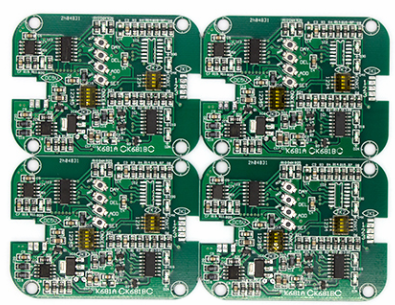
Among these electronic components, the High-Precision PCB serves as a critical connection and control platform. It enables stable communication between control modules, monitoring circuits, sensors, power systems, and high-speed data-processing components.
Unlike conventional industrial circuit boards, PCBs used in proton therapy equipment must meet demanding requirements for signal integrity, dimensional accuracy, reliability, multilayer routing, electromagnetic compatibility, and long-term operational stability.
For medical equipment manufacturers, selecting an appropriate Medical PCB manufacturing and assembly solution is therefore an important part of developing reliable proton therapy systems.
Why Proton Therapy Systems Require High-Precision PCBs
A proton therapy system accelerates protons to high energy and precisely controls their delivery toward a target area. During treatment, multiple electronic subsystems must work together to control beam parameters, monitor equipment status, process measurement data, and coordinate treatment procedures.
The PCB provides the electrical infrastructure required for these functions.
Several characteristics make PCB requirements for proton therapy systems particularly demanding.
High-Speed and Stable Signal Transmission
Proton therapy equipment continuously processes control signals, measurement data, sensor information, and system-status information.
Any unnecessary signal delay, attenuation, noise, or distortion can affect system performance. High-speed PCB structures and carefully controlled impedance can help maintain signal quality throughout the transmission path.
PCB layout must take into account trace geometry, dielectric characteristics, return paths, grounding, differential-pair routing, and signal separation.
For high-speed interfaces, the PCB stack-up should be developed together with the required electrical specifications rather than being selected only after routing is completed.
Complex Multilayer Routing
Proton therapy equipment integrates numerous functional modules into relatively compact electronic assemblies.
A multilayer PCB allows engineers to separate power, ground, control, and high-speed signal layers while providing sufficient routing space.
Proper layer planning can improve routing density while helping reduce electromagnetic interference and unwanted coupling between sensitive circuits.
For complex electronic systems, professional PCB Design & Layout can help engineers evaluate board architecture, stack-up design, component placement, routing constraints, and manufacturability before fabrication.
Long-Term Reliability
Medical treatment equipment may need to remain operational for extended periods and must provide consistent performance over repeated operating cycles.
PCB reliability is therefore critical.
Factors such as laminate selection, copper thickness, plating quality, solder-joint reliability, thermal cycling, connector durability, and dimensional stability can all affect the service life of the final electronic assembly.
A properly designed Medical PCB should therefore be evaluated according to the actual electrical, mechanical, thermal, and environmental conditions of the equipment.
PCB Technologies Suitable for Proton Therapy Equipment
Different sections of a proton therapy system may require different PCB technologies. Three important approaches include advanced multilayer PCBs, high-frequency and high-speed PCBs, and HDI PCB structures.
Advanced Multilayer PCBs
Multilayer construction provides additional routing layers within a compact board structure.
This makes it possible to integrate control circuits, monitoring circuits, communication interfaces, power distribution, and other functions without requiring excessive board dimensions.
A properly designed multilayer stack-up can also provide dedicated reference planes and power planes, helping improve signal integrity and reduce electromagnetic coupling.
For systems containing multiple functional circuits, multilayer construction can provide an effective balance between electrical performance, routing density, and mechanical integration.
High-Frequency and High-Speed PCBs
High-speed signals are increasingly important in modern medical equipment.
High-frequency PCB materials with suitable dielectric characteristics can help reduce transmission losses and maintain stable electrical performance at elevated frequencies.
The selection of PCB material should consider dielectric constant, dissipation factor, thermal stability, dimensional stability, and compatibility with the required fabrication process.
High-speed routing should also consider impedance control, trace geometry, via structures, reference planes, and return-current paths.
HDI PCB Technology
An HDI PCB uses advanced interconnection structures such as microvias and high-density routing to provide more connections within a smaller board area.
This technology can be particularly useful when electronic modules need to be compact while supporting a large number of electrical connections.
HDI construction can also help shorten signal paths and improve component placement flexibility.
Depending on the system architecture, engineers may use blind vias, microvias, fine-pitch routing, and other advanced structures to achieve the required interconnection density.
Manufacturing Requirements for High-Precision Medical PCBs
The quality of the finished PCB depends heavily on manufacturing process control.
A reliable PCB Manufacturing process should maintain consistent control from material preparation through final inspection.
Material Selection and Incoming Inspection
Material selection should be based on the electrical and environmental requirements of the application.
For high-speed circuits, the PCB material should provide stable dielectric characteristics and suitable signal-loss performance.
For long-term medical equipment operation, thermal stability and dimensional reliability are also important.
Incoming materials should be inspected before entering production to reduce the risk of variations affecting final PCB performance.
Multilayer Lamination Control
For multilayer medical PCBs, lamination quality is critical.
Inappropriate temperature, pressure, or processing time can contribute to defects such as voids, delamination, resin-related problems, and dimensional variation.
Accurate registration between layers is particularly important for high-density designs because even small deviations can affect via alignment and electrical performance.
Manufacturers should therefore establish appropriate process controls for lamination, layer registration, curing, and dimensional stability.
Precision Drilling and Microvia Formation
High-density PCBs require accurate drilling and via formation.
Through-holes, blind vias, buried vias, and microvias must be manufactured according to the design specifications.
For HDI structures, laser drilling may be used to create microvias with controlled dimensions.
The quality of these interconnections directly affects electrical continuity and long-term reliability.
Copper Plating and Surface Finishing
Copper plating must provide reliable electrical connections between PCB layers.
Uniform plating thickness is important for both electrical performance and mechanical reliability.
The surface finish should also be selected according to the component technology, soldering process, environmental requirements, and expected service conditions.
Appropriate surface finishing can improve solderability and protect exposed copper surfaces during storage and assembly.
PCB Assembly for Proton Therapy Electronics
Fabricating the bare PCB is only one part of the electronic manufacturing process. Components must also be installed accurately to produce a functional electronic assembly.
A professional PCB Assembly process should be adapted to the component types and complexity of the proton therapy system.
SMT Assembly
Surface-mount technology is suitable for many compact medical electronic assemblies because it supports high component density and automated placement.
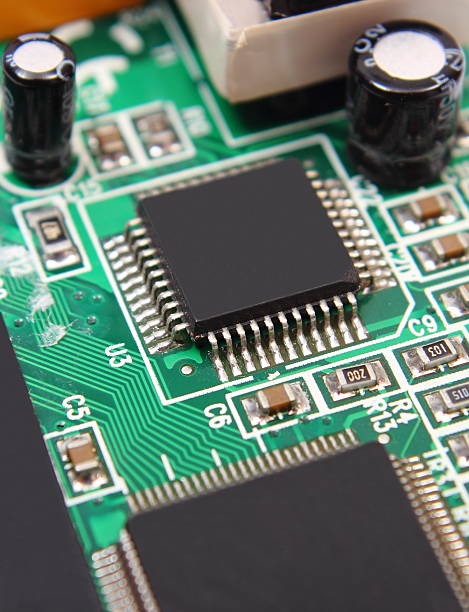
Fine-pitch ICs, processors, sensors, connectors, and other surface-mount devices can be placed using automated equipment.
Placement accuracy is especially important for fine-pitch and high-density components.
Through-Hole Components
Some connectors, power components, mechanical interfaces, and other devices may require through-hole mounting.
Through-hole technology can provide strong mechanical connections for components exposed to insertion forces, vibration, or mechanical stress.
Depending on the product design, SMT and through-hole technologies may be combined in a single assembly.
Inspection and Assembly Quality
After component placement and soldering, assemblies should undergo appropriate inspection.
Depending on the product requirements, inspection methods may include automated optical inspection, X-ray inspection, electrical testing, solder-joint inspection, and functional testing.
For assemblies containing BGA or other hidden solder joints, X-ray inspection can provide additional visibility into solder quality.
Quality Control During PCB Production
Quality management should cover the complete production process rather than focusing only on final inspection.
Electrical Testing
Electrical testing can identify open circuits, short circuits, incorrect connections, and other manufacturing defects.
For high-precision medical electronics, electrical tests should be developed according to the circuit design and product requirements.
Signal Integrity Verification
High-speed PCB assemblies may require additional signal integrity verification.
Testing can evaluate parameters such as impedance, insertion loss, return loss, crosstalk, and other relevant high-speed characteristics.
The exact test methods should be selected according to the interfaces and operating frequencies used by the equipment.
Dimensional Inspection
Dimensional accuracy is important when PCBs must fit into precisely engineered medical equipment.
Inspection should verify board outline dimensions, mounting holes, connector positions, layer registration, and other critical mechanical features.
Accurate mechanical dimensions help prevent assembly problems during system integration.
Reliability Testing
Depending on the application, reliability validation may include thermal cycling, temperature testing, humidity exposure, vibration testing, and other environmental evaluations.
These tests can help determine whether the PCB can maintain stable performance throughout its expected operating conditions.
From PCB Prototype to Production
Prototype development is an important stage in the development of proton therapy electronics.
Before volume production, manufacturers and engineering teams should verify the PCB design, material selection, stack-up, routing, mechanical dimensions, component compatibility, and manufacturing process.
A structured prototype process can help identify problems at an early stage.
Design Verification
The initial design should be reviewed for electrical and mechanical requirements.
Engineers should verify:
- PCB dimensions
- Layer count
- Material specifications
- Controlled impedance requirements
- Trace width and spacing
- Via structures
- Component placement
- Connector locations
- Mounting holes
- Thermal requirements
- Manufacturing tolerances
Prototype Fabrication
Once the design has passed engineering review, prototype PCBs can be fabricated.
Prototype production allows engineers to validate the physical board before committing to larger production quantities.
Potential manufacturing issues can be identified and corrected before mass production.
Prototype Assembly and Testing
After bare-board fabrication, components can be assembled onto the prototype.
Functional testing should then verify whether the complete assembly operates according to system requirements.
Any issues identified during prototype testing should be fed back into the design before the production version is released.
How Professional PCB Manufacturing Supports Medical Equipment
The development of proton therapy equipment requires close coordination between electronics engineers, mechanical engineers, system designers, PCB manufacturers, and assembly providers.
A capable manufacturing partner should be able to support both technical requirements and production consistency.
For companies that require a complete electronics manufacturing workflow, a Turnkey PCB Assembly solution can integrate PCB fabrication, component sourcing, assembly, inspection, and testing into a coordinated process.
Component availability is also important for medical equipment development. Proper Components Procurement can help manufacturers manage component sourcing, availability, and production requirements.
For new medical equipment projects, prototype production and low-volume manufacturing are often necessary before a design enters full-scale production. Prototype PCB Assembly can support early-stage product validation and engineering testing.
When a validated design is ready for larger production quantities, High-Volume PCB Assembly can provide a scalable manufacturing approach.
Conclusion
Proton therapy systems place demanding requirements on the electronic hardware responsible for beam control, monitoring, communication, and data processing.
The High-Precision PCB is an essential part of this architecture because it provides the electrical foundation for these critical functions.
Advanced multilayer construction, high-speed PCB technology, HDI structures, controlled impedance, precise drilling, reliable plating, and strict manufacturing controls can help meet the requirements of modern proton therapy electronics.
However, PCB performance depends on the complete development process. Material selection, PCB design, fabrication, component sourcing, assembly, inspection, electrical testing, and reliability validation should all be considered as interconnected stages.
By combining professional PCB design with controlled PCB Manufacturing, reliable PCB Assembly, and systematic prototype validation, medical equipment developers can reduce manufacturing risks and build electronic assemblies capable of supporting the demanding requirements of precision proton therapy systems.