High-Reliability Press-Fit Hole PCB Manufacturing
In industrial automation, medical equipment, aerospace-related electronics, and other applications where stability and durability are critical, a High-Reliability Press-Fit Hole PCB serves as an important platform for signal transmission, electrical interconnection, and mechanical support. The manufacturing quality of these boards can directly affect the operational safety, reliability, and service life of the final electronic system.
Compared with conventional circuit boards, high-reliability press-fit hole PCBs must maintain stable electrical and mechanical performance under demanding operating conditions. This requires careful control throughout the entire manufacturing process, from material selection and drilling to hole metallization, inspection, and final testing.
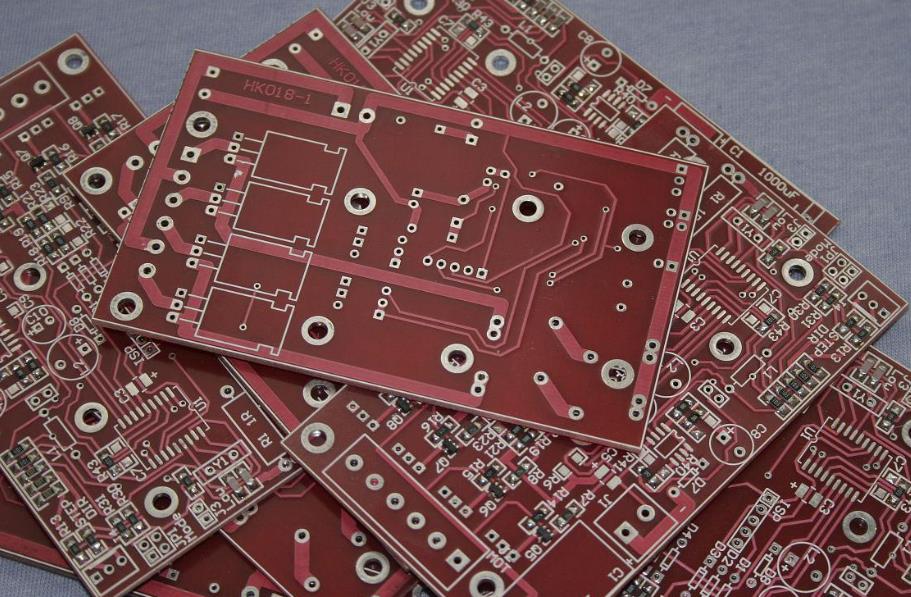
For demanding applications, Press-Fit Hole PCB Manufacturing requires not only accurate hole dimensions but also excellent hole-wall quality, dimensional stability, mechanical strength, and long-term reliability. A well-controlled manufacturing process helps ensure that press-fit components can be inserted accurately while maintaining reliable electrical connections throughout the product life cycle.
1. High-Quality Materials: Building the Foundation for Reliability
The manufacturing of a high-reliability PCB begins with appropriate material selection. The substrate provides the mechanical structure and electrical insulation required by the circuit board, so its characteristics have a direct impact on overall PCB performance.
For demanding press-fit applications, materials should provide suitable thermal resistance, mechanical strength, electrical insulation, and dimensional stability. Reliable raw materials also help minimize deformation during drilling, lamination, plating, and subsequent processing.
Material selection should therefore consider the actual operating environment of the finished product. Factors such as temperature variation, mechanical stress, electrical requirements, humidity, and long-term operating conditions may all influence the appropriate PCB material.
For more complex circuit structures, manufacturers may also combine advanced materials and controlled stack-up designs to meet specific electrical and mechanical requirements. GOPCBA provides a range of PCB manufacturing capabilities covering standard FR-4, high-TG materials, high-performance materials, RF materials, aluminum-backed PCB materials, and other specialized options.
2. Precision Press-Fit Hole Manufacturing: Controlling Every Detail
The press-fit hole is one of the most important features in Precision PCB Manufacturing. Its dimensional accuracy, position, wall quality, and metallization directly affect the installation and long-term performance of press-fit components.
Precision Drilling and Hole Position Control
The manufacturing process begins with precision drilling based on the customer’s PCB design and manufacturing specifications. High-precision drilling equipment and appropriate positioning methods are required to maintain accurate hole locations and diameters.
Accurate hole positioning is particularly important for connectors, terminals, power components, and other press-fit components. Excessive dimensional deviation may make component insertion difficult or create mechanical stress during assembly.
GOPCBA’s PCB manufacturing capabilities support advanced mechanical and laser drilling technologies for demanding PCB designs, including high-density and multilayer circuit boards.
Deburring and Hole-Wall Preparation
After drilling, the hole walls must be properly prepared. Burrs, resin residues, drilling debris, or other contaminants can affect subsequent copper plating and the final electrical connection.
A controlled desmear and hole-cleaning process helps create a suitable surface for subsequent metallization. This step is essential for improving copper adhesion and maintaining consistent hole-wall quality.
Hole Metallization
Hole metallization is a critical process for establishing reliable electrical connections between different PCB layers.
During through-hole plating, copper is deposited onto the hole walls to create a conductive path. The copper layer needs to achieve appropriate thickness and uniformity while maintaining strong adhesion to the substrate.
Poor plating quality can lead to defects such as voids, insufficient copper thickness, or weak adhesion. These defects may increase electrical resistance or create reliability problems during long-term operation.
For high-reliability PCB applications, manufacturing engineers therefore need to carefully control plating parameters, chemical conditions, current density, temperature, and processing time.
3. Complete Quality Control: Building Multiple Reliability Barriers
A robust PCB Quality Control system should cover every stage of production, from incoming materials to final shipment.
Incoming Material Inspection
Before production begins, raw materials should be inspected according to defined specifications.
Typical inspection items may include:
- PCB substrate thickness
- Copper foil thickness
- Material type and specification
- Dimensional stability
- Surface condition
- Flatness
- Appearance
- Material certification and traceability
Only materials that meet the required specifications should enter production.
In-Process Inspection
During press-fit hole processing, manufacturers should continuously monitor critical parameters such as:
- Hole diameter
- Hole position
- Hole-to-hole spacing
- Hole-wall condition
- Copper plating thickness
- Registration accuracy
- Board thickness
- Surface condition
Real-time process monitoring helps manufacturers identify deviations before they develop into large-scale production problems.
GOPCBA states that its PCB manufacturing process incorporates engineering review, DFM analysis, material preparation, imaging, etching, lamination, drilling, copper plating, surface finishing, electrical testing, and final inspection.
Final Inspection and Electrical Testing
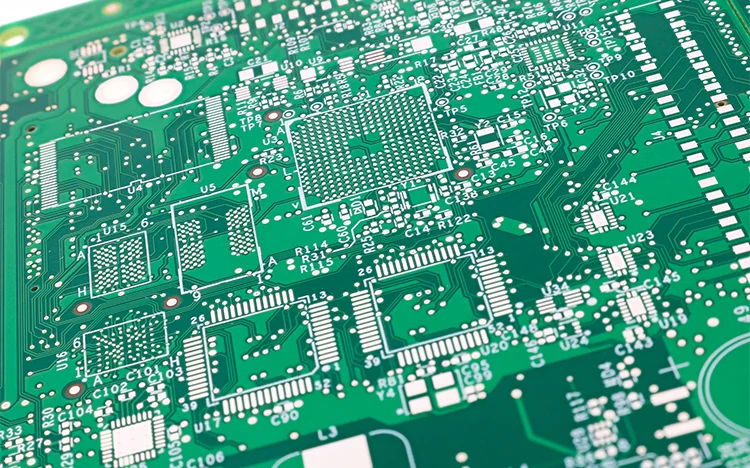
After manufacturing is completed, finished boards should undergo comprehensive inspection and testing.
Visual inspection can identify defects such as:
- Scratches
- Board deformation
- Surface contamination
- Damaged pads
- Hole defects
- Copper abnormalities
- Silkscreen problems
Electrical testing is also essential for verifying circuit continuity and detecting potential open or short circuits.
For demanding applications, additional testing and inspection methods may be selected according to the product requirements. GOPCBA’s quality management system includes PCB inspection, DFM checking, manufacturing control, testing, and production traceability, with 100% electrical testing listed among its PCB manufacturing quality measures.
4. Surface Finishing for Reliable Electrical Performance
Surface finishing is another important consideration in high-reliability PCB production.
The selected surface finish should be compatible with the component type, assembly process, electrical requirements, storage conditions, and expected service environment.
Common PCB surface finishes include:
- ENIG
- HASL
- Lead-free HASL
- OSP
- Immersion Tin
- Immersion Silver
- ENEPIG
- Hard Gold
- Soft Gold
- Gold Fingers
For press-fit applications, the finish must provide suitable surface characteristics while maintaining stable electrical and mechanical performance.
GOPCBA supports multiple surface finishing technologies, including ENIG, HASL, OSP, immersion tin, immersion silver, ENEPIG, gold fingers, hard gold, and wire-bondable gold.
5. Manufacturing Reliability for Demanding Applications
The performance requirements of a high-reliability PCB vary according to the final application.
Industrial Automation
Industrial control equipment often operates continuously in environments with vibration, temperature fluctuations, electrical noise, and mechanical stress.
A properly manufactured press-fit PCB can provide stable interconnections for industrial controllers, automation equipment, sensors, power control systems, and communication modules.
Medical Electronics
Medical electronic equipment requires reliable circuit boards because PCB performance can directly influence the stability of monitoring, diagnostic, imaging, and other electronic systems.
High-quality materials, controlled manufacturing processes, reliable electrical connections, and comprehensive inspection are essential for medical PCB applications.
GOPCBA provides PCB and PCBA manufacturing services for medical electronics and operates under quality systems including ISO 13485, alongside ISO 9001 and IATF 16949 certifications.
Aerospace and High-Reliability Electronics
Aerospace-related electronics can face demanding requirements involving vibration, temperature variation, electrical reliability, and long service life.
For these applications, PCB manufacturing must emphasize material consistency, dimensional accuracy, interconnection reliability, inspection, and process control.
Advanced PCB technologies such as multilayer construction, controlled impedance, HDI, high-TG materials, and specialized copper structures may also be incorporated according to system requirements.
Automotive Electronics
Modern automotive electronics increasingly rely on high-density and high-reliability PCBs for control units, ADAS, radar, battery management systems, power electronics, and vehicle communication systems.
Automotive PCB manufacturing must account for thermal cycling, vibration, electrical noise, current loading, and long operating periods. GOPCBA provides multilayer, HDI, high-frequency, high-TG, heavy-copper, rigid-flex, and controlled-impedance PCB manufacturing solutions for demanding electronic applications.
6. Why Manufacturing Precision Matters for Press-Fit PCBs
The reliability of a press-fit PCB depends on the interaction between PCB design, material properties, hole dimensions, copper plating, surface finishing, and component assembly.
A manufacturing process that does not sufficiently control these variables may result in:
- Difficult component insertion
- Excessive insertion force
- Damaged plated holes
- Poor electrical contact
- Mechanical stress
- Reduced connection reliability
- Premature product failure
Therefore, High-Reliability PCB Manufacturing should treat press-fit holes as critical manufacturing features rather than ordinary drilled holes.
Engineering review before production can identify potential manufacturing risks and help optimize the PCB design before fabrication begins. GOPCBA provides DFM analysis, stack-up optimization, manufacturing feasibility evaluation, and engineering support as part of its PCB manufacturing services.
7. From PCB Fabrication to Complete PCBA Manufacturing
For customers who require more than bare PCB fabrication, integrating PCB manufacturing with assembly can simplify the supply chain and improve production efficiency.
GOPCBA provides one-stop electronic manufacturing services covering PCB design, PCB fabrication, component procurement, SMT assembly, DIP assembly, testing, and finished product integration.
This integrated approach allows engineering teams to coordinate PCB fabrication and assembly requirements earlier in the development process. It can also help reduce communication gaps between different suppliers and improve production consistency.
For prototype and production projects, customers can provide Gerber files, BOMs, drawings, and other technical documents for engineering evaluation.
8. Choosing a Reliable Press-Fit PCB Manufacturing Partner
When selecting a supplier for high-reliability press-fit PCB production, buyers should evaluate more than price.
Important factors include:
- PCB manufacturing capabilities
- Material availability
- Precision drilling capability
- Plated-hole quality
- Copper plating control
- Surface finishing options
- Electrical testing
- DFM engineering support
- Quality management systems
- Production traceability
- Prototype and mass-production capability
- Delivery performance
A manufacturer with broad production capabilities can also provide greater flexibility when PCB requirements change during product development.
GOPCBA supports PCB production from prototype development through volume manufacturing and offers advanced PCB technologies including multilayer, HDI, high-frequency, high-TG, heavy-copper, rigid-flex, and controlled-impedance PCBs.
Conclusion
High-reliability press-fit PCB manufacturing is a comprehensive process that combines material selection, precision drilling, hole-wall preparation, copper metallization, surface finishing, inspection, and electrical testing.
The reliability of the finished board depends on controlling each manufacturing stage rather than focusing on a single process. Accurate hole dimensions, stable materials, consistent copper plating, appropriate surface finishing, and comprehensive quality control work together to ensure reliable electrical and mechanical performance.
For industrial automation, medical electronics, automotive systems, aerospace-related equipment, and other demanding applications, choosing an experienced manufacturer with advanced production capabilities and professional engineering support can significantly reduce manufacturing risks.
If you are developing a new high-reliability press-fit PCB project, GOPCBA can provide engineering evaluation, PCB Manufacturing services, DFM support, fabrication, assembly, testing, and integrated electronic manufacturing solutions.
Start your PCB project with GOPCBA and request a professional manufacturing evaluation today.