Hot Bar Soldering Control for Flex to Board Joints: 6 Rules
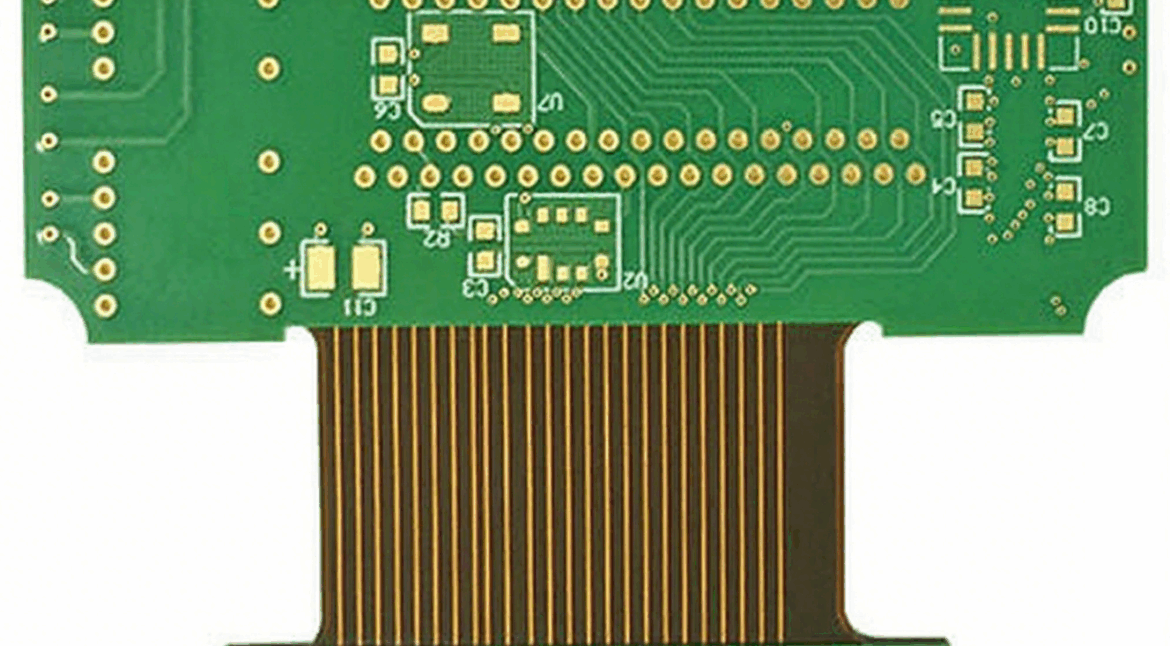
Hot bar soldering joins a flex tail to a rigid board by pressing a heated thermode onto the overlapping pads and melting the solder between them. The process is used where the joint count is high, the pitch is fine and the assembly cannot be run through a reflow oven.
Because the heat comes from one side and the joint is formed under force, the process has fewer variables than reflow but each of them acts more directly on the joint. Thermode condition and planarity are the two that decide most of the results.
What Hot Bar Soldering Does
The thermode is a metal bar with a defined contact face, heated by pulses of current and cooled by air or water. It transfers heat into the flex, through the pads and into the solder, and the solder melts while the bar holds the two surfaces together.
The joint is formed in one operation, so the whole row of pads is soldered at once. That makes the process fast, and it also means a temperature difference along the bar produces a difference in joint quality along the row. The bar is also profiled along its length before a production run, because a thermode that is a few degrees cooler at one end will produce a row of joints that vary from bright to dull. That variation is a machine condition rather than a soldering one.
Thermode Geometry and Condition
The contact face has to match the pad row. A bar that is wider than the row heats the flex beyond the pads and can damage the coverlay, while a bar that is too narrow leaves the outer pads cold and unsoldered.
Condition is checked before each shift. A bar with solder build-up, a nick or a flat spot transfers heat unevenly, and the defect appears as one or two joints in the row that are dull or incomplete. The laser soldering notes describe an alternative where each joint is heated individually. The condition check takes a few minutes and it is done with the bar cold, since solder that has solidified on the face is easier to see and to remove before the next run begins.
Force, Planarity and Support
Force presses the flex onto the pads and holds the joint together while the solder solidifies. Too little force leaves gaps that fill with flux rather than solder; too much force squeezes the solder out and can crack the flex or the pad.
Planarity is what makes the force even. The support under the board, the flatness of the thermode and the thickness of the flex all contribute, and any of them being off concentrates the load on one end of the row. The support under the board is part of the force path, so a board that is held only at its edges bends under the bar and the middle of the row receives less pressure than the ends.
Profile, Dwell and Cooling
The profile has a ramp, a dwell at reflow temperature and a controlled cool. The dwell has to be long enough for the whole row to reach temperature and short enough that the flex is not damaged, and both limits come from the flex specification.
Cooling under force is what produces a sound joint. If the bar lifts while the solder is still liquid, the joint can be disturbed and become dull or cracked, so the release is programmed after the solder has solidified. The cooling rate is also a joint property, because a fast quench produces a fine grain and a slow one allows the joint to be disturbed while the solder is still soft and mobile.
Pad Design and Stiffeners
The pads on the flex and the board must overlap with enough length to form a fillet, and the flex tail needs support behind it. A stiffener bonded behind the tail stops the flex bending away from the board during the press.
Pad width and spacing also set the process window. Very fine pitch needs a bar that can hold temperature across the row, and the solder volume has to be enough to form a fillet without bridging to the neighbouring pad. The overlap is checked on the first article rather than assumed from the drawing, since the flex tail can shift during handling and a joint with too little overlap has no fillet to inspect.
Flux, Paste and Residue
The solder can be applied as paste or pre-tinned on the pads, and either way the flux has to activate within the short dwell. A flux that needs a long soak is unsuitable, because the flex cannot survive the time at temperature.
The residue left after the joint is formed matters as much as the joint. Where the assembly is not cleaned, the residue has to be dry and non-corrosive, and the no clean residue review sets out what that means in practice. The paste or the pre-tin also sets the solder volume, and too much solder on a fine pitch row bridges as soon as the bar applies force, which is why the deposit is controlled before the joint is made.
Inspection and Test
Inspection uses magnification and, where possible, a pull or peel test on a sample. Visual criteria are the fillet shape, the absence of bridging and the absence of a dull, disturbed surface that indicates movement during solidification.
Wetting is a useful indicator of the thermal profile. A joint that did not wet indicates too little heat or a contaminated pad, and the wetting check notes describe how that condition is measured rather than guessed. A pull test on a sample from each batch gives a number that can be trended, and the trend is what shows a machine drifting before the joints begin to look different under the microscope.
Records and Change Control
Records should include the thermode identity, the force, the profile, the solder or paste batch and the sample test result. Together they explain why one run produced bright joints and another produced dull ones.
Changing the thermode, the flex supplier or the stiffener is a process change, because each alters the way heat and force are distributed. Where the joint also carries thermal load, the design side is described in the thermal pad voiding notes. The bar temperature is verified with a profile rather than with the controller display, because the display describes the heater and not the face that touches the flex. The measurement is repeated after every thermode change and filed with the run.
FAQ
Why are only the joints at one end of the row dull? That is the classic symptom of uneven thermode contact. The end that is not flat or not clean runs colder, so its joints do not fully reflow and cool in a disturbed state.
Can a hot bar joint be reworked? Yes, provided the flex has not been damaged. The joint is re-heated with the bar and the tail is repositioned, but each rework cycle adds thermal exposure, so the number of attempts is limited.
Is paste or pre-tinning better? Pre-tinning gives a more repeatable solder volume and fewer residues, while paste is easier to apply in small quantities. The choice follows from the pitch and from the cleaning process.