How to Ensure High-Temperature PCB Stability from -55°C to 125°C
In industrial control, automotive electronics, aerospace, and other demanding applications, printed circuit boards may be exposed to wide temperature fluctuations, including operating conditions from approximately -55°C to 125°C. Repeated temperature changes can cause material expansion and contraction, mechanical stress, delamination, electrical drift, and other reliability problems.
Building a reliable High-Temperature PCB therefore requires more than simply choosing a heat-resistant laminate. Material selection, stack-up design, lamination, drilling, plating, surface treatment, environmental testing, and quality control all need to work together.
The following guide explains the major factors that engineers and manufacturers should consider when designing and manufacturing PCBs intended to operate across a wide temperature range.
Material Selection: The Foundation of Wide-Temperature PCB Reliability
The materials used in a PCB have a direct influence on its thermal, mechanical, and electrical stability.
When a board must withstand repeated exposure to low and high temperatures, the laminate should be selected according to the actual operating temperature, thermal cycling profile, electrical requirements, mechanical stress, and expected service life.
Selecting the Right PCB Laminate
Important material parameters include:
- Glass transition temperature (Tg)
- Decomposition temperature (Td)
- Coefficient of thermal expansion (CTE)
- Thermal conductivity
- Dielectric constant (Dk)
- Dissipation factor (Df)
- Moisture absorption
- Dimensional stability
A high Tg material can provide improved thermal stability compared with standard materials, but Tg alone does not determine whether a PCB is suitable for a particular temperature environment.
The complete material system, including resin, glass reinforcement, copper foil, prepreg, and final board construction, should be evaluated against the application.
For demanding applications, specialized high-Tg, low-loss, polyimide, or other high-performance laminates may be considered depending on the electrical and environmental requirements.
Surface Finish Considerations
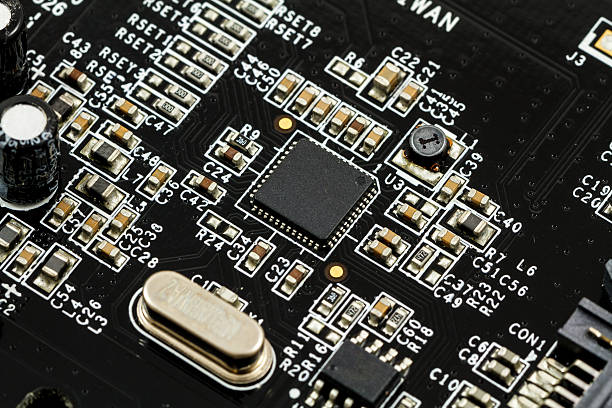
Surface finish selection can also influence long-term reliability.
The selected finish should be compatible with the operating environment, assembly process, storage conditions, and expected service life. Thermal cycling can create mechanical stress at interfaces between different materials, so the complete PCB construction should be evaluated rather than selecting a surface finish independently.
Solder Mask and Protective Materials
The solder mask must maintain adequate electrical insulation and adhesion across the expected temperature range.
At elevated temperatures, poor material selection can lead to discoloration, degradation, or reduced insulation performance. At low temperatures, materials with insufficient flexibility may become more susceptible to cracking or adhesion problems.
Any additional coatings, adhesives, stiffeners, or protective materials should also be qualified for the intended temperature range and environmental conditions.
Manufacturing Process Control: Building Structural Stability
Material selection establishes the foundation, but manufacturing precision determines whether the final PCB can consistently achieve the intended thermal and mechanical performance.
Precision Cutting and Dimensional Control
PCB panels and laminate materials should be processed using controlled cutting and routing procedures.
Dimensional accuracy is important because thermal cycling causes materials to expand and contract. Excessive dimensional variation or internal stress can increase the risk of mechanical deformation.
For multilayer structures, accurate panel preparation also contributes to layer registration and reliable downstream processing.
Lamination Process Control
Lamination is particularly important for boards exposed to repeated temperature changes.
During lamination, manufacturers need to control parameters such as:
- Temperature
- Pressure
- Heating and cooling rates
- Pressing time
- Resin flow
- Material combination
- Layer alignment
A properly controlled lamination process helps create a uniform multilayer structure and reduces the risk of voids, delamination, resin separation, and other structural defects.
GOPCBA supports advanced Multilayer PCB manufacturing, where layer alignment, lamination, drilling, plating, and interconnection reliability must be coordinated throughout the fabrication process.
Drilling and Plated Through-Hole Reliability
Plated through-holes are exposed to mechanical stress during thermal cycling because copper and laminate have different coefficients of thermal expansion.
For this reason, drilling quality and copper plating inside the hole walls are critical.
Manufacturing controls should address:
- Hole diameter
- Hole position
- Hole-wall quality
- Desmear
- Electroless copper deposition
- Electrolytic copper thickness
- Copper adhesion
- Annular ring dimensions
Uniform copper deposition and reliable hole-wall construction help maintain electrical continuity during repeated temperature changes.
Edge Treatment and Stress Concentration
Sharp edges, burrs, and machining defects can create local stress concentrations.
Proper routing, edge finishing, and deburring can reduce unnecessary mechanical stress and help improve the board’s structural integrity.
This is particularly important for larger boards, mechanically constrained assemblies, and PCBs installed in environments subject to vibration and thermal cycling.
Thermal Design and Environmental Adaptation
A PCB’s ability to withstand -55°C to 125°C depends not only on the laminate but also on how heat is distributed throughout the board and assembly.
Thermal Expansion Management
Different materials expand at different rates when temperature changes.
A PCB may contain:
- Copper
- Laminate
- Solder mask
- Solder
- Components
- Connectors
- Mechanical fasteners
- Heat sinks
The CTE mismatch between these materials can create mechanical stress during repeated thermal cycling.
For multilayer PCBs, the Z-axis expansion of the laminate is especially important because excessive expansion can place stress on plated through-holes and interlayer connections.
Copper Distribution and Thermal Balance
Uneven copper distribution can contribute to localized thermal and dimensional effects during manufacturing and operation.
A balanced stack-up and carefully considered copper distribution can help improve manufacturing consistency and thermal behavior.
For power electronics, engineers may also need to consider copper thickness, thermal vias, heat spreading, component placement, and external heat dissipation structures.
Environmental Testing and Thermal Cycling Verification
Wide-temperature stability should be verified through testing appropriate to the application.
A typical thermal cycling evaluation exposes PCB samples to defined low- and high-temperature conditions for a specified number of cycles, with inspection performed before, during, or after testing according to the applicable test plan.
The objective is not simply to determine whether the board still functions immediately after cycling. Engineers should also look for physical and electrical degradation.
What Should Be Checked?
Depending on the application, evaluation may include:
- Delamination
- Cracking
- Blistering
- Plated-hole integrity
- Copper adhesion
- Insulation resistance
- Dielectric performance
- Electrical continuity
- Dimensional changes
- Solderability
- Surface finish condition
The appropriate temperature range, dwell time, transition rate, cycle count, and acceptance criteria should be defined according to the product specification and applicable standards.
It is therefore more accurate to say that a PCB is qualified for a specified thermal cycling profile, rather than assuming that every board must survive a fixed number of cycles.
Protecting PCB Performance in Harsh Environments
Temperature is often combined with other environmental stresses.
A PCB operating in an automotive engine compartment, industrial control cabinet, aircraft system, or outdoor electronic enclosure may also experience humidity, vibration, contamination, salt exposure, or mechanical shock.
Conformal Coating
For applications requiring additional environmental protection, conformal coating can provide a protective barrier against moisture, dust, chemical contamination, and other environmental factors.
However, the coating material must be compatible with the PCB materials, components, assembly process, and intended temperature range.
Coating thickness, curing conditions, coverage, and inspection should also be controlled.
Mechanical Protection
The PCB mounting structure can have a significant influence on reliability.
Engineers should consider:
- Mounting-hole locations
- Fastener stress
- Board support
- Connector loading
- Vibration
- Thermal expansion
- Enclosure constraints
A PCB that is mechanically constrained without allowing appropriate expansion may experience additional stress during thermal cycling.
Quality Control and Full Process Traceability
Thermal reliability is not created by one manufacturing step. It must be managed throughout the entire production process.
A comprehensive quality system should cover incoming materials, manufacturing parameters, inspection, testing, and final release.
Incoming Material Inspection
Before production, materials should be verified against the specified grade and relevant documentation.
Depending on the project, incoming controls may include:
- Material type
- Manufacturer
- Material thickness
- Copper thickness
- Batch or lot number
- Certificate of conformity
- Storage conditions
- Shelf life
- Moisture-control requirements
Maintaining material traceability makes it easier to identify the source of potential problems during production or field analysis.
In-Process Inspection
Critical process parameters should be monitored throughout PCB fabrication.
Examples include:
- Inner-layer registration
- Lamination parameters
- Drilling quality
- Plating thickness
- Line width
- Line spacing
- Surface finish
- Solder mask condition
- Board dimensions
Automated Optical Inspection (AOI), dimensional inspection, electrical testing, cross-section analysis, and other methods may be used according to the board structure and customer requirements.
GOPCBA’s PCB Manufacturing solutions cover complex PCB fabrication requirements including multilayer, HDI, high-frequency, high-speed, rigid-flex, heavy-copper, and controlled-impedance boards. High-Reliability PCB Design for Wide Temperature Ranges
When a PCB must operate across a wide temperature range, reliability should be considered during the design stage rather than addressed only after fabrication.
Stack-Up Design
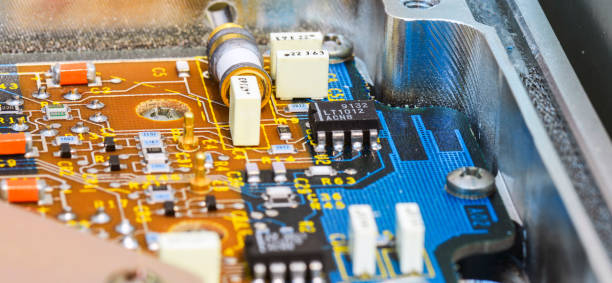
The stack-up determines the relationship between signal layers, power planes, ground planes, and dielectric materials.
For high-speed or RF circuits, dielectric thickness and material properties directly affect impedance and signal integrity.
For high-reliability multilayer boards, the stack-up should also consider thermal expansion, copper distribution, layer symmetry, and mechanical stability.
GOPCBA supports High-Reliability PCB requirements through controlled manufacturing processes, engineering review, inspection, and project-specific testing.
Controlled Impedance
If the board carries high-speed digital or RF signals, controlled impedance may be required.
Impedance depends on several physical parameters, including:
- Trace width
- Copper thickness
- Dielectric thickness
- Dielectric constant
- Distance to the reference plane
- Copper surface profile
Temperature can also affect material properties, which means impedance stability should be considered across the expected operating environment when the application requires it.
GOPCBA provides controlled-impedance manufacturing for high-speed and high-frequency PCB applications, with fabrication tolerances coordinated with the specified stack-up and electrical requirements.
Applications Requiring -55°C to 125°C PCB Performance
Wide-temperature PCB requirements are common in several industries.
Automotive Electronics
Automotive electronics can experience substantial temperature variation, vibration, electrical noise, and long service cycles.
Applications may include:
- Engine control systems
- Transmission control
- ADAS
- Automotive radar
- Battery management systems
- Body electronics
- Power electronics
- Vehicle communication systems
For demanding vehicle electronics, material selection, multilayer construction, thermal management, and manufacturing consistency all contribute to reliability.
GOPCBA provides Automotive PCB manufacturing solutions for multilayer, high-frequency, high-Tg, HDI, heavy-copper, and other application-specific requirements.
Aerospace and Avionics
Aerospace electronics may experience thermal cycling together with vibration, mechanical shock, electromagnetic interference, humidity, pressure variation, and other environmental stresses.
Avionics, navigation, communication, radar, satellite, and defense electronics therefore require careful coordination between material selection, PCB design, fabrication, assembly, and environmental qualification.
Industrial Control
Industrial equipment may operate continuously in factories, outdoor installations, energy facilities, and other environments where temperature variation and electrical noise can be significant.
Long service life and stable operation make material selection and process consistency particularly important for industrial control PCBs.
How to Improve PCB Reliability from -55°C to 125°C
A practical reliability strategy can be summarized into several key steps:
- Define the actual operating temperature profile rather than relying only on a nominal temperature range.
- Select suitable laminate and supporting materials based on Tg, CTE, thermal stability, electrical properties, and environmental requirements.
- Optimize the PCB stack-up to balance electrical, mechanical, and thermal performance.
- Control lamination, drilling, and plating processes to protect interlayer and plated-hole reliability.
- Manage thermal expansion by considering material combinations and mechanical mounting conditions.
- Use appropriate environmental protection when moisture, contamination, or other environmental factors are present.
- Perform thermal cycling and reliability testing according to the actual application and applicable standards.
- Maintain material and process traceability throughout production.
- Coordinate PCB design and manufacturing so that material properties and manufacturing tolerances are included in the engineering process.
- Monitor production data continuously and use failure analysis to improve materials and processes when necessary.
Conclusion
Ensuring stable PCB operation from -55°C to 125°C is a system-level engineering task rather than a single material or manufacturing-process decision.
The foundation is appropriate material selection, but long-term reliability also depends on stack-up design, CTE management, lamination quality, plated-hole integrity, thermal management, environmental protection, testing, inspection, and process traceability.
For demanding automotive, aerospace, industrial, and other high-reliability electronics, the PCB should be evaluated against its actual operating environment and qualification requirements.
A coordinated approach between PCB design and manufacturing can reduce thermal-mechanical stress, improve electrical stability, and provide more predictable long-term performance.
With capabilities covering advanced PCB fabrication, high-frequency and high-speed technologies, multilayer structures, controlled impedance, HDI, rigid-flex, assembly, inspection, and testing, GOPCBA can support engineering teams developing PCB solutions for demanding temperature and reliability requirements.