Impedance Coupon: Preparation, Placement and Process Control
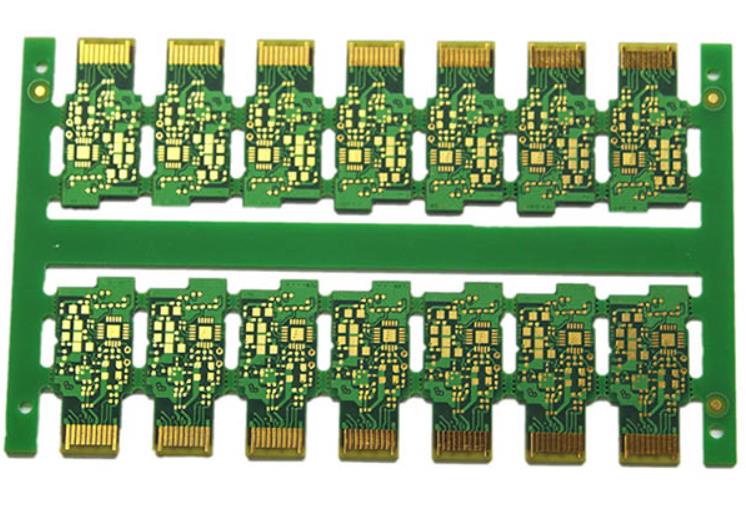
An impedance coupon is a small test pattern on the panel that carries traces built to the same stack up as the product. It exists so that the impedance of the board can be measured without measuring the board itself.
Why the Coupon Is Separate
A trace in the product is surrounded by other traces, vias and planes, and it cannot be probed in a way that gives a clean reading. The coupon places the same trace geometry in an accessible position.
The coupon is only evidence if it is built on the same panel with the same stack up. Our test coupon notes describe the general arrangement.
Choosing the Trace Geometry
The coupon should repeat the trace width and the layer pair that the design uses most, and it should include the narrowest and the widest controlled trace on the board. A coupon with a convenient trace is not evidence about a difficult one.
Where the board has several impedance targets, the coupon carries one trace for each. Our high speed notes describe the targets that are commonly specified.
What the Measurement Reads
Time domain reflectometry sends a fast edge along the trace and reads the reflection. The result depends on trace width, dielectric height and the dielectric constant, so a shift in any one of them moves the reading.
The measurement is therefore a check on the fabrication, not on the design. Our laminate notes describe the dielectric constant that enters the calculation.
Coupon Placement
The coupon is normally placed on the rail, where it does not use product area, and it travels with the panel through every process. It has to survive the same plating and etching as the product for the data to mean anything.
Where a coupon is placed inside a waste area on the panel, that has the same effect. Our panelization notes describe the space that is available.
Incoming Inspection and Records
The coupon reading should be recorded per panel or per lot, together with the date, the operator and the instrument. A reading without that context cannot be compared with a later one.
Where the reading drifts, the record shows whether the drift is gradual or a step. Our yield notes describe how the trend is used.
When the Reading Is Out of Tolerance
An out of tolerance reading is first a question about the coupon, then a question about the board. The probe contact, the calibration and the coupon damage should all be excluded before the panel is rejected.
Where the panel is genuinely out, the cause is usually in the etch or the press cycle. Our etching notes describe the control that keeps it in window.
Verification
The verification is a coupon that repeats the product geometry, a calibrated instrument, a recorded reading with its context, and a defined action when the reading falls outside the window.
That chain is what makes an impedance specification meaningful at the shop rather than only on the drawing. Our fabrication notes list the points to confirm.
Process Control and Verification
The process window is set by the narrowest step in the flow, so an improvement anywhere else shows up as margin rather than as yield until that step is addressed. A short note on the drawing about handling, storage or packaging is often worth more than an extra decimal place on a tolerance.
Where a value sits close to a process limit, the drawing should say so, since the shop can then open the process window rather than working to a nominal figure that carries no tolerance. A stack-up that is drawn rather than described removes most of the ambiguity from a quotation, and it lets the fabricator price the board against the dielectric and copper weights that will actually be used.
Where the requirement is not written down, the shop supplies its own default, and the default is chosen for the process rather than for the design. The measurements that matter are the repeatable ones: conductor width and spacing, annular ring, finished hole size, plating thickness and surface finish are all verifiable on a coupon that travels with the panel.
Checks Before Release
The checks that matter are the ones performed on the product rather than on a sample kept for the purpose, because a coupon that travels with the panel is the only evidence about that panel. Where a requirement can be measured, it should be measured at the point of manufacture and recorded against the board or the lot it applies to.
A parameter that is set once and never re verified drifts, and the drift is usually discovered by a defect rather than by the record. The tooling, the material and the profile form one system, and a change to any of them should be assessed against the other two before it is released.
Where the process window is narrow, the measurement resolution has to be better than the window, or the data cannot distinguish a good part from a marginal one. A record that identifies the operator, the date and the settings is worth more than a record that identifies only the result.
The acceptance criteria should be written before the work starts, so that the decision is made by the specification rather than by the person inspecting.
FAQ
Does every panel need a coupon? It depends on the specification and on the process control in place. Where the specification is controlled impedance, at least one coupon per lot is the usual requirement.
Can the coupon be reused after depaneling? It can, if it is stored without damage, but a coupon from a different lot is not evidence about the lot in hand.
What does gopcb provide for impedance work? We provide coupons that repeat the product trace geometry on the same stack up, one trace per impedance target, placement on the rail where it does not consume product area, recorded readings with date and instrument, and a defined disposition when a reading falls outside the window.