Industrial Control PCB Manufacturer: How to Choose the Right Manufacturing Partner
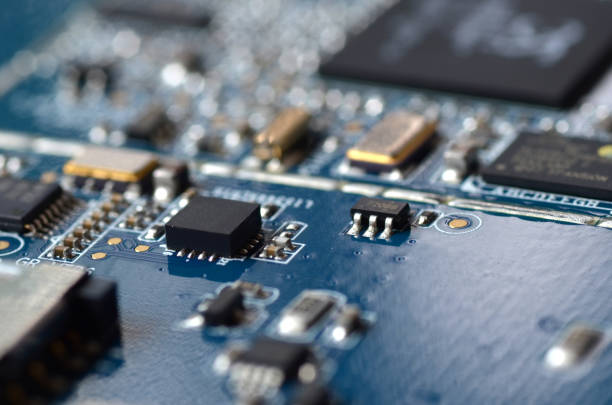
Industrial control systems are the backbone of modern automation, manufacturing equipment, robotics, power systems, instrumentation, and other mission-critical applications. At the center of these systems is the industrial control PCB, which connects processors, sensors, communication interfaces, power circuits, and control components into a reliable electronic platform.
Unlike consumer electronics, industrial control equipment often operates continuously and may be exposed to electrical noise, temperature fluctuations, vibration, humidity, and other demanding conditions. As a result, PCB reliability directly affects equipment stability, service life, and operational safety.
Choosing the right industrial control PCB manufacturer is therefore more than comparing unit prices. A qualified manufacturing partner should provide advanced PCB fabrication capabilities, strong engineering support, strict quality control, stable material sourcing, and the flexibility to support both prototypes and volume production.
What Is an Industrial Control PCB?
An industrial control PCB is a printed circuit board specifically designed for industrial automation and control equipment. It can be used to connect and manage microcontrollers, processors, sensors, relays, power devices, communication modules, motor-control circuits, and other electronic components.
Industrial control PCBs can range from relatively simple two-layer boards to complex multilayer constructions with controlled impedance, high-density interconnects, heavy copper, mixed materials, or other specialized technologies.
Typical applications include:
- Industrial automation controllers
- PLC systems
- Motor drives and servo controllers
- Robotics and motion-control systems
- Industrial communication equipment
- Power control systems
- Measurement and instrumentation equipment
- Factory automation equipment
- Machine vision systems
- Energy management equipment
The PCB design must be matched to the electrical, mechanical, thermal, and environmental requirements of the final industrial system.
Key Capabilities of a Reliable Industrial Control PCB Manufacturer
1. Advanced PCB Manufacturing Equipment
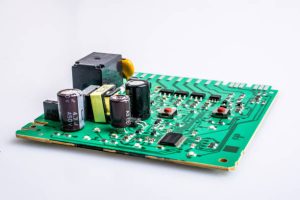
A professional manufacturer should have production equipment capable of maintaining consistent dimensional accuracy throughout drilling, imaging, etching, plating, lamination, solder mask, and surface finishing processes.
High-precision drilling is particularly important because hole diameter and positional accuracy affect component mounting, via reliability, and multilayer interconnection. For high-density industrial boards, manufacturing accuracy becomes increasingly important as trace widths, spacings, and via structures become smaller.
Advanced imaging and etching processes are also necessary to maintain consistent trace geometry. Variations in copper thickness, etching, or line width can affect electrical performance and manufacturing yield.
For complex industrial products, manufacturers should also have experience with multilayer PCB manufacturing, allowing engineers to implement power, ground, signal, and functional layers in an appropriate stackup.
2. Broad PCB Technology Capabilities
Industrial control equipment does not have a single standardized PCB structure. Different applications require different materials, layer counts, interconnection technologies, and electrical characteristics.
Depending on the application, an industrial PCB manufacturer may need experience with:
- Multilayer PCBs
- High-Tg FR-4 PCBs
- High-speed PCBs
- High-frequency PCBs
- HDI PCBs
- Rigid-flex PCBs
- Heavy copper PCBs
- Metal-core PCBs
- Controlled-impedance PCBs
- Blind and buried vias
- Via-in-pad structures
- Mixed-material PCB constructions
For example, a motor controller may require strong current-carrying capability and thermal management, while a high-speed industrial communication module may require controlled impedance and carefully managed signal integrity.
The manufacturer’s technology portfolio should therefore match the actual requirements of the product rather than simply offering the lowest-cost standard PCB.
PCB Material Selection for Industrial Control Applications
Material selection is another critical consideration when evaluating an industrial PCB supplier.
Standard FR-4
Standard FR-4 is widely used because it provides a practical balance between electrical performance, mechanical strength, availability, and cost. It is suitable for many conventional industrial control systems.
High-Tg Materials
Industrial equipment may experience elevated operating temperatures or repeated thermal cycling. High-Tg laminate materials can provide improved thermal stability compared with standard FR-4 constructions and may be appropriate for demanding applications.
High-Speed and High-Frequency Materials
Industrial communication equipment, RF systems, and high-speed data interfaces may require specialized laminates with controlled dielectric properties and lower signal loss.
In these designs, engineers need to consider dielectric constant (Dk), dissipation factor (Df), copper roughness, dielectric thickness, trace geometry, and stackup configuration.
Metal-Core and Thermal Management Solutions
Power electronics and other heat-generating industrial applications may require PCB structures designed for improved thermal dissipation. Metal-core PCB technology can be considered when thermal management is a significant design requirement.
Material selection should always be based on the electrical, thermal, mechanical, and environmental requirements of the application.
Strict Quality Control Throughout PCB Manufacturing
A reliable industrial control PCB manufacturer should implement quality control throughout the entire production process rather than relying solely on final inspection.
Incoming Material Inspection
Before production begins, raw materials should be verified against the required specifications. Important characteristics can include:
- Laminate type
- Copper thickness
- Dielectric construction
- Material certification
- Dimensional specifications
- Electrical characteristics
- Surface quality
Controlling incoming materials helps prevent manufacturing problems before they enter the production process.
In-Process Inspection
Quality control should continue through drilling, desmear, electroless copper, electroplating, imaging, etching, lamination, solder mask, and surface finishing.
Typical inspection points may include:
- Hole diameter and position
- Hole-wall quality
- Copper thickness
- Plating uniformity
- Trace width and spacing
- Registration accuracy
- Lamination quality
- Solder mask coverage
- Surface finish quality
For high-density boards, automated optical inspection and other automated inspection technologies can help identify defects efficiently.
Electrical Testing
Electrical testing is essential for industrial control PCBs because an open circuit or short circuit may cause equipment malfunction in the field.
Depending on the product requirements, testing may include:
- Continuity testing
- Isolation testing
- High-voltage testing
- Netlist verification
- Functional testing
A strong manufacturer’s testing strategy should be adapted to the PCB’s electrical design and intended application.
Traceability and Continuous Quality Improvement
Industrial customers often need more than a pass/fail inspection report. They need confidence that the manufacturing process is repeatable and traceable.
A robust quality system should make it possible to trace important production information such as material batches, manufacturing processes, inspection results, and production lots.
When a defect is identified, engineers should be able to analyze its root cause and determine whether it originated from material selection, equipment settings, process parameters, design issues, or other factors.
Corrective and preventive actions can then be implemented to reduce the risk of recurrence.
This closed-loop approach is particularly important for industrial products that may remain in service for many years.
Engineering and Customization Capabilities
Industrial control PCB projects frequently involve customized requirements. A capable supplier should therefore provide engineering support rather than functioning only as a fabrication house.
Before production, engineers should review:
- PCB stackup
- Material selection
- Layer configuration
- Trace width and spacing
- Via structures
- Copper thickness
- Impedance requirements
- Thermal requirements
- Component clearances
- Manufacturing tolerances
- Surface finish
- Panelization
- Test requirements
Early engineering review can identify potential manufacturing risks before they become expensive production problems.
For customers who need design assistance, PCB design and layout engineering can help bridge the gap between an electrical concept and a manufacturable PCB.
Designing Industrial Control PCBs for Harsh Environments
Industrial electronics frequently operate in environments that are more demanding than consumer products.
Potential environmental factors include:
- Temperature cycling
- High operating temperature
- Vibration
- Mechanical shock
- Humidity
- Dust
- Electrical interference
- Continuous operation
- High-current switching
The PCB itself should be designed according to the actual operating conditions.
For example, high-current paths may require appropriate copper thickness and trace geometry. Sensitive signals may require careful routing and grounding to reduce interference. Components and PCB materials should be selected according to the expected temperature range.
For equipment exposed to significant vibration or mechanical movement, mechanical constraints and component support also need to be considered during design.
Signal Integrity and EMI Considerations
Modern industrial control systems increasingly use high-speed communication interfaces, sensors, Ethernet-based networks, and other digital technologies.
As signal speed increases, PCB layout becomes an important part of system performance.
Engineers may need to control:
- Characteristic impedance
- Differential-pair geometry
- Return paths
- Reference planes
- Crosstalk
- Trace length
- Via transitions
- Grounding
- Power integrity
For applications involving high-speed or RF signals, a manufacturer with experience in specialized materials and controlled-impedance manufacturing can reduce production risks.
This is particularly important when the PCB must maintain predictable electrical performance across multiple production batches.
Supply Chain Stability and Cost Control
PCB quality is important, but supply stability also matters to industrial customers.
Industrial equipment manufacturers may require long-term production support, repeat orders, engineering changes, and consistent material availability. A supplier should therefore have a stable supply chain and effective production planning system.
Important factors include:
Stable Raw Material Supply
Reliable access to qualified laminates, copper foil, prepreg, solder mask materials, and surface-finish chemicals helps reduce production interruptions.
Production Planning
Effective capacity planning can help manufacturers manage prototype orders, engineering builds, and larger production batches without compromising delivery performance.
Process Optimization
Manufacturing efficiency can reduce unnecessary material waste, rework, energy consumption, and machine downtime.
The goal should not simply be the lowest initial quotation. A better evaluation considers total cost of ownership, including quality consistency, yield, lead time, engineering support, and long-term supply reliability.
Prototype-to-Production Support
Industrial control PCB projects often evolve through multiple stages:
- Initial PCB design
- Engineering review
- Prototype fabrication
- PCB assembly
- Functional testing
- Design optimization
- Pilot production
- Volume manufacturing
A supplier capable of supporting these stages can reduce communication gaps between different vendors.
For early-stage projects, prototype PCB assembly allows engineers to validate PCB design, component placement, assembly processes, and functional performance before committing to larger production quantities.
This approach can identify design or manufacturing problems early, when changes are generally less expensive.
PCB Assembly Is Also Important
Fabricating a reliable bare PCB is only one part of the manufacturing process. Industrial customers may also need component sourcing, SMT assembly, through-hole assembly, inspection, and testing.
A turnkey manufacturing partner can integrate PCB fabrication with assembly and other services.
With turnkey PCB assembly, the manufacturing process can cover activities such as component procurement, PCB fabrication, SMT assembly, reflow soldering, through-hole assembly, inspection, testing, and final packaging.
This integrated model can simplify supplier management and improve communication between PCB fabrication and assembly engineering teams.
How to Evaluate an Industrial Control PCB Manufacturer
Before selecting a supplier, industrial companies should evaluate several factors instead of relying solely on price.
Manufacturing Capability
Confirm that the manufacturer can produce the required layer count, material construction, copper thickness, trace geometry, via technology, and surface finish.
Quality System
Check whether the manufacturer has an established quality management system and appropriate inspection and testing procedures.
Engineering Support
Determine whether engineers can participate in DFM reviews, stackup optimization, impedance planning, material selection, and manufacturing problem resolution.
Production Scalability
The supplier should be capable of moving from prototypes to pilot production and volume manufacturing without significant changes in quality or process control.
Communication
Clear communication is essential for industrial PCB projects involving engineering changes, documentation, production schedules, and quality requirements.
Long-Term Support
Industrial equipment can have long product lifecycles. A reliable PCB supplier should be capable of supporting repeat production, engineering changes, and future revisions.
Why Choose GOPCBA for Industrial Control PCB Manufacturing?
GOPCBA provides PCB manufacturing and assembly services for customers developing industrial and other demanding electronic products.
The manufacturing portfolio covers conventional and advanced PCB technologies, including multilayer, HDI, high-Tg, high-speed, high-frequency, rigid-flex, heavy copper, metal-core, and other application-specific PCB solutions.
The manufacturing process can also be integrated with PCB assembly services, helping customers reduce the complexity of managing separate fabrication and assembly suppliers.
For customers requiring both fabrication and assembly, PCB assembly services can support SMT, through-hole, and other assembly requirements according to project specifications.
GOPCBA also supports engineering review and prototype development, helping customers validate designs before scaling to production.
Conclusion
Selecting an industrial control PCB manufacturer is a strategic decision that directly affects the reliability, performance, and production stability of industrial equipment.
The right supplier should combine advanced manufacturing technology with strict quality control, engineering expertise, stable material sourcing, reliable testing, and flexible production capabilities.
For industrial control applications, the most important evaluation criteria include:
- Advanced PCB manufacturing capabilities
- Appropriate material selection
- Reliable multilayer and specialized PCB technology
- Strict process and electrical testing
- Traceability and quality improvement
- DFM and engineering support
- Prototype-to-production scalability
- Stable supply chain management
- PCB assembly integration
- Long-term technical and production support
Rather than choosing a supplier based only on unit price, industrial companies should evaluate the manufacturer’s ability to consistently deliver reliable PCBs throughout the entire product lifecycle.
A capable manufacturing partner can help reduce design risk, improve production efficiency, maintain consistent quality, and provide a more reliable foundation for industrial automation and control systems.