
Infrared Curing: Heat Transfer in a Cure Oven
Infrared curing heats a coating by radiating energy onto it, and the coating absorbs that energy and converts it into heat. The mechanism is direct, which makes it fast, and it is also selective, which makes it sensitive to colour, thickness and geometry. It is also difficult to describe with a single temperature, because the film and the substrate do not reach the same value.
The process is used for solder mask, for conformal coatings and for marking inks, and in each case the requirement is the same: a defined time at a defined temperature. How that temperature is reached differs from convection, and the difference shows in the defects that appear. The defects of an infrared oven therefore tend to be local rather than general.
How Infrared Heating Works
A lamp emits radiation across a band of wavelengths, and the coating absorbs part of it at its surface. Absorption is highest at the surface, so the energy density falls as it goes deeper into the film and into the substrate. The absorbed energy raises the film temperature, and the film then heats the substrate beneath it by conduction.
A dark film absorbs more than a light one, and a film over copper absorbs differently from a film over bare laminate. Two areas that look identical to the eye can therefore reach different temperatures in the same oven. The difference is largest on a board with large copper areas beside areas with none.
Wavelength and Absorption
Short wavelength emitters at a high filament temperature penetrate further and heat the substrate as well as the film. Long wavelength emitters heat the surface more and the substrate less, which is useful when the substrate must not be overheated. The substrate temperature is what drives the cure of the interface and the adhesion that results from it.

The choice belongs with the material. A coating formulated to absorb in a particular band cures efficiently under a matched emitter and cures poorly under a mismatched one, even when the total power is the same. A material change therefore requires a review of the emitter as well as of the schedule.
Shadowing and Line of Sight
Radiation travels in straight lines, so a feature standing between the lamp and the surface casts a shadow. A tall component, a connector housing and the underside of an overhang all receive less energy than the flat areas around them. The shadow is not total, because some radiation is reflected and some is re-emitted.
Convection reaches those areas through the air and radiation does not. An oven that is purely infrared therefore cures a flat board and leaves an under-component area partly cured, which is not visible until the product is used. The effect is worst on a tall part with vertical surfaces facing away from the lamps.
Cure Schedule and Time at Temperature
The cure schedule states a temperature and a time, and the useful quantity is the time the film spends above the temperature at which the chemistry reacts. Reaching that temperature quickly and holding it is the point of the process. The film temperature is not the air temperature, and only a sensor in contact with the film reports the difference.
A schedule that is too short leaves the film soft and soluble, while one that is too long embrittles it. The window is narrower than for a coating printed over a flat area, because film thickness varies. A schedule at the edge of the window on a flat test panel will be outside it on a populated board.
Film Thickness and Cure
Film thickness determines both the energy absorbed and the distance the heat has to travel. A thick film cures at its surface first, and the layer beneath can still be soft when the surface is already hard. The gradient through the film is why a cure is described by a time and a temperature rather than by a dose.
Thickness variation across a panel therefore becomes cure variation. The thinner areas are over-cured and the thicker ones under-cured, and one schedule cannot satisfy both, which is why thickness control is a prerequisite for cure control. The mask side is described in the notes on solder mask curing.
Comparison with Convection
Convection heats by transferring energy from moving air, so the object reaches the air temperature and geometry matters less. Infrared heats by radiation, so the object temperature depends on what it absorbs and on what stands in the line of sight. The two methods also differ in how they respond to a change in conveyor speed.
A combined oven uses both, with infrared for the initial rise and convection to equalise. The combination reduces shadowing without giving up the speed of the radiant stage, and the alternative approach is described in the notes on UV curing of solder mask. The equalisation stage is what makes a combined oven tolerant of a shadowed area.
Common Cure Defects
The characteristic defects are a tacky surface, a film that dissolves in solvent, and a film that has cracked or discoloured. The first two indicate under-cure and the third over-cure, and all three can appear on the same panel. All three are checked on a sample rather than on a production panel, because the tests disturb the surface.
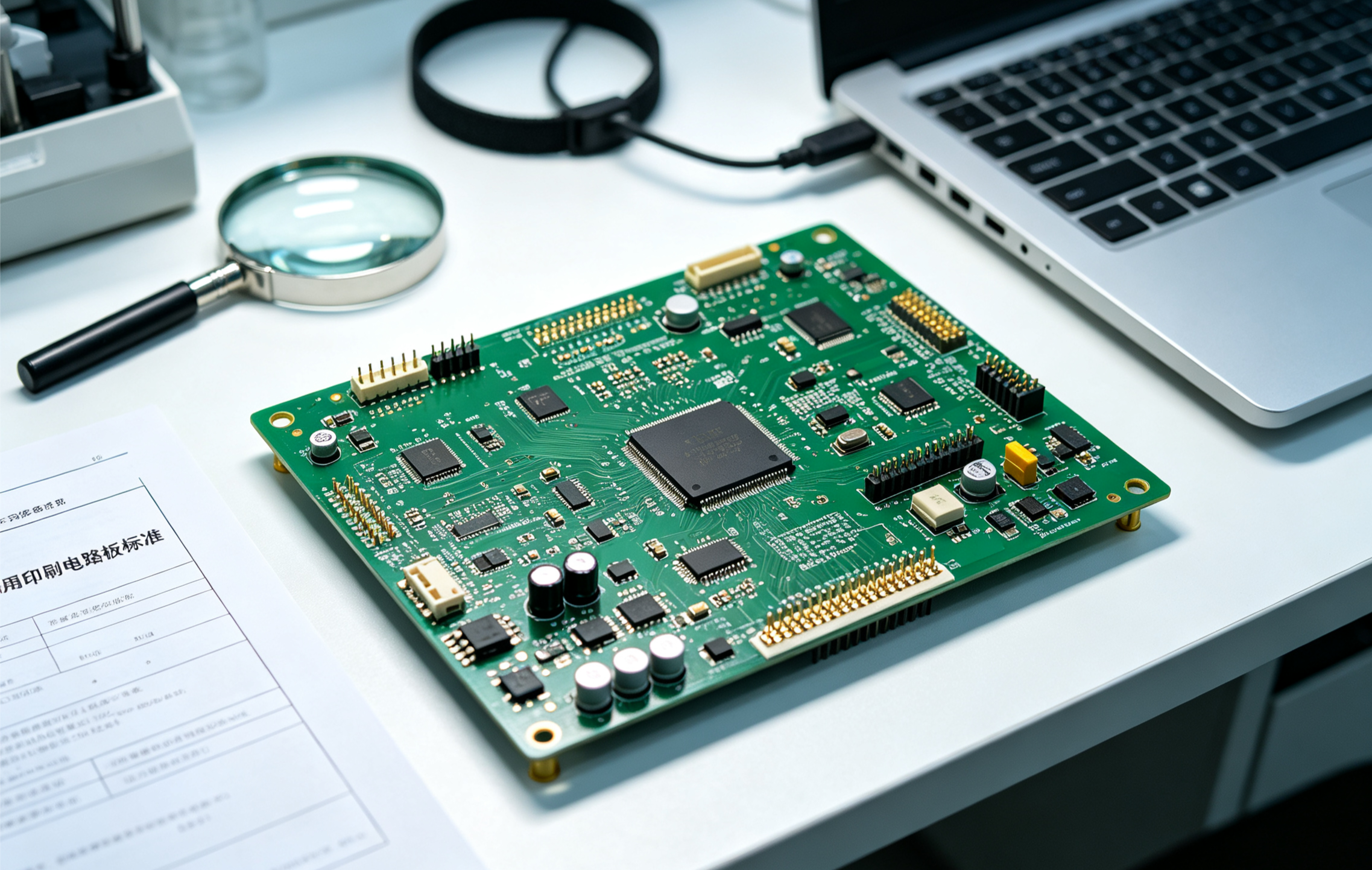
Adhesion failures appear later. A film that is under-cured at the interface with the substrate can pass an appearance check and lift during a later process, and the mechanism is described in the notes on coating cure verification.
Verification Methods
Verification measures the cure rather than the appearance. A solvent rub, a pencil hardness test and a thermal analysis each answer a different part of the question, and none of them answers all of it. The thermal analysis gives the degree of cure, and it is the only one of the three that produces a number.
A travelling thermocouple gives the time and temperature profile the film actually experienced, which is the record that allows one panel to be compared with another. The rub test is a pass or fail check and the thermal analysis is a number, and both are useful. The thermocouple is attached to the film rather than to the board, for the same reason as in a reflow profile.
Equipment and Records
The controllable parameters are lamp power, distance to the board, conveyor speed and, where fitted, airflow. Lamp ageing reduces the emitted power gradually, and a lamp at the end of its life changes the cure without any change to the setting. The distance between lamp and board sets the energy density, so a fixture that positions the board differently changes the cure.
The record holds lamp hours, power setting, conveyor speed and the verification result. With those fields a change in cure can be attributed to the lamp rather than to the material, and lamp changes can be scheduled rather than reactive.
FAQ
Is infrared curing faster than convection? It is faster to reach temperature and less uniform. Speed and uniformity are traded against each other.
Why does a dark film cure faster than a light one? It absorbs more of the incident radiation. The difference belongs to the coating and the emitter together.
Can a shadowed area be cured by a longer cycle? Only partly. A longer cycle cures the shadowed area and over-cures every area that was already receiving full power.