Choosing Copper Thickness for IoT PCBs: 1oz, 2oz or More?
What Copper Thickness Changes
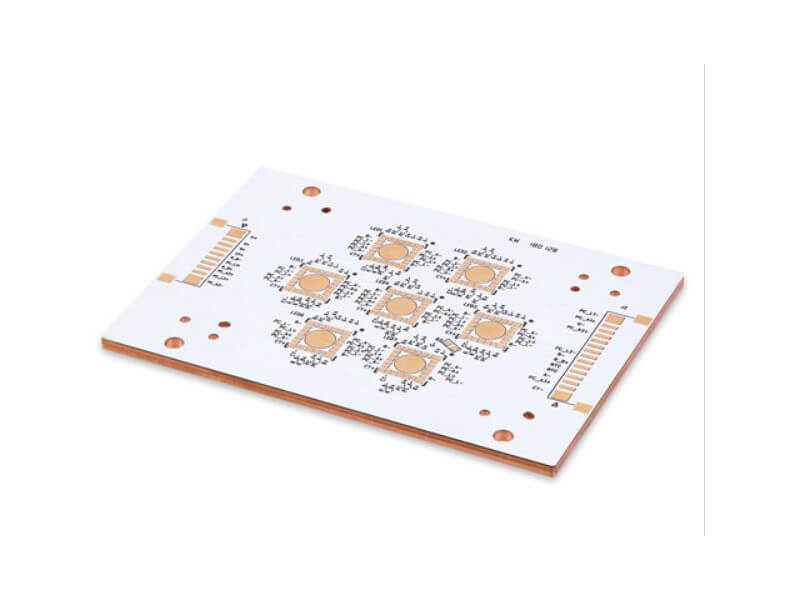
Copper weight is quoted in ounces per square foot, and one ounce corresponds to roughly 35 microns of thickness. Increasing the weight changes four things at once: it lowers trace resistance, it carries more current, it spreads heat better, and it makes fine line etching harder. Thicker copper also shifts the impedance of a given trace geometry, which matters when the design includes RF sections or controlled impedance lines. For an IoT product, where the board is often small, battery powered and packed with a radio, the question is rarely whether thicker copper is better in general, but whether the design has a hotspot or a current path that one ounce cannot handle.
The Default: One Ounce
One ounce copper is the standard for a reason. It is cheap, it etches to fine lines reliably, and it supports the currents that most IoT designs actually draw. A wireless sensor node, a wearable, a smart home module or a battery powered tag typically runs at tens of milliamps with short bursts of a few hundred milliamps during transmission. For those currents, a one ounce trace of reasonable width keeps the temperature rise small, and the fine geometry it allows is more valuable than the extra current capability. Unless there is a measured thermal or voltage drop problem, one ounce is the right starting point.
When Two Ounces Helps
Two ounce copper earns its place in three situations. The first is a genuine current path, such as a motor driver, a relay, a heater or a high power LED string, where the trace has to carry amps rather than milliamps. The second is thermal, where the copper acts as a heatsink for a power device or a radio front end and the board area is too small for a separate thermal solution. The third is voltage drop, where a long narrow trace would lose an unacceptable fraction of the supply before it reaches the load. In all three cases the benefit is measurable, and the price premium is modest compared with the next step up.

The IoT Specifics
Battery current pulses. A radio transmitting in bursts draws far more current than its average, and a narrow trace turns that pulse into a voltage dip. Check the peak, not the average, and widen the supply path rather than increasing copper everywhere. DC to DC converters. The switching loop, the inductor and the ground return carry high peak currents in a very small area, so they benefit from short, wide copper and often from a local two ounce pour even if the rest of the board stays at one ounce. Antenna keep-out. The area under and around an antenna must be free of copper, so the copper plan around the radio is dictated by the antenna, not by current. Thermal. The radio and the processor are the heat sources, and the ground plane under them is the heatsink, which is an argument for generous copper area rather than extra copper weight. Board area. IoT boards are small, so any copper added has to be justified by the limited space it consumes. Weight and thickness. Wearables may have a strict stack height, and thicker copper plus the plating required can conflict with that budget.
Antenna and RF Considerations
For RF sections, copper thickness is less important than copper geometry and continuity. The ground plane under the radio must be solid solder mask free copper, with a clear keep-out around the antenna and vias stitching the ground planes together. Increasing copper weight changes the width needed for a target impedance, so if the design has a 50 ohm feed line, the trace width has to be recalculated when the weight changes. In practice, RF layouts usually stay at one ounce and solve their problems with geometry, ground plane discipline and via stitching rather than with thicker copper.
Cost Impact
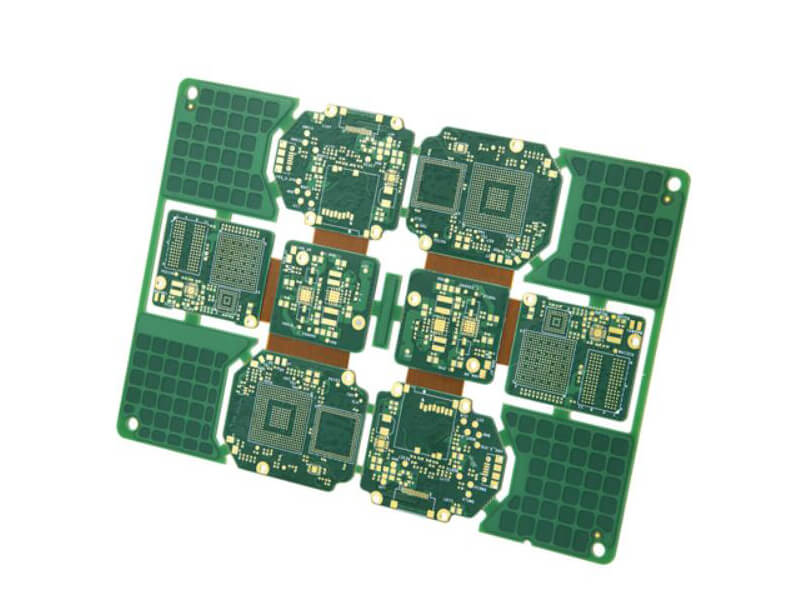
Moving from one ounce to two ounces adds a moderate premium, mainly because plating takes longer and etching becomes harder. Above two ounces the cost climbs faster, because minimum line width has to increase and the process window narrows, and the design may no longer be able to hold the fine geometry the IoT layout needs. The practical rule for IoT products is to keep one ounce as the default, use two ounces only for the specific high current or thermal net, and consider selective heavy copper on a designated layer rather than lifting the whole stack.
Decision Guide
Stay at one ounce for signal, RF and general supply routing, and for any board where fine lines and small vias are needed. Move to two ounces when a measured current path, a voltage drop budget or a thermal hotspot cannot be solved with wider traces or more copper area. Go above two ounces only for dedicated power boards or motor drive stages where the current is the dominant requirement. Use selective heavy copper on one layer for a high current net while keeping the rest of the stack standard, which is usually the most economical answer.
Copper weight is a fabrication parameter that interacts with impedance, minimum line width and thermal design, so it should be fixed with the fabricator rather than guessed. Review how PCB manufacturing handles different copper weights, apply the current and impedance rules in your PCB design and layout, and check the design and manufacturing considerations before release. A prototype PCB assembly build with thermal and current measurements confirms whether the choice was right.
FAQ
Is thicker copper always better for IoT boards? No. One ounce supports most IoT currents, and thicker copper narrows the achievable line width.
Do I need two ounces for a wireless module? Usually not. Widen the supply path and keep a solid ground plane instead.
Does copper weight affect the antenna? The weight affects trace width for a given impedance, but the antenna performance is governed mainly by the keep-out area and ground plane continuity.
What is the cheapest way to handle a high current net? Keep the standard stack and use selective heavy copper, or a wider trace, only on the net that needs it.
Conclusion
Copper thickness on an IoT board is a trade between current capability, thermal spreading and the fine geometry a small wireless design depends on. One ounce covers the vast majority of IoT products, two ounces solves a specific current or thermal problem, and anything heavier belongs on a dedicated power stage. Measure the peak current, check the keep-out around the radio, keep the stack standard elsewhere, and the copper plan will serve the product without inflating the cost in 2026.