Low-Cost PCB Assembly does not simply mean choosing the lowest-priced manufacturing service. A reliable cost-effective solution should reduce unnecessary manufacturing expenses while maintaining the required quality, electrical performance, reliability, and production consistency.
China has a well-established electronics manufacturing ecosystem, including PCB fabrication, component sourcing, PCB assembly, testing, logistics, and supply-chain services. This integrated ecosystem can help manufacturers control production costs and efficiently support projects ranging from prototypes and small batches to medium- and high-volume production.
For companies evaluating Low-Cost PCB Assembly in China, it is important to consider the complete manufacturing process rather than focusing only on the quoted unit price. Factors such as PCB Design, materials, component selection, production volume, assembly technology, testing requirements, and manufacturing efficiency can all affect the final cost.
Key Factors Affecting Low-Cost PCB Assembly
The cost of PCB Assembly is influenced by several interconnected factors, including the manufacturer’s capabilities, manufacturing location, board complexity, materials, PCB dimensions, order quantity, component selection, and production lead time.
1. PCB Assembly Manufacturer Capabilities
The capabilities of the PCB Supplier are one of the most important considerations when selecting a cost-effective assembly partner.
A manufacturer should have appropriate production equipment, engineering expertise, process controls, and inspection capabilities for the required product. A low-cost solution is only valuable when the manufacturer can consistently meet the technical and quality requirements of the design.
Important capabilities may include:
- SMT placement equipment
- Reflow soldering systems
- Through-hole and selective soldering capabilities
- Solder paste inspection (SPI)
- Automated optical inspection (AOI)
- X-ray inspection for hidden solder joints
- Electrical and functional testing
- Engineering and DFM support
- Process parameter optimization
- Preventive equipment maintenance
An experienced manufacturer can identify unnecessary process complexity and recommend practical alternatives without compromising essential product requirements.
2. Manufacturing Location and Supply Chain
Manufacturing location can influence material availability, logistics, labor costs, production efficiency, and overall lead time.
China has a mature electronics manufacturing ecosystem with extensive supply chains for PCBs, electronic components, connectors, mechanical parts, and other supporting materials. This concentration of suppliers can make sourcing and production coordination more efficient.
However, location alone does not guarantee lower costs. The actual benefit depends on supply-chain management, purchasing efficiency, production scale, logistics arrangements, and the manufacturer’s ability to coordinate multiple manufacturing processes.
For international customers, total landed cost should be evaluated, including:
- PCB fabrication
- Electronic components
- Assembly
- Testing
- Packaging
- Shipping
- Customs and import-related costs
3. PCB Design Complexity
PCB Design has a direct impact on manufacturing and assembly costs.
A well-designed board can reduce manufacturing difficulties, improve assembly efficiency, and minimize the risk of defects. In contrast, unnecessary complexity can increase fabrication and assembly costs.
Important design-related cost factors include:
- Number of PCB layers
- Board thickness
- Copper thickness
- Minimum trace width and spacing
- Via diameter and via type
- Number of vias
- Surface finish
- Component density
- Fine-pitch components
- BGA packages
- Mixed SMT and through-hole components
- Special impedance or reliability requirements
Multilayer boards generally require more materials and additional manufacturing processes than simple two-layer boards. Very small vias, dense routing, advanced HDI structures, and special materials can also increase fabrication costs.
At the assembly stage, extremely dense component placement or very fine-pitch packages may require tighter process control and additional inspection.
Therefore, cost optimization should begin during the design stage rather than after production has already started.
4. PCB Materials and Electronic Components
Material and component selection is another major factor in PCB Manufacturing and assembly costs.
The goal should not be to select the cheapest available material. Instead, the selected material should provide the performance required by the application at an appropriate cost.
Common PCB material considerations include:
- FR-4 laminate
- High-Tg materials
- High-frequency laminates
- Flexible materials
- Metal-core materials
- Halogen-free materials
- Specialized thermal-management materials
Electronic components can have an even greater impact on the overall PCBA cost than the bare PCB itself. Component package, availability, lifecycle status, supplier, tolerance, performance requirements, and purchasing quantity should all be considered.
A complete Bill of Materials (BOM) helps manufacturers evaluate component costs and identify potential sourcing issues.
For example, a manufacturer may identify an alternative component with equivalent electrical and mechanical characteristics, provided that the customer approves the substitution and the alternative satisfies all applicable design requirements.
5. PCB Size and Panel Utilization
PCB dimensions directly affect material usage and manufacturing efficiency.
Larger boards generally consume more laminate and may reduce the number of individual PCBs that can be produced from a standard panel. Smaller boards may allow better panel utilization, depending on their geometry and manufacturing requirements.
Panelization is therefore an important cost-optimization technique.
A suitable panel design can:
- Increase material utilization
- Reduce fabrication waste
- Improve assembly throughput
- Simplify automated handling
- Reduce setup frequency
However, panelization should also consider board thickness, component overhang, routing method, assembly equipment limitations, depanelization requirements, and mechanical constraints.
Using a standardized board outline when appropriate can also simplify manufacturing, but standardization should never override the electrical or mechanical requirements of the final product.
6. PCB Order Quantity
Production quantity has a significant effect on unit cost.
Prototype and small-batch production usually has a higher unit cost because engineering preparation, programming, setup, tooling, material procurement, inspection, and other fixed costs are distributed across fewer units.
As production volume increases, these fixed costs can be distributed across more boards. Components and materials may also become more economical when purchased in larger quantities.
However, increasing order quantity is not automatically the best way to reduce total cost. Companies should also consider inventory carrying costs, component shelf life, product demand, and the risk of design changes.
For new products, a staged production strategy can often be more practical:
Prototype → Small Batch → Pilot Production → Mass Production
This approach allows the design and manufacturing process to be validated before significant inventory is committed.
7. Manufacturing Cycle and Turnaround Time
Production cycle time is another important consideration for Low-Cost PCB Assembly.
A lower unit price does not necessarily represent a lower overall cost if excessive delays result in missed product launches, inventory shortages, or additional logistics expenses.
Manufacturing efficiency can be improved by:
- Standardizing production processes
- Optimizing SMT programming
- Reducing unnecessary setup changes
- Improving material preparation
- Coordinating PCB and component procurement
- Using appropriate panelization
- Automating repetitive operations
- Applying effective quality-control procedures
The objective is not simply to manufacture faster, but to eliminate unnecessary non-value-added activities while maintaining process stability and quality.
Applications of Low-Cost PCB Assembly
Low-Cost PCB Assembly can support a wide range of electronic products and development projects, including:
- Industrial control and automation equipment
- Telecommunications and wireless devices
- 5G-related equipment
- Consumer electronics
- Test and measurement instruments
- Automotive electronics
- Medical and healthcare equipment
- Information technology equipment
- Computers, laptops, and peripherals
- Tablets and smartphones
- Digital cameras and recording equipment
- Home appliances and entertainment electronics
- LED and lighting systems
- IoT devices
- Robotics
- Wearable electronics
- Research and development projects
The appropriate manufacturing strategy depends on the product’s technical requirements, expected production volume, reliability requirements, and target cost.
How to Reduce PCB Assembly Costs Without Sacrificing Quality
Effective cost reduction should focus on eliminating unnecessary expenses rather than simply selecting cheaper materials or components.
Optimize PCB Design
Design for Manufacturing (DFM) should be considered early in the development process.
A DFM review can identify:
- Manufacturing rule violations
- Difficult-to-assemble components
- Insufficient component spacing
- Unnecessary board complexity
- Poor panel utilization
- Difficult soldering areas
- Potential inspection problems
Early design optimization is generally more economical than correcting manufacturing problems after production begins.
Standardize Components Where Practical
Using commonly available component packages can simplify sourcing and assembly.
For example, selecting widely supported package types may reduce purchasing difficulties and make automated assembly easier. However, component substitutions must always be evaluated against the electrical, mechanical, thermal, and regulatory requirements of the product.
Improve Panelization
Efficient panelization can reduce material waste and improve machine utilization. The optimal panel configuration depends on PCB geometry, production equipment, depanelization technology, and assembly requirements.
Select Appropriate Assembly Technology
The choice between SMT, THT, selective soldering, and manual assembly should be based on the actual product requirements.
SMT Assembly is generally well suited to high-density automated production, while through-hole assembly remains useful for components requiring mechanical strength or specific package structures.
Using the appropriate combination of technologies can improve both manufacturing efficiency and product reliability.
Match Inspection to Product Risk
Not every product requires the same inspection strategy.
AOI can efficiently identify many surface-level assembly defects, while X-ray inspection is useful for examining hidden solder joints such as those beneath BGA components. Electrical and functional testing can provide additional confidence in product performance.
A risk-based inspection strategy can help control costs while maintaining appropriate quality assurance.
The Role of DFM in Low-Cost PCB Assembly
DFM is one of the most effective approaches to controlling manufacturing costs.
A DFM review evaluates whether the PCB design can be manufactured and assembled efficiently using the intended production process.
Typical DFM checks include:
- Trace width and spacing
- Pad dimensions
- Component-to-component clearance
- Component-to-board-edge clearance
- Via placement
- Solder mask design
- Silkscreen placement
- BGA and fine-pitch component requirements
- Panelization
- Assembly accessibility
- Test-point availability
- Depanelization requirements
When these factors are reviewed before production, potential defects and manufacturing interruptions can be reduced.
Common Cost Drivers in PCB Assembly
| Cost Factor | Potential Cost Impact |
|---|---|
| PCB layer count | More layers generally require additional materials and processing |
| Board size | Larger boards consume more material and may reduce panel efficiency |
| Copper thickness | Thicker copper can require specialized fabrication processes |
| Surface finish | Different finishes have different material and processing costs |
| Component count | More components increase placement and inspection time |
| Fine-pitch components | May require tighter process control |
| BGA components | May increase inspection and process requirements |
| Special materials | High-frequency, high-Tg, flexible, or metal-core materials can cost more |
| Production quantity | Larger volumes can reduce unit cost through scale |
| Testing requirements | Additional testing increases manufacturing time and equipment requirements |
| Lead time | Expedited production may increase labor, setup, or logistics costs |
Understanding these cost drivers allows customers and manufacturers to identify realistic opportunities for optimization.
How to Choose a Low-Cost PCB Assembly Supplier
Choosing a PCB Supplier should involve more than comparing quotations.
1. Evaluate Equipment and Engineering Capabilities
Check whether the manufacturer has the equipment and engineering resources required for the product.
The supplier should be able to support the relevant PCB assembly technologies and provide appropriate inspection and testing.
2. Review Manufacturing Experience
Experience with similar PCB structures, component packages, materials, and production volumes can help reduce manufacturing risks.
Instead of focusing only on the number of years a supplier has been operating, evaluate its actual technical capabilities and experience with products similar to yours.
3. Evaluate Process and Quality Management
A reliable supplier should have documented manufacturing procedures, process controls, inspection systems, and traceability appropriate to the project.
Quality should be controlled throughout the process rather than relying solely on final inspection.
4. Review Communication and Engineering Support
Clear communication is particularly important during prototype and new-product introduction projects.
A capable supplier should be able to communicate about:
- BOM issues
- Component availability
- PCB fabrication requirements
- DFM concerns
- Assembly limitations
- Testing requirements
- Production changes
5. Compare Total Cost Rather Than Unit Price
A quotation with the lowest unit price may not provide the lowest overall manufacturing cost.
Customers should consider:
- Engineering charges
- PCB cost
- Component cost
- Assembly cost
- Testing
- Tooling or fixtures
- Shipping
- Rework and scrap risks
- Inventory requirements
- Production lead time
The best solution is one that provides an appropriate balance between cost, quality, reliability, and delivery performance.
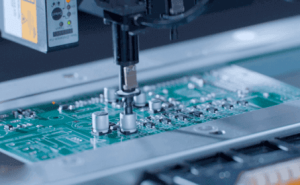
Kingda Low-Cost PCB Assembly Solutions
Kingda provides PCB manufacturing and assembly support for customers seeking cost-effective production solutions.
By combining appropriate manufacturing processes, engineering review, component management, assembly, inspection, and testing, Kingda can help customers evaluate opportunities for cost optimization throughout the production process.
For prototype and low-volume projects, engineering and DFM considerations are especially important because early manufacturing decisions can significantly influence the transition to larger-scale production.
For higher-volume projects, process standardization, panel utilization, component sourcing, production efficiency, and quality control become increasingly important.
The objective of a Low-Cost PCB Assembly strategy is not simply to reduce the quotation price. It is to create an efficient manufacturing process that delivers the required product performance while minimizing avoidable material, labor, process, and logistics costs.
Balancing Cost, Quality, and Productivity
Successful PCB manufacturing requires a balance between cost, quality, productivity, and reliability.
Reducing costs too aggressively can introduce risks such as inferior materials, unsuitable component substitutions, inadequate inspection, or unstable manufacturing processes. On the other hand, excessive process complexity can increase production costs without providing meaningful improvements to the final product.
A better approach is to optimize the entire manufacturing workflow.
This includes:
- Designing for manufacturability
- Selecting suitable materials
- Optimizing component sourcing
- Improving panel utilization
- Choosing appropriate assembly technology
- Automating repetitive processes
- Applying risk-based inspection
- Reducing unnecessary process steps
- Maintaining stable production parameters
- Controlling material and inventory costs
With proper planning, Low-Cost PCB Assembly can achieve competitive manufacturing costs without compromising the technical requirements of the product.
Conclusion
Low-Cost PCB Assembly is the result of systematic manufacturing optimization rather than simply choosing the cheapest supplier. PCB design, materials, components, board dimensions, production volume, assembly technology, inspection requirements, and supply-chain efficiency all contribute to the final cost.
For companies evaluating PCB assembly in China, a capable PCB Supplier should be able to provide more than competitive pricing. Engineering support, DFM analysis, manufacturing quality, component management, process control, testing, and reliable communication are equally important.
By optimizing the design and manufacturing process from the beginning, businesses can reduce unnecessary costs, improve production efficiency, and build a reliable path from prototype development to volume production.