What a Multilayer High Frequency PCB Manufacturer Should Master
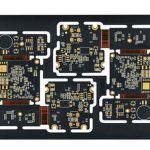
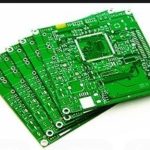
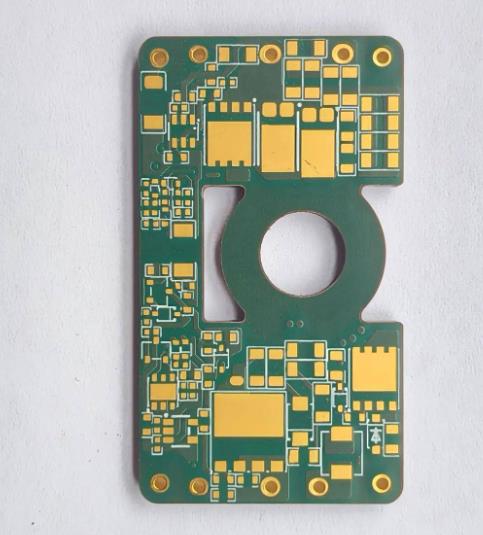
High frequency multilayer boards place unusual demands on every production step. Dielectric thickness must stay uniform, copper surfaces need low roughness, and each layer must maintain tight dimensional stability during lamination. A capable manufacturer reviews the stackup before tooling, checks controlled impedance targets, and confirms that buried or blind vias can be produced with acceptable yields. Early feedback from PCB design for manufacturability reduces the risk of expensive iteration later.
Material Selection for High Frequency Multilayer Boards
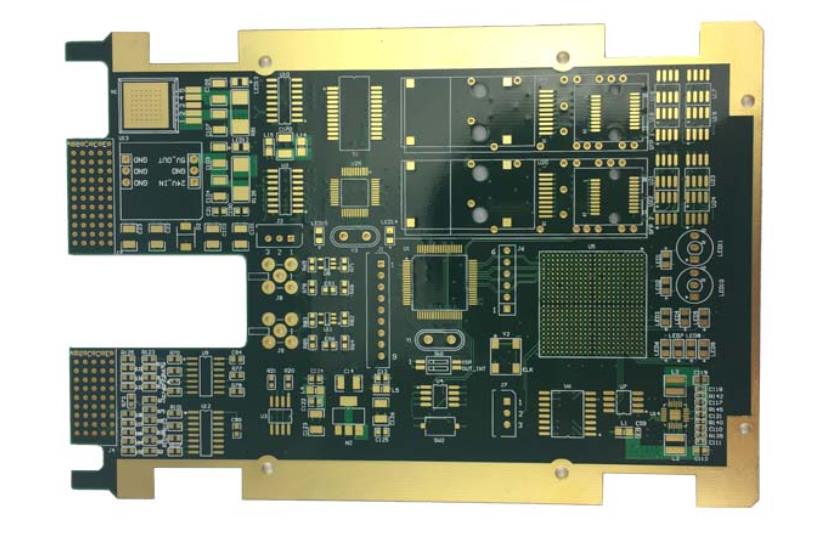
Material choice determines signal loss, impedance stability, and thermal reliability. PTFE, hydrocarbon ceramic, and modified FR-4 laminates are used for different frequency ranges and cost targets. A multilayer high frequency PCB manufacturer must manage material shrinkage, prepreg compatibility, and moisture absorption while keeping the dielectric constant stable across the board. This is especially important when high frequency layers are combined with conventional signal or power layers in a hybrid stackup.<
/p>
Certified materials and controlled incoming inspection also protect production quality. Raw laminate should be checked for dielectric constant, dissipation factor, thickness, and warp. Traceable material data helps engineers predict impedance and loss more accurately when they move from evaluation to volume orders.
Precision Imaging, Etching, and Impedance Control
Fine lines on high frequency boards need clean edges and uniform widths. Laser direct imaging improves pattern accuracy, while controlled etching chemistry limits side etch and impedance variation. The manufacturer should test coupons from each panel and document impedance values, because signal integrity depends on trace geometry and the surrounding dielectric structure.
For radar and 5G applications, microstrip, stripline, and coplanar structures all require different reference plane designs. Engineering input at the stackup stage helps avoid uncontrolled return paths and EMI issues. A manufacturer with high frequency PCB manufacturing experience can recommend practical tolerances that still meet system performance.
Applications Across Communication and Automotive Systems
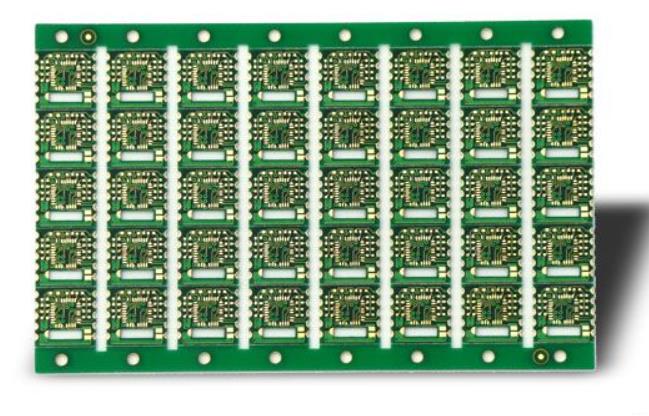
Multilayer high frequency boards support automotive radar, telematics, industrial wireless links, medical monitoring, and energy equipment. These applications combine high speed digital interfaces with RF front ends, so layer count and material selection must satisfy both signal types. Boards also face vibration, thermal cycling, and outdoor contamination, making reliability testing as important as electrical performance.<
/p>
From Prototype Support to Stable Batch Supply
Product teams usually need fast prototype boards first and repeatable batch supply later. The manufacturer should respond quickly during DFM review, provide test reports for the first article, and hold the same material and process parameters for production. A partner that offers low-volume PCB assembly and high-volume PCB assembly can also simplify the move from bare board delivery to finished electronic modules.
Choosing a Reliable Multilayer High Frequency PCB Manufacturer
Start with clear electrical specifications, frequency range, layer count, material requirements, and acceptance criteria. Ask how the supplier controls impedance, how it manages hybrid laminates, and what documentation it provides for each lot. A reliable multilayer high frequency PCB manufacturer should give practical answers, stable quality data, and realistic delivery dates.
gopcb specializes in mid-to-high-end PCB manufacturing and supports complex high frequency stackups, controlled impedance, and fast-turn engineering support. For procurement and final assembly, component procurement and turnkey services can keep the entire supply chain aligned with your production schedule.