Solder Paste Open Time and Stencil Dwell Control on SMT Lines
Solder paste is a suspension of metal powder in flux, and it begins to change as soon as it is exposed to air. Solvent evaporates, the flux thickens and the powder begins to oxidise, so a deposit that prints perfectly in the first hour behaves differently after sitting on the stencil for four. Open time is the period a paste can be exposed before its behaviour changes beyond the tolerance of the process, and it is one of the quietest causes of print defects on a busy line.
What Open Time Means
Open time is normally defined as the interval between removing paste from its container and the point at which its printing characteristics fall outside the specification. It applies to the paste on the stencil, to the paste left in the jar and to the deposit already printed on a board that is waiting for reflow.
The limit is not a single number that applies everywhere. A paste that has been formulated for a long open time will tolerate an eight hour shift, while a water soluble paste with a high solvent content may behave differently within two hours. The specification should come from the supplier and be verified on the line, because the conditions that shorten the open time are usually the ones that are unique to the shop.
Paste Drying and Rheology
Drying removes solvent and concentrates the flux, which increases the viscosity and changes the rheology of the paste. A paste that has thickened does not roll properly in front of the squeegee, does not release cleanly from the aperture and does not tack the component in place, and the defects that follow are attributed to pressure, aperture design or the stencil itself.
The change is gradual, which is what makes it dangerous. There is no moment when the paste stops working; there is a slow drift in the deposit volume and in the tack, and the drift is only visible when the deposits are measured or when the defect rate begins to rise without an obvious cause. By then the paste on the stencil has usually been replaced several times without a record of when or why.
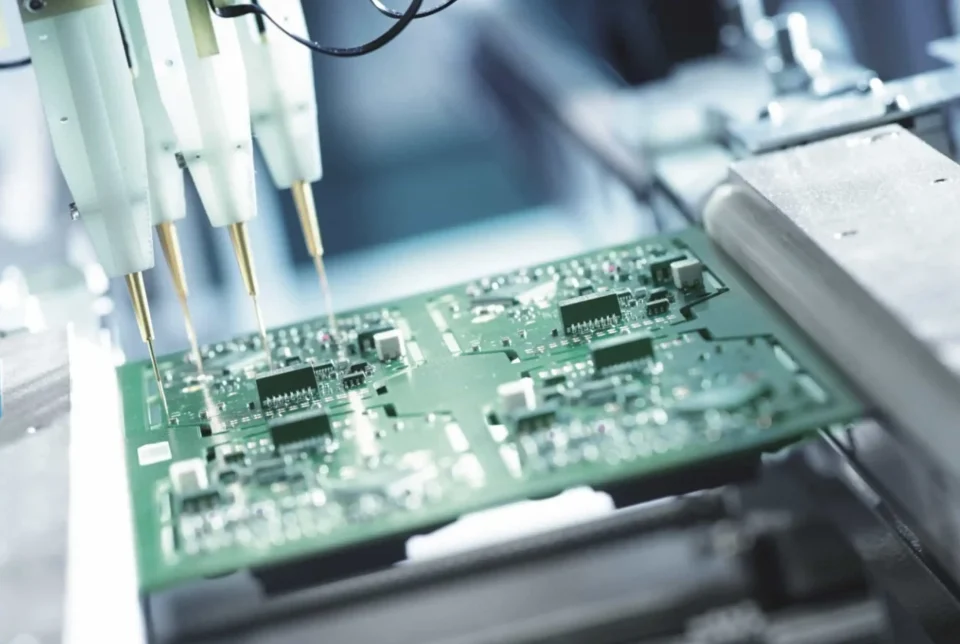
<img src="https://www.gopcba.com/wp-content/uploads/2026/08/1700208791461916-1.webp" alt="Solder paste on a stencil during a long print interval” />
Stencil Dwell and Print Interval
Stencil dwell is the time the paste spends sitting on the stencil between prints, and it is the variable that a line controller can actually influence. A printer that runs every thirty seconds keeps the paste moving and mixed, while one that waits five minutes between boards allows the top layer to dry and skin over.
Print interval is therefore a process parameter rather than an incidental detail. Where the interval is long, the paste should be removed and replaced, or the printer should be programmed to perform a periodic print without a board so that the paste keeps moving. The choice depends on the paste and on the volume being used.
Effect of Environment and Temperature
The room conditions change the rate at which the paste dries. Higher temperature accelerates evaporation, low humidity removes solvent faster and airflow across the stencil carries moisture away from the surface. A printer placed near a door, a fan or an oven will dry its paste faster than one in a stable corner of the room, and the difference is often large enough to explain why two identical machines behave differently.
Temperature also affects the paste rheology directly. A paste that is warm prints with a lower viscosity and tends to slump, while one that is cold does not roll correctly and can leave the stencil surface dirty. The paste should be brought to room temperature before use and the room should be controlled, not just the machine.
Consequences of Expired Paste
Paste that is outside its open time produces a set of related defects. Deposits lose volume, the print becomes ragged and the paste releases poorly from fine apertures, which shows up as an insufficient solder joint after reflow. Tack is reduced, so components move during placement or fall off before the board reaches the oven.
The reflow behaviour changes as well. Flux that has already partially dried does not activate properly, wetting becomes poorer and the joint may show more voids or a duller fillet. The defects that finally appear are not obviously related to the paste, which is why the open time record is worth keeping and why the investigation should include the paste whenever the print changes without a mechanical cause.
Cleaning and Reuse Rules
Paste should not be scraped back into the container. Material that has been on the stencil has already begun to dry and carries contamination from the stencil surface, and mixing it with fresh paste changes the properties of the whole jar in a way that cannot be measured from the outside.
The rule on the line should be simple: a defined quantity on the stencil, replaced at a defined interval, and any excess discarded rather than returned. The cost of the discarded paste is small compared with the cost of a batch of boards that has to be reworked because of print defects, and the rule is easier to follow than a judgement call.
Line Balancing to Reduce Dwell
The most effective control is to avoid long dwell in the first place. Line balancing, buffer management and the sequence in which products are run all determine how long the printer sits idle, and a change in the schedule can be more effective than any adjustment to the printer.
Where a line must pause, the pause should be planned rather than accidental. A short break can be covered by a wipe and a fresh charge of paste, while a long one should involve removing the paste from the stencil and cleaning it. Planning the downtime is cheaper than discovering its consequences at the end of the shift, and it also gives the operator a defined action instead of a decision to make under pressure.
Monitoring and Records
Open time should be recorded like any other process parameter: when the paste was taken out, how long it was on the stencil, when it was replaced and what the deposit measurement showed. The records allow a print defect to be traced to a paste condition rather than to the printer, which saves hours of unnecessary adjustment.
Deposit measurement is the practical way to see the effect. The technique described in the guide to solder paste inspection gives volume and area data that shows the drift before the defects appear, and it turns the open time limit from a rule into a measured condition.
Supplier Data and Specification
The supplier’s data sheet gives a starting point for open time, but the value that matters is the one measured on the production line with the actual stencil and the actual environment. Two lines using the same paste in different rooms can have different practical limits.
The specification should therefore be written in terms of the line, and it should be reviewed when the paste, the stencil or the room changes. The failures that result when it is not respected are catalogued in the guide to solder defects and board failures, and the sequence that follows printing is described in the guide to the PCB production process flow.
FAQ
How long can paste stay on the stencil? It depends on the paste and on the room, and the practical limit is often shorter than the figure on the data sheet. A common approach is to replace the paste on the stencil every few hours and to measure the deposit volume to confirm that the limit is correct for the line.
Can dried paste be revived by stirring? Sometimes, if it has only thickened slightly, but the change is not uniform and the flux chemistry has already moved away from its specification. Mixing can restore the appearance without restoring the printing behaviour, which makes it a risky solution for anything other than a short delay.
Does a sealed jar have an open time too? A sealed jar has a shelf life rather than an open time, and the two are different figures. Once the jar is opened the clock starts, and the paste should be consumed within the period the supplier states for the container in use.