Paste Tack After Printing: 5 Open Time Rules
Paste tack is the stickiness that holds a placed component on its printed deposit until the board reaches reflow. It is not the same property as viscosity, and it is not the same as wetting, but it decides whether an assembly survives the trip from the placement machine to the oven without the small parts sliding out of position.
Tack falls from the moment the deposit is printed. The loss is quiet, so the fault appears as a pattern rather than a single event: parts that move on one panel, tombstoning on another, and a rising count of components that the inspection system reports as displaced. Controlling paste tack is therefore a matter of controlling time and environment.
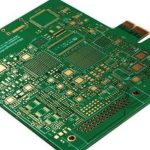
<img src="https://www.gopcba.com/wp-content/uploads/2026/06/测试-1.jpg" alt="Paste tack test probe lifted from a printed solder deposit” />
What Paste Tack Holds in Place
A placed component is supported by nothing except the deposit under its terminations. Gravity, conveyor vibration and the acceleration of the placement head all act on it, and the only resistance is the adhesion of the paste to the pad and to the metal termination.
That adhesion has to be greater than the forces the board will see before reflow. For a small chip the margin is large, which is why most boards tolerate a long queue. For a heavy part such as a large inductor or a connector, the margin is small, and paste tack becomes the limiting factor for the whole process.
How Paste Tack Decays After Printing
Three mechanisms remove tack over time. Solvent leaves the deposit and the flux thickens, the surface oxidises and loses the ability to wet, and water from the air changes the rheology of the vehicle. The first effect is the fastest, and most of the loss happens in the first half hour.
The decay curve then flattens. A deposit that is still usable after two hours is often still usable after four, provided the room is stable. This is why a single number for open time is misleading, and why the practical rule is a curve measured on the line rather than a figure copied from a data sheet.
Measuring Paste Tack with a Probe
The standard method uses a probe of defined diameter that is lowered onto the deposit, held for a set time and pulled away at a set speed. The force needed to separate the probe is recorded in grams. The IPC paste specifications define the geometry and the conditions so that results from different labs can be compared.
For production control the absolute number matters less than the shape of the curve. Measure a fresh print, then repeat at intervals on the same panel. A tack test that falls to half of the initial value is a useful warning line, and the point where it falls is the open time for that paste in that room.

Humidity, Temperature and Airflow Effects
Relative humidity is the strongest environmental factor. Dry air pulls solvent out of the deposit and shortens the open time, while very humid air adds water to the flux and softens it. A room that swings between shifts will show a different open time on each shift.
Temperature acts in the same direction and airflow adds to it. A printer that sits under an air conditioning diffuser dries deposits faster than one in still air, and a conveyor that carries panels past an open oven door warms them. Both effects are invisible in the process record unless the queue is measured with them in mind.
Component Mass and Placement Stability
The component has to be matched to the deposit. A part with a large mass and two small terminations is the hardest case, because the paste area that supports it is small and the moment acting on it as the board accelerates is large. In these cases the deposit geometry should be reviewed together with the tack value.
Where the margin is tight, the options are to shorten the queue, to support the part during transfer, or to add a small amount of adhesive. The last option changes the process and the rework rules, so it should be treated as a design decision rather than a line fix, and the placement requirements should state it explicitly.
Queue Control Between Printer and Oven
The printer queue is where paste tack is spent. Every panel that waits on a magazine, on a buffer or in front of the oven is losing tack, and the loss is not recovered when the board starts to move again. The queue length and the height of the stack both matter.
The control that works is a timestamp on the first panel of each print cycle, plus a rule that a panel older than the measured open time is reworked rather than placed. Where the line runs a long conveyor, the paste working life rule should be written for the worst case in the queue, not for the average panel.
Reflow of a Dried Deposit
A deposit that has lost its tack has also lost some of its flux activity. The joint may still form, because the alloy melts and wets what it can reach, but the result is a dull fillet, more solder balls on the mask and a higher chance of an intermittent open on a small pad.
Drying is not reversible. Reheating the board before reflow does not restore tack, and adding solvent to the surface is not a production technique. The only reliable answer is to keep the deposit inside its open time, which is why the queue rule is more valuable than any attempt to rescue a dry panel.
Setting a Working Life Rule for the Line
Set the rule from data rather than from the data sheet. Print a panel, place parts, and inspect at intervals until displacement appears. The interval before the first displacement, with a safety margin, is the open time for that product on that line.
Then make the rule visible. A label, a screen counter or a timer at the printer all work, and the choice should follow the culture of the shop. The stencil wipe cycle belongs in the same instruction, because a paste that is drying on the stencil is also drying in the deposit.
Tracing Component Shift Back to Its Source
When a component shift appears, the first question is when it happened. Displacement seen before reflow points at paste tack, conveyor handling or nozzle placement, while a shift that appears only after reflow points at unequal heating, a pad that did not wet or a deposit that was short of paste.
The check is cheap: stop the line after placement and look at the panel under the microscope, before the oven. If the parts are still where the program put them, the shift happened in reflow and the profile deserves the attention. If they have already moved, a tack test is the next measurement, and the queue is the first thing to change.
FAQ
Is paste tack the same as viscosity? No. Viscosity describes how the paste resists flow under the squeegee, while paste tack describes how well the deposit holds a placed component. A paste can have high viscosity and poor tack, and the two are measured with different instruments.
Does a longer reflow soak compensate for low paste tack? Only in the sense that a slow profile gives the flux more time to activate. It cannot restore a deposit that has already dried, and a long soak adds oxide to the joint, so the profile should not be used as a remedy for a queue problem.
How often should tack be checked on a running line? Once per shift is enough where the room is stable and the queue is short. Where the product carries heavy parts, or the room swings with the weather, check at the start and the middle of each shift and after any change to the printer settings.